

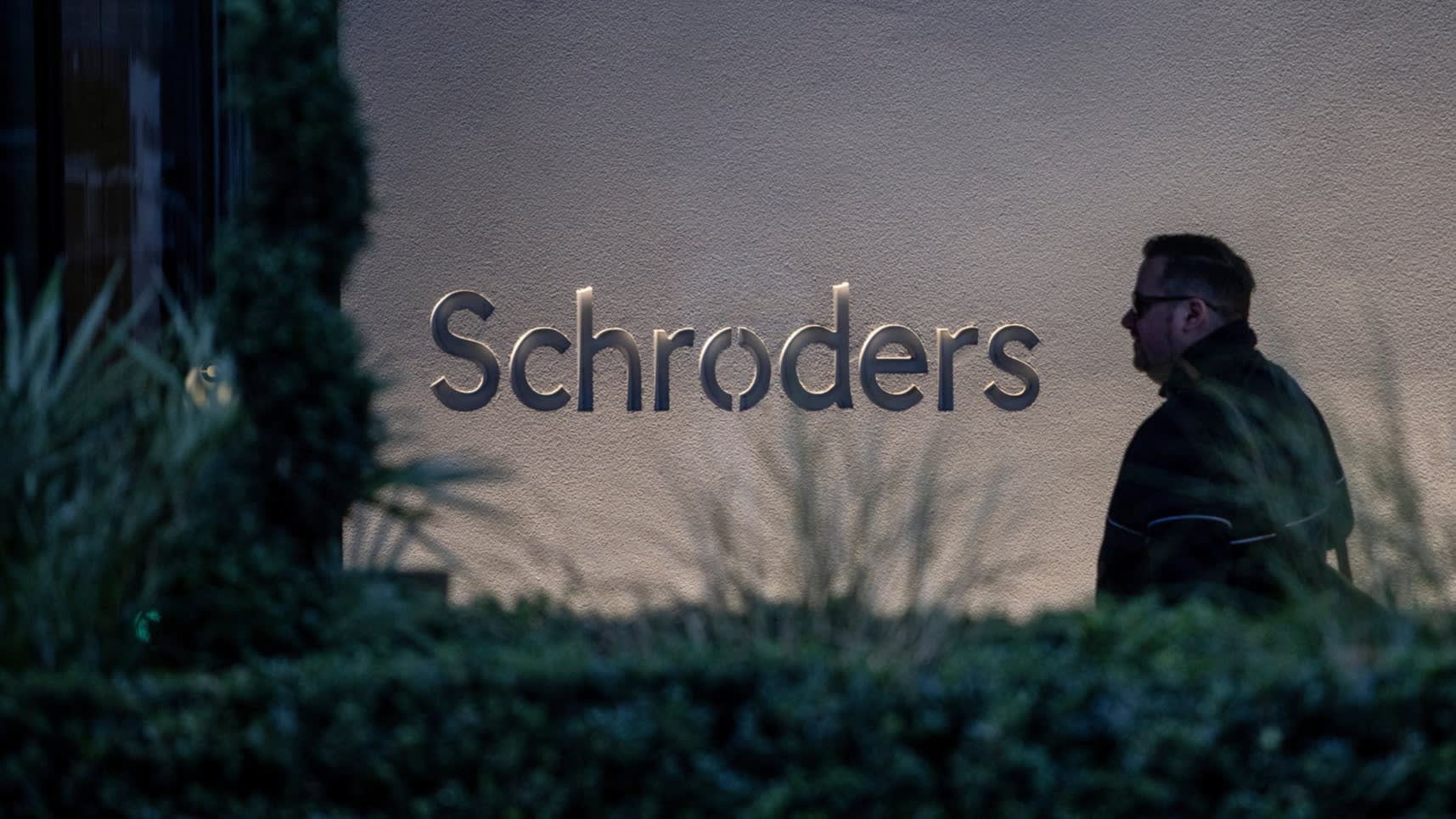
For more than two centuries, the name Schroders has been synonymous with the City of London’s financial hegemony, surviving the Napoleonic Wars, the collapse of the gold standard, and the seismic shifts of the digital revolution. Yet, today, the venerable institution finds itself at a historical inflection point where the weight of tradition is increasingly colliding with the brutal realities of modern capital markets. While the prospect of selling a firm that has remained under family control since 1804 is emotionally wrenching for its stakeholders, an objective analysis of the global asset management landscape suggests that such a move may no longer be a matter of "if," but "when."
The fundamental challenge facing Schroders is not a lack of competence, but a systemic shift in how wealth is managed globally. For decades, active management—the art of picking stocks and bonds to beat the market—was the industry’s gold mine. High fees were justified by the promise of outperformance. However, the rise of passive investing, led by titans like BlackRock and Vanguard, has fundamentally altered the economics of the sector. As low-cost exchange-traded funds (ETFs) and index trackers become the default for both retail and institutional investors, the "middle ground" of asset management has become a dangerous place to inhabit. With approximately £750 billion in assets under management, Schroders is a giant in the United Kingdom, yet it remains a mid-sized player on the global stage when compared to the multi-trillion-dollar behemoths of Wall Street.
The economic pressure of fee compression is perhaps the most immediate catalyst for a strategic rethink. Across the industry, margins are being squeezed as clients demand lower costs for traditional equity and fixed-income products. For Schroders, this has necessitated a pivot toward "private assets" and wealth management—sectors where margins remain higher and capital is "stickier." The creation of Schroders Capital was a calculated move to capture the growing appetite for private equity, real estate, and infrastructure. While this transition has been strategically sound, it requires immense scale to compete with specialized giants like Blackstone or Brookfield. The question remains whether an independent Schroders can generate the necessary investment capital to keep pace with these global leaders without the backing of a larger parent organization.
Leadership transitions often serve as the catalyst for structural change, and the appointment of Richard Oldfield to succeed Peter Harrison as Chief Executive signals a potential shift in philosophy. Unlike Harrison, who was a career fund manager and a standard-bearer for the firm’s active-management heritage, Oldfield brings a background from PwC, suggesting a focus on operational efficiency, balance sheet optimization, and perhaps a more clinical view of the firm’s long-term independence. In the world of high finance, an outsider’s perspective is often the precursor to radical restructuring or a "for sale" sign, as they are less tethered to the sentimental history of the institution.
The role of the Schroder family cannot be overstated in this unfolding drama. Owning nearly 45% of the company’s voting shares, the family has long provided a "permanent capital" mindset that shielded the firm from the short-termism of the public markets. This dual-class share structure has been the bedrock of Schroders’ stability, allowing it to take long-term risks that other listed firms might shun. However, the family faces its own set of dilemmas. As the pool of family beneficiaries grows and diversifies, the desire for liquidity may eventually outweigh the prestige of controlling a mid-sized independent manager. For a dynasty, the decision to sell is not merely a financial transaction; it is the closing of a multi-generational chapter. Yet, the fiduciary duty to preserve wealth for future generations may ultimately dictate that the value of the firm is best realized through a premium acquisition rather than a slow erosion of market share.
Market data further complicates the narrative of independence. The "London Discount"—the tendency for UK-listed companies to trade at lower valuations than their US or European peers—has made Schroders an attractive target for foreign predators. In an era where scale is the ultimate defense, a merger with a global banking giant or a massive US-based asset manager could offer the synergies required to survive. Potential suitors are numerous. US giants like JP Morgan or Goldman Sachs are constantly looking to bolster their European wealth management footprints, while Asian conglomerates, such as Mitsubishi UFJ, have shown a keen interest in acquiring Western asset management expertise to serve their domestic aging populations.
The broader implications for the City of London are significant. Schroders is one of the last remaining independent "blue blood" investment houses in the UK. Its sale would mark the end of an era for British financial services, following in the footsteps of previous icons like S.G. Warburg and Cazenove. From a national economic perspective, the loss of domestic control over such a large pool of capital raises concerns about "Global Britain’s" ability to maintain a self-sustaining financial ecosystem. If the decision-making power for billions of pounds of UK pension and insurance assets shifts to New York or Tokyo, the influence of the London market could be further diminished.
However, the counterargument is rooted in the "inevitability of consolidation." The asset management industry is currently in a "scale or fail" cycle. We have already seen the merger of Standard Life and Aberdeen, and the acquisition of Legg Mason by Franklin Templeton. These deals were driven by the need to spread rising regulatory and technology costs over a larger asset base. For Schroders, the cost of maintaining a global distribution network, complying with increasingly complex ESG (Environmental, Social, and Governance) regulations, and investing in cutting-edge data analytics is staggering. At some point, the overhead of being a standalone public company may become a drag on the very investment performance that the firm prides itself on.
Expert insights suggest that the current market environment—characterized by higher interest rates and geopolitical volatility—is particularly punishing for traditional active managers. In a "higher for longer" interest rate world, the easy gains of the quantitative easing era have vanished. Investors are becoming more discerning, moving away from "closet indexers" and toward either ultra-low-cost passive options or high-conviction, high-alpha alternative strategies. Schroders has attempted to straddle both worlds, but the cost of doing so is immense.
In analyzing the economic impact, one must also consider the employees and the corporate culture. Schroders has long been regarded as a "cradle-to-grave" employer, fostering a culture of loyalty and intellectual rigor. A sale would almost certainly lead to "rationalization"—a polite term for the job cuts and office closures that follow any large-scale merger. For the thousands of professionals who call Schroders home, the "wrenching" nature of a sale is not an abstract concept but a direct threat to a way of life.
Ultimately, the trajectory of Schroders reflects the broader evolution of global capitalism. The era of the independent, family-influenced merchant bank or asset manager is giving way to a world dominated by massive, tech-enabled financial platforms. While the Schroder family and the firm’s board will likely fight to maintain their independence as long as possible, the gravity of market forces is a powerful opponent. The inevitability of a sale stems from a simple reality: in the modern financial world, being a respected, historic institution is no longer a sufficient defense against the relentless demand for scale, efficiency, and technological dominance. When the emotional dust settles, the decision to sell may be viewed not as a surrender, but as a pragmatic realization that the best way to preserve the legacy of the Schroders name is to ensure its survival within a structure capable of competing in the 21st century.