


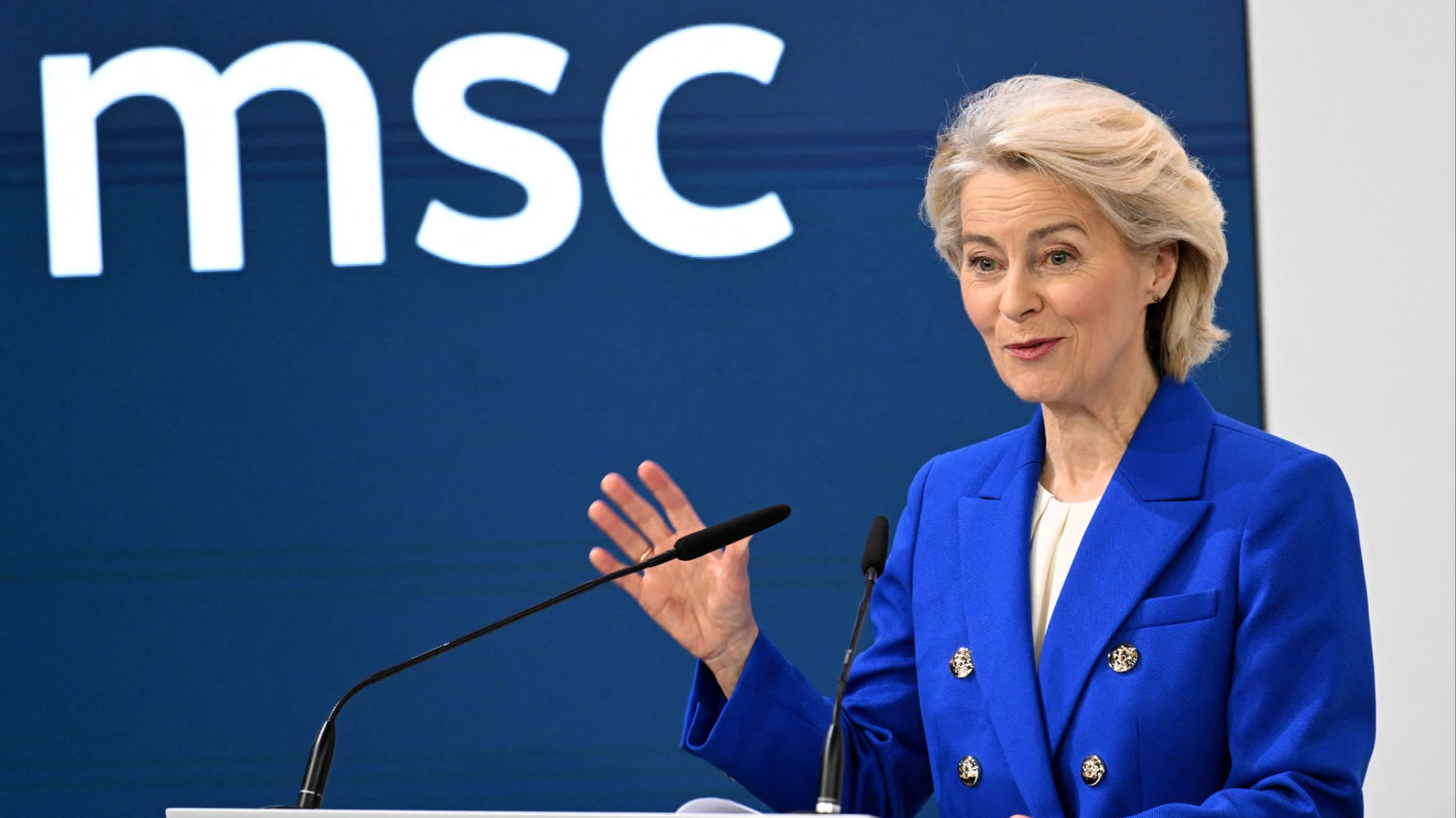
European Commission President Ursula von der Leyen has issued a clarion call for the European Union to transform its dormant mutual defense clause from a theoretical legal provision into a robust, operational reality. This shift in rhetoric signals a profound evolution in the bloc’s strategic posture, moving away from its historical reliance on "soft power" and economic integration toward a more assertive and self-reliant security architecture. Speaking against a backdrop of intensifying geopolitical volatility, von der Leyen argued that the "geographical center" of European security is shifting, necessitating a fundamental reappraisal of how the 27-member union protects its sovereignty and its citizens.
The centerpiece of this proposal is the revitalization of Article 42.7 of the Treaty of Lisbon. Often described as the EU’s equivalent to NATO’s Article 5, the clause stipulates that if a member state is the victim of armed aggression on its territory, the other member states have an "obligation of aid and assistance by all the means in their power." Despite its clear language, Article 42.7 has remained largely underutilized and lacks the integrated command structures and automated response mechanisms that define the North Atlantic Treaty Organization. Von der Leyen’s assertion that Europe must "bring this clause to life" reflects a growing consensus in Brussels that the continent can no longer afford to treat collective security as an optional or secondary concern.
The urgency of this initiative is driven by a confluence of external pressures that have shattered the post-Cold War security paradigm. The most immediate catalyst is Russia’s ongoing war in Ukraine, which has fundamentally altered the threat perception of frontline states in the Baltics and Eastern Europe. Furthermore, the specter of a potential shift in U.S. foreign policy—regardless of specific electoral outcomes—has forced European leaders to confront the possibility of a diminished American security umbrella. This "strategic autonomy" is no longer a French-led intellectual exercise but a pragmatic necessity for a continent that finds itself increasingly vulnerable to conventional warfare, hybrid threats, and cyber attacks.
Economically, the transition to a functional mutual defense framework implies a massive reallocation of capital and a restructuring of the European industrial base. For decades, many European nations benefited from a "peace dividend," redirecting funds from defense budgets to social welfare and infrastructure. This era has effectively ended. NATO’s 2% of GDP spending target, once viewed as an aspirational ceiling for many, is now increasingly seen as a baseline. The European Commission has proposed a comprehensive European Defence Industrial Strategy (EDIS) aimed at incentivizing joint procurement and reducing the fragmentation that currently plagues the European defense market.
Market data underscores the scale of this challenge. While the United States operates a highly streamlined defense sector dominated by a few massive primes, Europe’s defense landscape is characterized by duplication and inefficiency. For example, European armies currently utilize approximately 17 different types of main battle tanks, whereas the U.S. relies on just one. This lack of interoperability not only increases maintenance costs but also hampers the ability of member states to act in a unified manner during a crisis. By breathing life into the mutual defense clause, von der Leyen aims to provide the political impetus for industrial consolidation, encouraging companies like Rheinmetall, Leonardo, Thales, and BAE Systems to collaborate more closely on pan-European projects.
The financial mechanisms to support this transformation are already being debated in the halls of the European Investment Bank (EIB) and the European Council. There is significant momentum behind the idea of "Defense Bonds"—a collective debt instrument similar to the NextGenerationEU fund launched during the pandemic—to finance the massive R&D and infrastructure costs associated with modernizing Europe’s armed forces. While "frugal" member states remain cautious about new forms of common debt, the gravity of the security situation is shifting the political calculus. The European Defence Fund (EDF), which currently manages a budget of nearly €8 billion for the 2021–2027 period, is likely to see substantial replenishment and expansion in the next multi-annual financial framework.
However, the path toward a credible EU defense union is fraught with legal and political obstacles. Unlike NATO, the EU includes several militarily neutral or non-aligned members, such as Ireland, Austria, and Malta. For these nations, a move toward a more integrated defense framework raises sensitive questions about national identity and constitutional constraints. Von der Leyen’s vision must therefore balance the need for decisive collective action with the diverse strategic cultures of the member states. The solution likely lies in "permanent structured cooperation" (PESCO), which allows groups of member states to pursue deeper military integration without requiring the participation of the entire bloc.
Expert insights suggest that the success of Article 42.7 will depend less on its legal text and more on the "operationalization" of its requirements. This includes the development of a European "Rapid Deployment Capacity" (RDC) of up to 5,000 troops, as outlined in the EU’s Strategic Compass. It also requires a unified approach to cyber defense and space security, domains where the distinction between civil and military infrastructure is increasingly blurred. As asymmetric threats from state and non-state actors grow, the EU’s ability to protect its undersea cables, satellite networks, and energy grids becomes a critical component of its mutual defense obligations.
Global comparisons highlight the stakes of this transition. China’s rapid military modernization and the United States’ pivot toward the Indo-Pacific have left a vacuum in the European theater that the EU is now scrambling to fill. In terms of total defense spending, the EU-27 collectively outspends Russia by a significant margin; however, the lack of coordination means that this spending does not translate into equivalent combat power or strategic leverage. Von der Leyen’s push is an attempt to rectify this "output gap" by creating a unified demand signal that can sustain a world-class defense industrial base on the continent.
The economic impact of this shift extends beyond the defense sector. The push for "defense-led innovation" is expected to yield significant spin-offs in sectors such as semiconductors, artificial intelligence, and green energy. Much like the Apollo program or the early internet, large-scale defense R&D can serve as a catalyst for broader industrial policy. By prioritizing "European preference" in defense procurement—aiming for at least 50% of defense budgets to be spent on EU-made equipment by 2030—the Commission hopes to foster a resilient ecosystem that can withstand global supply chain disruptions.
Critics, however, warn of the risks of creating a "Fortress Europe" that alienates traditional allies or creates redundant structures that compete with NATO. Von der Leyen has been careful to frame the revitalization of Article 42.7 as complementary to NATO, rather than a replacement for it. The goal is to create a "European pillar" within the transatlantic alliance, ensuring that Europe is a capable partner rather than a dependent protectorate. This requires a delicate diplomatic balancing act, particularly with the United Kingdom, which remains a top-tier military power in Europe despite its exit from the EU.
As the European Union approaches its next legislative cycle, the "defense of democracy" and the "defense of the union" are becoming indistinguishable. Von der Leyen’s advocacy for a functional mutual defense clause represents a historical pivot. It marks the moment when the European project recognized that its economic prosperity and democratic values cannot be sustained without the credible threat of force and the institutional capacity to exercise it. The coming years will determine whether this vision can overcome the inertia of national sovereignty and the complexities of EU bureaucracy to create a security framework that is truly "brought to life." The transition from a "civilian power" to a "geopolitical actor" is no longer a choice for Europe; it is a prerequisite for its survival in a fractured world.