


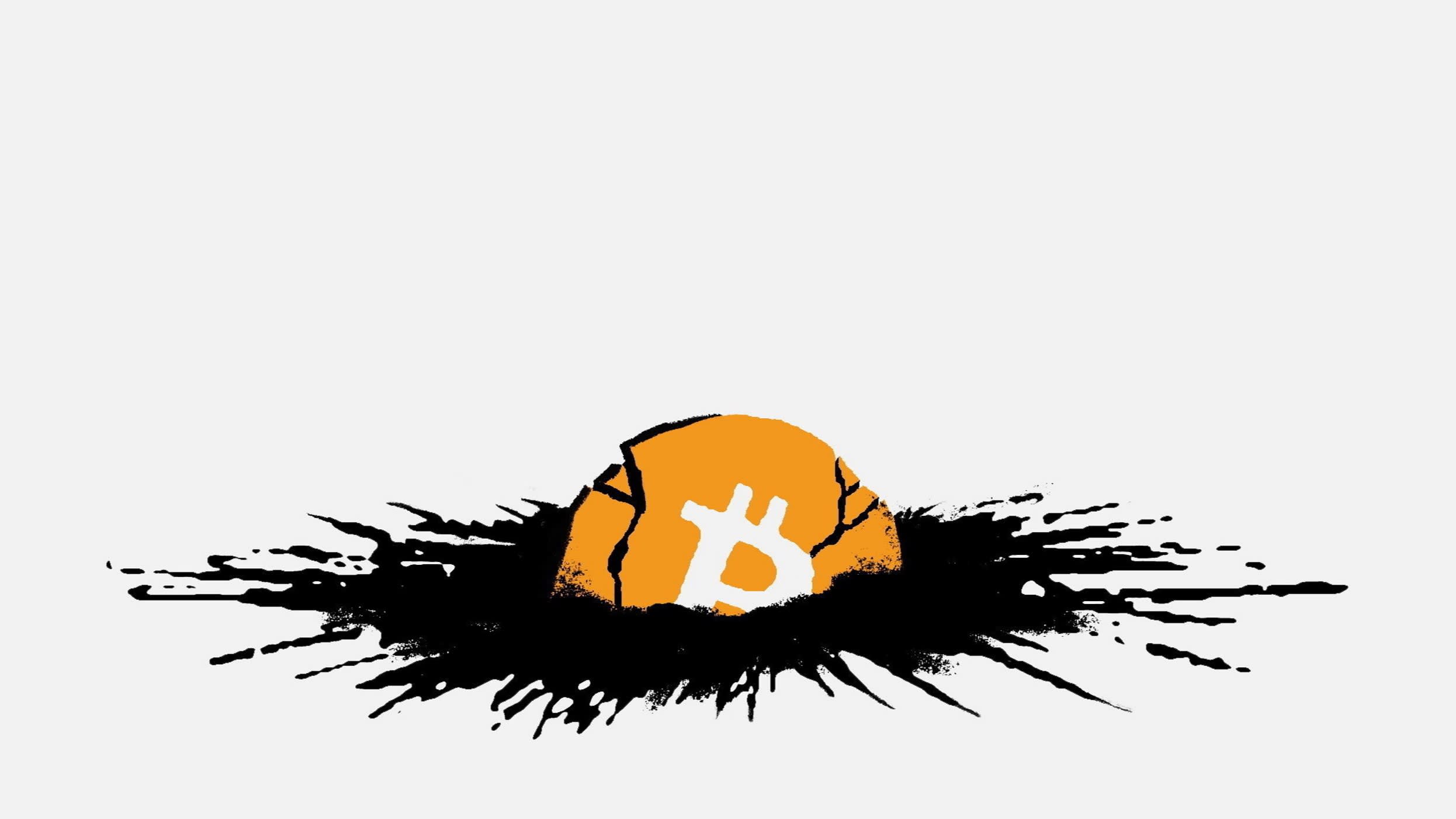
In the volatile theater of global finance, few assets provoke as much polarization as Bitcoin. To its proponents, the digital token represents a revolutionary decoupling of money from the state, a "digital gold" for an era of fiscal profligacy. To its detractors, it remains a speculative chimera, an asset whose market price bears no relation to its intrinsic value. As Bitcoin once again tests the psychological and historical resistance levels around $69,000, the debate has moved beyond the fringes of internet forums into the boardrooms of the world’s largest asset managers. Yet, beneath the veneer of institutional legitimacy provided by spot ETFs and high-frequency trading, a haunting economic question remains: if Bitcoin’s utility as a currency is negligible and its cash flow is non-existent, is the entire valuation built on a foundation of air?
The argument that Bitcoin is overpriced by the exact amount it trades for is not merely a provocative contrarian stance; it is rooted in classical economic theory. For an asset to have a fundamental value, it typically must generate future cash flows, provide a clear utility, or serve as a stable medium of exchange. Bitcoin, by design, does none of these. Unlike a stock, it yields no dividends. Unlike a bond, it pays no interest. Unlike a commodity like oil or wheat, it has no industrial use. And unlike a sovereign currency, it is not backed by the taxing power of a government or the productivity of a national economy. Consequently, the skeptics argue that the "fair value" of Bitcoin is not $60,000 or $70,000, but zero. The current price, therefore, represents a massive divergence between market sentiment and economic reality.
This divergence is largely fueled by the "Greater Fool Theory," a psychological phenomenon where the price of an object is determined not by its intrinsic worth but by the belief that someone else will be willing to pay a higher price for it later. In the case of Bitcoin, this belief has been institutionalized. The approval of spot Bitcoin Exchange-Traded Funds (ETFs) by the U.S. Securities and Exchange Commission in early 2024 marked a watershed moment. It allowed billions of dollars from pension funds and retail brokerage accounts to flow into the ecosystem. While this provided a massive tailwind for the price, it did little to address the underlying lack of utility. Instead of Bitcoin becoming more useful as a tool for commerce, it has become more "financialized"—a speculative vehicle used to hedge against the very financial system it was supposedly designed to replace.
To understand why critics believe Bitcoin is still "too high," one must examine its failure to fulfill its original promise. The 2008 whitepaper by the pseudonymous Satoshi Nakamoto envisioned Bitcoin as a "peer-to-peer electronic cash system." It was intended to bypass banks and provide a low-cost, efficient way to transact globally. Fifteen years later, that vision is largely dead. Bitcoin’s network is plagued by high transaction fees during periods of congestion and a processing capacity that pales in comparison to traditional networks like Visa or Mastercard. While the "Lightning Network" was proposed as a solution to scale these transactions, its adoption has been sluggish, and for the average consumer, using Bitcoin to buy a cup of coffee remains an exercise in technical frustration and tax-compliance nightmares.
Furthermore, the "store of value" narrative—the idea that Bitcoin is digital gold—is frequently undermined by its extreme volatility. A true store of value is expected to preserve purchasing power over time with relatively low correlation to risk assets. However, Bitcoin often trades as a high-beta play on tech stocks. When liquidity is abundant and interest rates are low, Bitcoin soars; when the Federal Reserve tightens the money supply, Bitcoin collapses. This behavior is more characteristic of a speculative bubble than a stable haven. During the inflationary surge of 2022 and 2023, while traditional gold held its ground and eventually reached new highs, Bitcoin saw a peak-to-trough decline of over 70%. For an asset marketed as an inflation hedge, such performance is difficult to reconcile with its purported purpose.
The environmental cost of maintaining the Bitcoin network adds another layer to the argument of overvaluation. The "Proof of Work" consensus mechanism requires vast amounts of electricity to secure the ledger, with some estimates placing Bitcoin’s annual energy consumption on par with mid-sized nations like Sweden or Argentina. In an era where Environmental, Social, and Governance (ESG) criteria are becoming central to institutional investing, the carbon footprint of Bitcoin represents a significant hidden liability. Critics argue that a system that consumes so much real-world energy to produce a digital abstraction with no industrial utility is fundamentally inefficient and destined for a regulatory reckoning.
Global regulatory pressure continues to be the "Sword of Damocles" hanging over the market. While the United States has taken a path of regulated integration, other nations have been more hostile. China’s blanket ban on mining and transactions in 2021 demonstrated how quickly the "decentralized" dream can be disrupted by state power. The European Union’s Markets in Crypto-Assets (MiCA) regulation and the increasing scrutiny from the Financial Action Task Force (FATF) regarding anti-money laundering (AML) protocols suggest that the era of the "Wild West" is ending. If the anonymity and friction-less nature of Bitcoin are stripped away by regulation, its primary appeal to a certain subset of users vanishes, potentially removing a significant portion of its market demand.
Despite these criticisms, the market price remains stubbornly high, driven by a narrative of "algorithmic scarcity." With a hard cap of 21 million coins, Bitcoin’s supply is inelastic. Proponents argue that in a world of endless fiat currency printing and ballooning sovereign debt—which recently surpassed $34 trillion in the United States alone—an asset that cannot be debased is priceless. This "scarcity value" is the engine behind the $69,000 price tag. However, economists point out that scarcity alone does not create value. A one-of-a-kind rock found in a backyard is scarce, but it is not valuable unless there is a demand for it. The demand for Bitcoin is currently driven by a narrative of future adoption, creating a self-reinforcing feedback loop that many believe is a classic speculative mania.
Comparing Bitcoin to the Dot-com bubble of the late 1990s provides a sobering perspective. During that era, companies with no revenue and no path to profitability were valued at billions based on the "promise" of the internet. While the internet did indeed change the world, the vast majority of those companies went to zero. The technology survived, but the speculative vehicles did not. Skeptics suggest that blockchain technology may follow a similar path: the underlying distributed ledger technology may find utility in supply chain management or central bank digital currencies (CBDCs), but the original "speculative token" could eventually be discarded as an obsolete and overpriced relic of the early digital age.
The economic impact of a potential Bitcoin correction is also a matter of growing concern. As Bitcoin becomes more integrated into the broader financial system through ETFs and corporate balance sheets (such as those of MicroStrategy or Tesla), the "contagion risk" increases. A sudden collapse in Bitcoin’s price could trigger margin calls and liquidity crunches in unrelated sectors of the market. This systemic risk is exactly what regulators are currently struggling to quantify. If Bitcoin is indeed $69,000 too high, the eventual "return to mean" could be a painful experience for the global economy, echoing the fallout of the 2008 subprime mortgage crisis, where complex financial products built on shaky underlying assets eventually crumbled.
Ultimately, the valuation of Bitcoin is a Rorschach test for one’s view of the modern financial system. To those who believe the current monetary order is broken, no price is too high for an alternative. To those who adhere to traditional valuation metrics and the necessity of intrinsic utility, the current price is a testament to collective delusion. As the market continues to fluctuate, the gap between the believers and the skeptics remains a chasm. Whether Bitcoin will eventually find a stable role in the global economy or vanish into the annals of history as the largest financial bubble ever recorded remains the multi-trillion-dollar question. For now, the price of $69,000 stands not just as a market quote, but as a monument to the unprecedented era of digital speculation.