


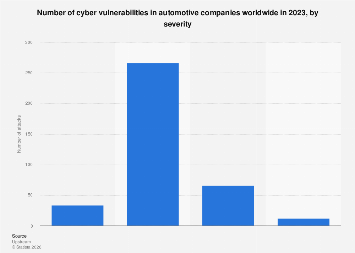
The global automotive industry is grappling with a significant and escalating cybersecurity challenge, with a marked increase in reported vulnerabilities across manufacturers and their associated supply chains. In 2023 alone, a substantial number of high-severity cybersecurity weaknesses were identified within automotive companies worldwide. These critical flaws represent potential entry points for malicious actors seeking to disrupt operations, steal sensitive data, or compromise vehicle safety. Beyond the high-severity threats, the sector also encountered a considerable volume of critical and medium-level vulnerabilities, underscoring the pervasive nature of these risks.
This surge in detected vulnerabilities is not an isolated incident but rather a continuation of a concerning trend observed over the past several years. Data indicates a dramatic escalation in publicly reported cybersecurity weaknesses within the automotive domain between 2019 and 2023. This period has witnessed a significant leap in the sheer number of identified vulnerabilities, painting a stark picture of an industry racing to keep pace with the evolving threat landscape.
The implications of these vulnerabilities extend far beyond mere data breaches. Modern vehicles are increasingly complex, interconnected ecosystems, often referred to as "computers on wheels." They integrate advanced driver-assistance systems (ADAS), sophisticated infotainment units, over-the-air (OTA) update capabilities, and seamless connectivity to external networks. This intricate web of software and hardware, while enabling unprecedented functionality and convenience for consumers, simultaneously creates a larger attack surface for cybercriminals. A successful breach could potentially compromise critical vehicle functions such as steering, braking, or acceleration, leading to dangerous real-world consequences. Furthermore, the potential for widespread disruption through fleet-wide attacks, ransomware on connected car platforms, or the exfiltration of vast amounts of personal data from vehicle owners adds layers of economic and societal risk.
Industry analysts and cybersecurity experts point to several contributing factors behind this alarming trend. The rapid pace of technological innovation, the increasing reliance on third-party software components and suppliers, and the complex global nature of automotive supply chains all introduce new vectors for cyber threats. As vehicles become more software-defined, the traditional hardware-centric security models are proving insufficient. The integration of artificial intelligence (AI) and machine learning (ML) in vehicle design and operation, while offering significant advantages, also introduces new complexities and potential vulnerabilities that require specialized security expertise.

The economic ramifications of these cybersecurity weaknesses are substantial. Beyond the direct costs of incident response, data recovery, and potential regulatory fines, the automotive industry faces significant reputational damage and loss of consumer trust if high-profile security incidents occur. The cost of patching vulnerabilities, implementing robust security protocols, and conducting continuous security testing represents a significant investment for automakers. However, the potential cost of a major cyberattack, including product recalls, lawsuits, and a decline in sales, far outweighs these preventative measures.
Global comparisons highlight the universal nature of this challenge. While the exact figures may vary by region and reporting methodology, virtually all major automotive markets are experiencing similar increases in cybersecurity concerns. Regulators worldwide are beginning to recognize the critical importance of automotive cybersecurity, with new standards and guidelines emerging to mandate stronger security practices. For instance, regulations like UNECE WP.29’s R155 (Cyber Security) and R156 (Software Updates) are setting global benchmarks for vehicle cybersecurity and secure software lifecycle management, pushing manufacturers to prioritize these aspects throughout the design and production process.
The increase in vulnerabilities is often categorized by their severity, typically assessed using frameworks like the Common Vulnerability Scoring System (CVSS). High-severity vulnerabilities, often scoring 9.0 or above on the CVSS scale, indicate a significant risk of exploitation and severe impact. Critical vulnerabilities, while potentially slightly less severe than high-severity ones, still pose a substantial threat. Medium-severity vulnerabilities, though less immediately dangerous, can still be chained together by attackers to achieve more significant compromises. The sheer volume of all these categories underscores a systemic challenge.
The automotive sector’s reliance on a vast and intricate supply chain adds another layer of complexity. A vulnerability introduced by a single component supplier, even a seemingly minor one, can propagate throughout the entire vehicle ecosystem. This necessitates a comprehensive "security by design" approach, where security considerations are integrated from the earliest stages of product development, and rigorous vetting of all third-party suppliers is conducted. Supply chain security has become a paramount concern, as demonstrated by numerous high-profile cyber incidents in other industries that originated from compromised suppliers.
Looking ahead, the automotive industry must continue to invest heavily in cybersecurity research, development, and talent. This includes fostering a culture of security awareness among all employees, from engineers and designers to marketing and sales teams. Proactive threat intelligence, advanced intrusion detection and prevention systems, and rapid incident response capabilities are no longer optional but essential components of a resilient automotive cybersecurity strategy. The continuous evolution of vehicle technology, including the advent of autonomous driving and vehicle-to-everything (V2X) communication, will undoubtedly introduce new and unforeseen cybersecurity challenges, demanding ongoing vigilance and adaptation from the industry. The race to secure the future of mobility is intrinsically linked to the industry’s ability to effectively address its escalating cybersecurity vulnerabilities.