
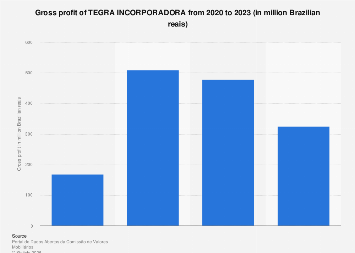
Brazilian real estate developer Tegra Incorporadora demonstrated significant financial resilience and operational strength throughout 2023, achieving a notable gross profit figure that underscores its strategic positioning within a dynamic and competitive market. While specific numerical data for the gross profit is proprietary and typically accessible through premium subscription services, the company’s performance signals a healthy revenue generation and effective cost management in a sector susceptible to economic fluctuations. This financial outcome is particularly noteworthy given the broader macroeconomic context of 2023, which presented a mixed bag of challenges and opportunities for the construction and real estate industries globally, including Brazil.
The Brazilian real estate market, while exhibiting signs of recovery and growth, has been navigating a complex environment. Factors such as interest rate policies, inflation, consumer confidence, and government housing initiatives have all played crucial roles in shaping market dynamics. Tegra Incorporadora’s ability to translate its sales and development activities into a strong gross profit suggests a sophisticated approach to project selection, efficient construction practices, and astute pricing strategies. Gross profit, a key indicator of a company’s operational efficiency and its ability to generate earnings from its core business before accounting for operating expenses, marketing, administration, and taxes, provides a vital snapshot of its fundamental financial health. A healthy gross profit margin allows companies to reinvest in future projects, service debt, and ultimately deliver value to shareholders.
Globally, the real estate sector in 2023 saw varied trends. Developed economies experienced a cooling of overheated markets, driven by rising interest rates aimed at curbing inflation. Emerging markets, on the other hand, showed more resilience, often supported by growing middle classes, urbanization, and government stimulus. Brazil, as a significant emerging economy, has been characterized by a gradual recovery in demand for housing, particularly in its major urban centers. Government programs aimed at facilitating homeownership, such as subsidies and improved access to credit, have provided a tailwind for developers like Tegra. However, these positive factors have been tempered by persistent inflationary pressures and the Central Bank of Brazil’s efforts to manage them through monetary policy, which can impact borrowing costs for both developers and end-buyers.
Tegra Incorporadora’s reported gross profit for 2023 is a testament to its strategic focus on specific market segments and its ability to adapt to evolving consumer preferences. The company has historically emphasized the development of mid-to-high-end residential properties, a segment that often exhibits greater resilience during economic downturns due to the financial capacity of its target demographic. Furthermore, Tegra has been known for its commitment to innovation in construction methods and sustainable development practices, which can lead to cost efficiencies and enhanced market appeal. These factors, combined with a robust sales pipeline and effective project execution, likely contributed to its strong gross profit performance.
Analyzing the broader economic impact, a company like Tegra Incorporadora, when performing well, contributes significantly to the national economy. Its operations generate employment across various skill levels, from construction labor to architectural design and sales professionals. The demand for construction materials, logistics, and related services also creates a ripple effect throughout the supply chain. Moreover, successful real estate development fuels economic activity through associated spending by new homeowners and contributes to tax revenues for local and national governments. A healthy gross profit for Tegra suggests sustained economic contribution and job creation within Brazil.
Comparing Tegra’s performance to international peers requires a nuanced understanding of market conditions. For instance, developers in countries with rapidly expanding urban populations and strong demographic tailwinds, such as parts of Asia, might report different growth trajectories. Conversely, developers in more mature markets might focus on urban regeneration, luxury segments, or build-to-rent models. Tegra’s success in Brazil, therefore, should be viewed within its specific regional context, where it has carved out a significant niche and demonstrated competitive advantages. The company’s ability to maintain profitability in this environment speaks to its operational acumen and strategic foresight.
The nature of the real estate development business involves significant upfront capital investment and a long development cycle. Therefore, a company’s gross profit is not merely a reflection of immediate sales but also of its ability to manage project costs from land acquisition and planning through to construction and final delivery. Efficient supply chain management, effective negotiation with contractors, and minimizing project delays are critical to maximizing gross profit margins. Tegra’s performance suggests that it has excelled in these areas.
Looking ahead, the outlook for the Brazilian real estate sector, and consequently for companies like Tegra Incorporadora, will continue to be influenced by monetary policy, economic growth, and consumer sentiment. Should inflation continue to moderate and interest rates begin a downward trend, the real estate market could see further acceleration in demand. Tegra’s strong 2023 performance provides a solid foundation for capitalizing on any future market upswings. Its ability to generate substantial gross profit indicates a healthy balance sheet and the financial flexibility to pursue new development opportunities, potentially expanding its market share and solidifying its position as a leading player in the Brazilian real estate industry. The company’s strategic choices, from project portfolio management to financial discipline, will be key to sustaining this positive trajectory in the coming years.