


The name Rothschild has, for over two centuries, served as the ultimate shorthand for financial sovereignty, discretion, and the seamless integration of private wealth with global political influence. From the Napoleonic Wars to the industrialization of Europe, the family’s banking houses in London, Paris, and Zurich have navigated the turbulent waters of history with a reputation for peerless strategic foresight. However, in the wake of the posthumous reckoning surrounding Jeffrey Epstein, that carefully curated veneer of invulnerability has faced an unprecedented challenge. The revelation of deep-seated connections between the late financier and prominent members of the Rothschild family has forced a re-examination of how even the most storied institutions can become entangled in the webs of modern infamy.
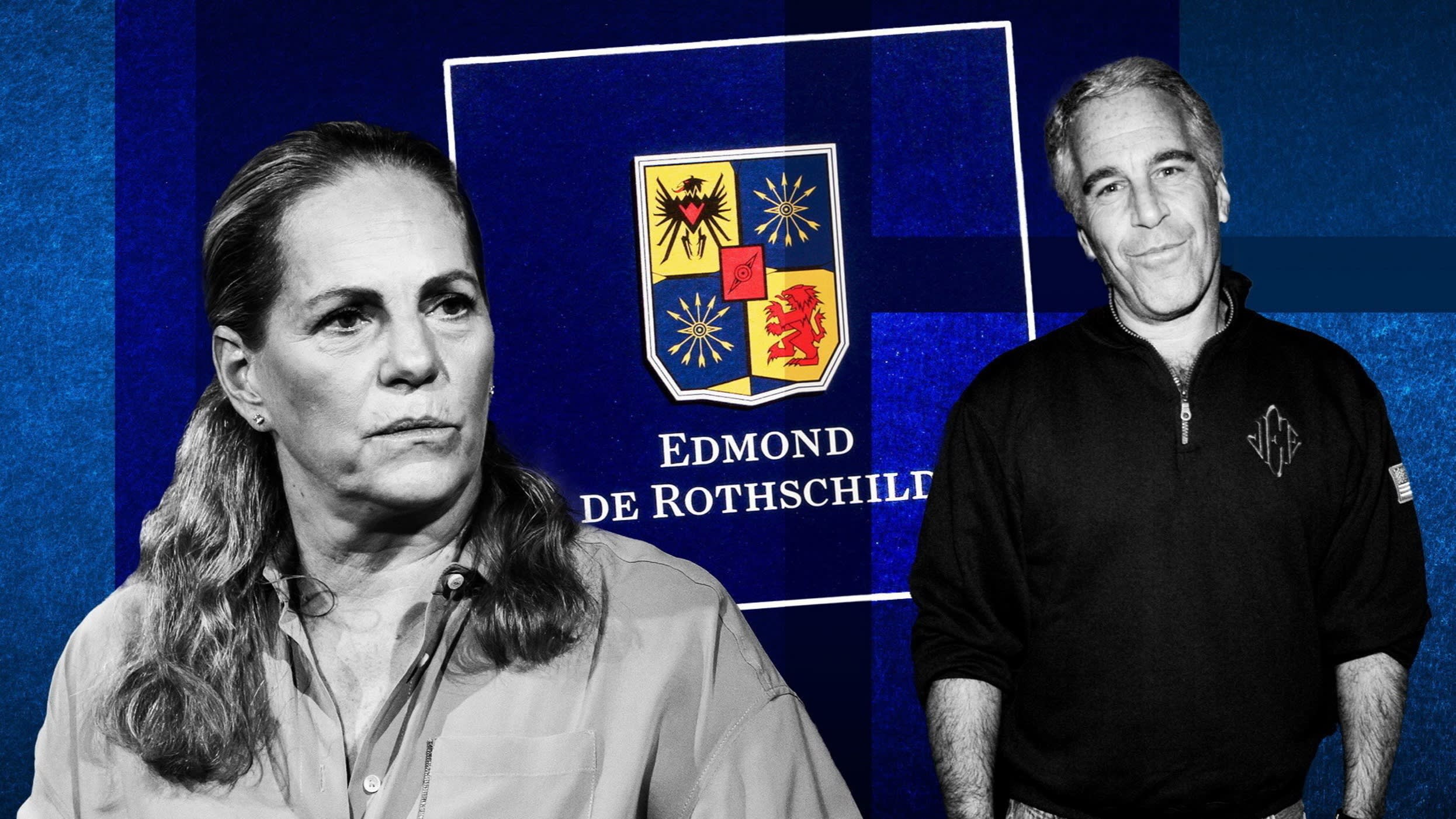
The intersection of the Rothschild legacy and the Epstein saga is not merely a story of social proximity; it is a case study in the architecture of influence within the ultra-high-net-worth (UHNW) ecosystem. At the center of this narrative is the relationship between Epstein and Sir Evelyn de Rothschild, the former chairman of N.M. Rothschild & Sons, and his wife, Lady Lynn Forester de Rothschild. Unlike many of Epstein’s transactional associations with Wall Street hedge fund managers or Silicon Valley entrepreneurs, his link to the Rothschilds represented a bridge to the "Old Money" aristocracy of Europe—a demographic that provides the ultimate social validation for any aspiring power broker.
The genesis of this specific entanglement is often traced back to the late 1990s, a period when Epstein was aggressively expanding his Rolodex of global elites. According to historical accounts and corroborated social records, it was Epstein who facilitated the introduction between Sir Evelyn and Lynn Forester at the 1998 Bilderberg meeting in Scotland. The Bilderberg Group, an annual private conference of approximately 130 political leaders and experts from industry, finance, and academia, is perhaps the world’s most exclusive forum. That Epstein—a man with no clear institutional backing or transparent source of wealth at the time—was positioned to act as a matchmaker within such a sanctum speaks volumes about his role as a social architect.
For the Rothschild family, the fallout from these associations began to crystallize following the 2019 arrest and subsequent death of Epstein in a federal lockup. As investigative journalists and legal teams began unearthing thousands of pages of flight logs, calendar entries, and deposition transcripts, the frequency of contact between the Rothschilds and Epstein became a matter of public record. These documents revealed a pattern of meetings that extended far beyond a singular social introduction. They suggested a level of familiarity that included visits to Epstein’s various residences and, crucially, discussions that touched upon the professional spheres of the Rothschild financial empire.
From an economic and risk-management perspective, the entanglement highlights a significant vulnerability in the world of private banking and wealth management: the reliance on personal networks over institutional due diligence. In the late 20th and early 21st centuries, the "social license" to operate at the highest levels of finance was often granted through shared social circles. Epstein leveraged what sociologists call the "halo effect," where his proximity to figures like the Rothschilds, the British Royal Family, and former American presidents created a self-reinforcing loop of legitimacy. For a firm like Rothschild & Co, which prides itself on the motto Concordia, Integritas, Industria (Harmony, Integrity, Industry), the association with a convicted sex offender represents a catastrophic breach of the "integrity" pillar.
The broader implications for the Rothschild brand are significant in an era increasingly defined by Environmental, Social, and Governance (ESG) criteria. Modern institutional investors and sovereign wealth funds now scrutinize the reputational history of their partners with the same rigor they apply to balance sheets. The revelation that Epstein had multiple meetings with Rothschild-linked individuals—including discussions involving the late Edmond de Rothschild’s private bank and various family offices—creates what analysts call "contagion risk." Even if no illegal activity took place within these meetings, the mere presence of Epstein in the boardroom or the private parlor suggests a failure of the vetting processes that are supposed to protect these historic institutions.
Furthermore, the Epstein-Rothschild connection provides a window into the shifting dynamics of global power brokering. In the 19th century, the Rothschilds were the primary lenders to nation-states, effectively functioning as a private central bank for Europe. In the 21st century, however, power is increasingly decentralized and mediated through shadowy intermediaries like Epstein, who trade in "access" rather than traditional capital. By embedding himself within the Rothschild social fabric, Epstein was not just seeking investment opportunities; he was acquiring the "legacy capital" that only a 200-year-old dynasty can provide.
The financial world’s reaction to these disclosures has been one of quiet recalibration. While the Rothschild family remains a formidable force in global M&A advisory and wealth management—overseeing hundreds of billions of dollars in assets—the Epstein association has emboldened critics who argue that the world of UHNW finance operates with a dangerous lack of transparency. Comparative analysis with other institutions, such as JPMorgan Chase or Deutsche Bank, which have paid hundreds of millions in settlements related to their dealings with Epstein, shows a different kind of impact. While those firms faced direct legal and regulatory penalties, the Rothschilds face a more intangible, yet perhaps more durable, "reputational tax."
The 2023 release of Epstein’s private calendars added further fuel to the fire, revealing scheduled meetings with individuals associated with the Rothschild wealth management apparatus. These entries, which date back long after Epstein’s 2008 conviction in Florida, suggest that the "entanglement" was not a relic of the 1990s but a persistent thread in his network. For the Rothschilds, the challenge of distancing the family name from this history is complicated by the very nature of their business. Unlike a public corporation that can fire a CEO and move on, the Rothschild brand is inextricably tied to the family itself. Every headline that links the name to Epstein serves as a reminder of the risks inherent in the "concierge" culture of elite finance.
Economic historians often point to the Rothschilds’ ability to survive revolutions, world wars, and economic depressions as proof of their institutional resilience. Yet, the Epstein scandal represents a different kind of threat—one born of the information age where secrets are rarely permanent and "guilt by association" is amplified by global media cycles. The family has largely maintained a policy of public silence regarding the specifics of their relationship with Epstein, a strategy consistent with their historical preference for discretion. However, in the court of public opinion and the increasingly transparent world of global finance, silence can often be interpreted as an inability to reconcile the past with the standards of the present.
As the legal battles surrounding Epstein’s estate and his co-conspirators continue to unfold, the shadow cast over the House of Rothschild serves as a cautionary tale for the global financial elite. It underscores the reality that in the modern economy, social capital is as volatile as any market-traded asset. The entanglement between one of history’s most powerful banking dynasties and one of the 21st century’s most notorious figures is more than just a tabloid sensation; it is a profound reflection of the blurred lines between legitimate power and the predatory networks that seek to exploit it. For the Rothschilds, the task ahead is not just to manage their assets, but to safeguard a legacy that has suddenly found itself under the scrutiny of a world no longer willing to look the other way.