


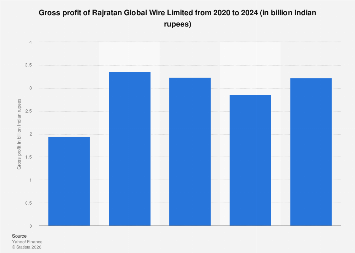
The Indian wire and cable manufacturer, Rajratan Global Wire Limited, is navigating a complex economic landscape, with its financial performance, particularly its gross profit for the fiscal year 2024, serving as a key indicator of its operational health and market resilience. While specific, up-to-the-minute gross profit figures for fiscal year 2024 are typically disclosed through official company filings and financial reports, industry analysis suggests a period of strategic adaptation for the company, influenced by global commodity price volatility, evolving infrastructure demands, and intensified competition within the sector.
Gross profit, a fundamental measure of profitability before accounting for operating expenses, interest, and taxes, offers a crucial insight into a company’s core business efficiency. For Rajratan Global Wire, a significant player in the manufacturing of steel wires, including galvanized wire, bead wire, and patented wires, this metric is intrinsically linked to the cost of raw materials, primarily steel and zinc, and its ability to pass these costs onto its customers through effective pricing strategies. Fluctuations in international steel and zinc prices, driven by factors such as geopolitical tensions, supply chain disruptions, and global industrial demand, directly impact the cost of goods sold (COGS), thereby influencing the gross profit margin.
In recent fiscal periods, the global manufacturing sector has experienced considerable headwinds. The aftermath of the COVID-19 pandemic, coupled with ongoing supply chain bottlenecks and inflationary pressures, has created a challenging environment for many industrial enterprises. For companies like Rajratan Global Wire, managing these external shocks while maintaining profitability requires astute procurement strategies, robust production efficiencies, and a keen understanding of market demand. The company’s diversification into areas such as bead wire for the tire industry and patented wires for construction and infrastructure projects, while adding revenue streams, also introduces distinct market dynamics and cost structures that need careful management.
Analyzing the broader Indian manufacturing sector provides further context. India’s ambition to become a global manufacturing hub, bolstered by initiatives like "Make in India," has spurred significant investment in infrastructure, automotive production, and renewable energy – all key end-user industries for wire and cable products. This sustained demand from domestic sectors offers a degree of insulation from global economic downturns. However, it also means that companies must compete effectively on price and quality to secure these contracts. The growth trajectory of the Indian economy, with its projected GDP growth rates often exceeding those of many developed nations, suggests a positive long-term outlook for industrial manufacturers. For instance, projections by international financial institutions often place India’s GDP growth in the high single digits for the coming years, a powerful tailwind for domestic industrial output.
The competitive landscape for Rajratan Global Wire is multifaceted. Domestically, it contends with a number of established and emerging players, each vying for market share. Internationally, the company faces competition from manufacturers in countries with potentially lower production costs, although India’s strategic geographical location and growing domestic market offer distinct advantages. Companies that can demonstrate superior product quality, reliability of supply, and competitive pricing are best positioned to thrive. Furthermore, the increasing focus on sustainability and environmental compliance within global manufacturing supply chains may also present both challenges and opportunities, requiring investments in greener production processes and materials.
Expert analysis of the wire and cable industry often highlights the importance of technological adoption and innovation. Companies that invest in advanced manufacturing techniques, such as automation and digital transformation, can achieve significant improvements in production efficiency, reduce waste, and enhance product consistency. This, in turn, can lead to lower COGS and a healthier gross profit margin. For Rajratan Global Wire, staying abreast of these technological advancements is crucial to maintaining its competitive edge. The integration of Industry 4.0 principles, for example, could unlock new efficiencies in production planning, inventory management, and quality control, all of which contribute to the bottom line.
The global steel wire market, a primary segment for Rajratan Global Wire, is projected to experience steady growth, driven by increasing demand from the construction, automotive, and manufacturing sectors. Market research reports often forecast a compound annual growth rate (CAGR) in the mid-single digits for this market over the next five to seven years. However, this growth is not without its challenges, primarily the price volatility of raw materials. The price of steel, for instance, can fluctuate by significant percentages within short periods, directly impacting the cost of production for wire manufacturers. Similarly, the price of zinc, a key component in galvanizing, is subject to its own market forces, influenced by mining output, industrial demand, and global inventory levels.
The company’s strategic decisions regarding its product mix also play a vital role in its gross profit. A higher proportion of value-added products, such as patented wires or specialized galvanized wires for demanding applications, typically command higher selling prices and can contribute more significantly to gross profit margins compared to commodity steel wires. Rajratan Global Wire’s ongoing efforts to expand its product portfolio and target niche markets are therefore critical for its long-term profitability. This strategic pivot towards higher-margin products is a common trend among manufacturers seeking to differentiate themselves in increasingly commoditized markets.
Furthermore, global economic trends, such as interest rate hikes implemented by central banks to combat inflation, can indirectly affect companies like Rajratan Global Wire. Higher interest rates can increase the cost of borrowing for capital expenditures and operational financing, potentially squeezing profit margins if not adequately managed. Conversely, a stable or declining interest rate environment can provide a more favorable backdrop for investment and expansion.
In assessing the fiscal year 2024 performance, it is important to consider the company’s operational capacity and utilization rates. High capacity utilization generally leads to lower per-unit production costs due to the spread of fixed costs over a larger volume of output, thus positively impacting gross profit. Conversely, underutilization can lead to higher per-unit costs and diminished profitability. Rajratan Global Wire’s ability to maintain high operational efficiency and adapt to fluctuating demand is therefore a key determinant of its financial success. The company’s investments in expanding its manufacturing facilities and modernizing existing ones are strategic moves aimed at enhancing its production capacity and efficiency, thereby supporting its gross profit objectives.
Ultimately, Rajratan Global Wire’s gross profit for fiscal year 2024, when officially reported, will be a culmination of its ability to manage raw material costs, optimize production processes, respond to market demand, and navigate the broader economic environment. Its strategic positioning within India’s growing industrial ecosystem, coupled with its product diversification efforts, suggests a company poised for resilience, though the precise financial outcomes will underscore the effectiveness of its operational and strategic execution in a dynamic global marketplace. The ongoing global economic recalibration, with its attendant uncertainties, will continue to test the mettle of manufacturers worldwide, making detailed financial analysis and strategic foresight indispensable for sustained success.