


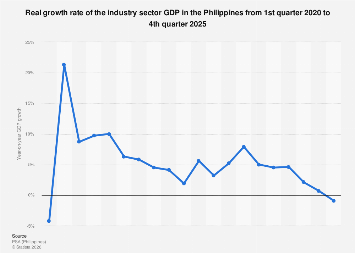
The Philippine industrial sector is anticipated to experience a contraction in real terms during the fourth quarter of 2025, marking a notable shift from periods of growth. Data projections indicate a decline of an unspecified percentage compared to the same period in the preceding year. This forecast suggests a challenging environment for the nation’s core production and manufacturing activities as the year concludes.
Historically, the industry sector, which encompasses mining and quarrying, manufacturing, electricity, steam, water, and waste management, along with construction, has demonstrated volatility. The sector registered its most robust growth phase in the second quarter of 2020, a period that followed an initial contraction in the first quarter of that year. This earlier dip and subsequent rebound underscored the sector’s sensitivity to economic shocks and its capacity for recovery. However, the current projections for late 2025 point towards a different trajectory, signaling potential headwinds that could impact employment, investment, and overall economic output.
Understanding the nuances of this projected contraction requires a broader economic context. The Philippines’ economy, like many in Southeast Asia, is heavily reliant on a mix of domestic consumption, remittances, services, and increasingly, its industrial base. The performance of the industry sector is a critical barometer of the nation’s manufacturing competitiveness, infrastructure development, and its ability to participate effectively in global supply chains. A sustained downturn in this segment could have ripple effects across the entire economy, potentially dampening consumer spending due to job insecurity and reduced income, and discouraging foreign direct investment.
Several factors could be contributing to the anticipated slowdown. Global economic uncertainties, such as persistent inflation, rising interest rates in major economies, and geopolitical tensions, can significantly dampen demand for manufactured goods. For an export-oriented economy like the Philippines, a slowdown in key international markets translates directly into reduced orders for its products. Domestically, challenges such as rising input costs for raw materials and energy, logistical bottlenecks, and regulatory hurdles could also be weighing on industrial output. The construction sub-sector, a key component of the industry segment, might also be affected by changes in government spending priorities, private sector investment appetite, and the availability of financing.
To gauge the potential severity and duration of this projected contraction, it is essential to consider comparative data and expert analysis. Many emerging economies are currently navigating similar economic crosscurrents. For instance, neighboring countries in ASEAN, while exhibiting varied growth patterns, are also grappling with the impact of global demand shifts and inflationary pressures. Analysts suggest that sectors heavily reliant on discretionary spending, both domestically and internationally, are most vulnerable. The Philippine industrial sector, particularly segments focused on electronics, automotive components, and processed goods for export, could be directly exposed to these global demand fluctuations.
Furthermore, the forecast for the fourth quarter of 2025 needs to be viewed within the framework of the country’s medium-term economic development plans. The Philippine government has consistently emphasized the importance of industrialization and value-added manufacturing as pillars of sustainable economic growth. Policies aimed at attracting foreign investment in manufacturing, developing special economic zones, and enhancing infrastructure are designed to bolster this sector. However, the effectiveness of these initiatives can be significantly influenced by the prevailing macroeconomic environment. A contraction in the industrial sector could necessitate a reassessment of these strategies and potentially lead to policy adjustments to mitigate the negative impacts.
The reliance on specific sub-sectors within the industry segment also warrants attention. For example, if manufacturing, which often employs a significant portion of the industrial workforce, is the primary driver of the projected decline, the social implications could be more pronounced. This could manifest as increased unemployment rates, a need for reskilling and upskilling initiatives for affected workers, and a potential strain on social safety nets. Conversely, if the contraction is more evenly distributed across sub-sectors, the impact might be more diffused but still significant in terms of overall economic contribution.
Looking ahead, the period leading up to and beyond the fourth quarter of 2025 will be crucial for monitoring the Philippine industrial sector. Key indicators to watch will include manufacturing output indices, construction permits and activity, export orders for manufactured goods, and investment inflows into the industrial sector. Economic forecasters will be closely analyzing inflation trends, interest rate movements in major trading partners, and the trajectory of global commodity prices. The government’s policy responses, including fiscal stimulus measures, targeted support for struggling industries, and efforts to diversify export markets, will play a vital role in shaping the sector’s recovery and future growth prospects.
The projected contraction in the Philippine industrial sector in late 2025 serves as a reminder of the intricate linkages between national economies and the global economic landscape. While specific data points on the magnitude of the contraction were not fully detailed, the indication of a downturn underscores the need for vigilant economic management, strategic industrial policy, and robust contingency planning to navigate potential challenges and foster a resilient and dynamic industrial base for the Philippines. The ability of the sector to rebound and contribute to sustained economic prosperity will depend on a confluence of global economic stability, effective domestic policy interventions, and the adaptability of Philippine industries to evolving market conditions.