


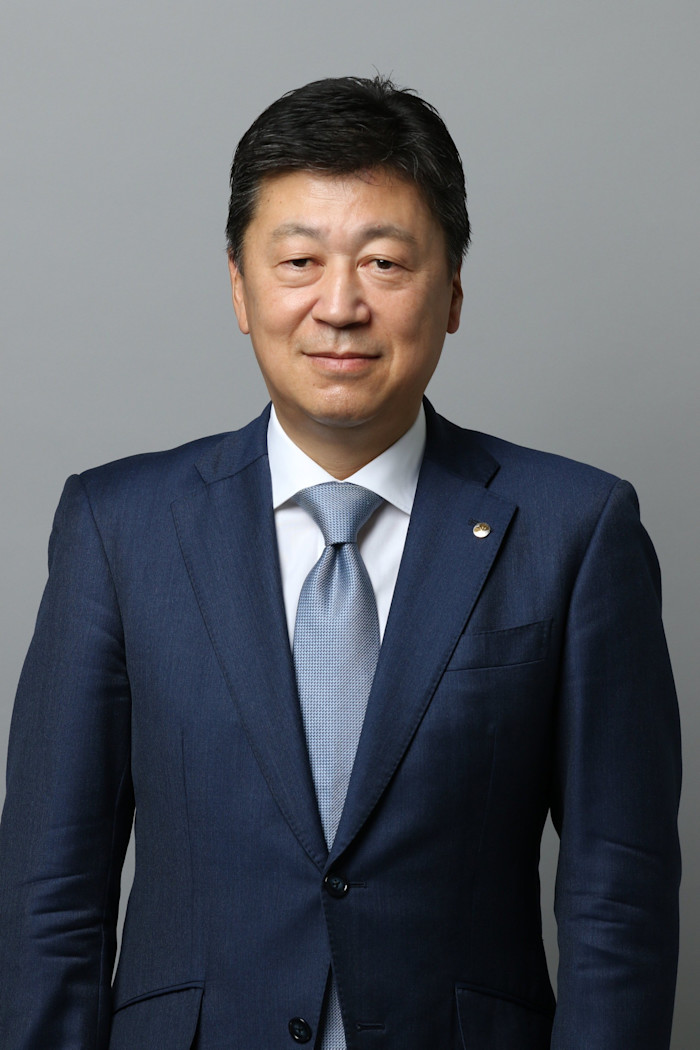
The leadership transition at Nikkei Inc., the cornerstone of Japanese financial journalism and the parent company of the Financial Times, marks a pivotal moment in the 150-year history of the organization. Tsuyoshi Hasebe, who has served as the company’s president since 2021, is set to ascend to the roles of chair and group chief executive. This strategic reshuffle comes at a time when the global media landscape is being fundamentally reshaped by the dual forces of generative artificial intelligence and a volatile geopolitical environment. As Hasebe takes the helm of the employee-owned conglomerate, the move signals a reinforced commitment to digital transformation and an aggressive pursuit of international growth, even as the company navigates the complex demographic challenges of its domestic market.
Accompanying Hasebe in this new leadership era is Nobuhisa Iida, who will succeed him as president and chief executive. Iida, a veteran with nearly four decades of experience within the Nikkei ecosystem, will take charge of the parent company’s day-to-day operations. His appointment is particularly noteworthy given his recent tenure as the head of Nikkei’s digital business and his leadership of the company’s information services and index division. This background suggests that Nikkei is prioritizing a data-centric future, leveraging its status as the provider of the Nikkei 225—the primary barometer for the Japanese equity market—to diversify its revenue streams beyond traditional advertising and subscriptions.
The outgoing chair, Naotoshi Okada, leaves behind a transformative legacy. Okada was the primary architect of Nikkei’s £844 million acquisition of the Financial Times in 2015, a deal that stunned the global media industry and established the Japanese firm as a heavyweight on the international stage. By pivoting toward a corporate advisory role, Okada makes way for a leadership team that must now manage the integration of these two distinct journalistic cultures while addressing the existential threats posed by the rapid evolution of information consumption. The 2015 acquisition was initially viewed with skepticism by some analysts who questioned the synergy between a traditional Japanese publisher and a British institution; however, the partnership has proven resilient, providing Nikkei with a blueprint for digital paywall success that it has since replicated at home.
The financial health of the Nikkei Group provides a robust foundation for this leadership change. Since Hasebe assumed the presidency in 2021, the company has seen a 16 percent increase in sales, culminating in a net profit of ¥8.3 billion ($53 million) for the 2024 fiscal year. This growth is particularly impressive when contrasted with the broader struggles of the print media industry globally. While many legacy publishers have faced declining revenues and mass layoffs, Nikkei’s ability to grow its top line reflects a successful pivot toward digital-first strategies. By the end of 2024, the digital edition of the Nikkei reached a significant milestone, surpassing one million paid subscribers. This achievement places Nikkei in an elite category of global publishers, alongside the New York Times and the Wall Street Journal, that have successfully convinced readers to pay for high-quality, specialized business intelligence.
However, the road ahead is fraught with structural challenges. Japan’s domestic market is characterized by a rapidly aging and shrinking population, which poses a natural ceiling on the growth of traditional media consumption. To counter this, Hasebe has been a vocal advocate for "de-Japanization" in a strategic sense—not by abandoning the company’s roots, but by ensuring its products and perspectives are indispensable to a global audience. This internationalization strategy is a survival mechanism as much as an expansionist one. By owning the Financial Times, Nikkei has secured a platform that reaches the corridors of power in London, New York, and Brussels, providing a hedge against the demographic headwinds facing the Japanese archipelago.

The rise of generative AI represents perhaps the most significant technological shift since the advent of the internet itself. For a news organization, AI offers both a tool for unprecedented efficiency and a threat to the integrity of original reporting. Iida’s stance on this issue is one of cautious optimism. He has stated that the company will "boldly embrace" the use of generative AI to enhance its information services and editorial workflows, while maintaining a strict firewall around the principle that "responsible journalism is driven by people." This reflects a broader industry trend where publishers are experimenting with AI for data analysis, translation, and administrative tasks, while simultaneously engaging in legal and ethical debates regarding the use of their copyrighted content to train large language models.
The economic impact of Nikkei’s leadership decisions extends far beyond the media sector. As the owner of the Nikkei 225 index, the company plays a critical role in the global financial infrastructure. The reliability and prestige of the Nikkei brand are intertwined with the perceived health of the Japanese economy. Under Hasebe’s guidance, the group has sought to modernize its index business, introducing new thematic indices that reflect the changing nature of the global economy, such as those focused on ESG (Environmental, Social, and Governance) criteria and technological innovation. Iida’s experience in this specific division suggests that Nikkei will continue to treat financial data as a core growth pillar, potentially rivaling Bloomberg or Reuters in the provision of specialized market intelligence.
Geopolitically, the new leadership takes over at a time when the "global order founded on democracy and freedom," as Hasebe described it, is under significant strain. The rise of misinformation, the polarization of political discourse, and the increasing restrictions on press freedom in various parts of the world have elevated the role of trusted news organizations. Hasebe’s commitment to safeguarding the "value of Nikkei" as a defender of these democratic principles is a clear signal to both readers and stakeholders. In an era of "fake news" and algorithmic echo chambers, the institutional credibility of a 150-year-old publisher becomes its most valuable asset.
Comparatively, Nikkei’s employee-owned structure offers it a unique advantage over its publicly traded peers. Unlike companies beholden to quarterly earnings calls and the whims of activist investors, Nikkei can afford to take a long-term view of its strategic investments. This autonomy was instrumental in the FT acquisition and will likely be crucial as the company navigates the capital-intensive requirements of AI integration. While competitors may be forced to cut editorial budgets to satisfy shareholder demands, Nikkei’s reinvestment of profits into its journalistic core has allowed it to maintain a level of quality that commands premium subscription prices.
As the company prepares for its 150th anniversary, the appointments of Hasebe and Iida—pending formal board approval on March 26—represent a bridge between tradition and the future. The challenges are immense: the transition from a print-centric past to a digital-only future is not yet complete, and the disruptive potential of AI is only beginning to be understood. Yet, with a record of financial stability, a successful international acquisition under its belt, and a clear-eyed view of the demographic realities of the 21st century, Nikkei appears positioned to maintain its status as a titan of global business media.
The leadership change is more than a routine corporate shuffle; it is a declaration of intent. By placing a digital pioneer like Iida in the presidency and a strategic visionary like Hasebe in the chair’s seat, Nikkei is signaling to the market that it will not be a passive observer of the digital revolution. Instead, it aims to be a primary architect of the new media landscape, balancing the timeless necessity of human-led investigative journalism with the limitless possibilities of the technological age. The success of this transition will likely determine whether Nikkei remains a primarily Japanese institution or fully realizes its ambition to be the world’s preeminent source of economic and financial truth.