


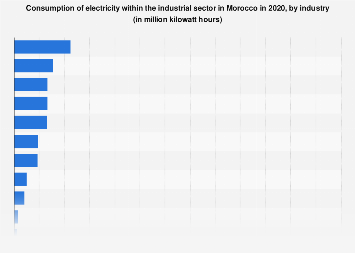
Morocco’s industrial sector’s electricity consumption reached approximately 14.5 billion kilowatt hours in 2020, underscoring the nation’s growing reliance on electrical power to fuel its economic activities. This figure highlights the critical role of energy in supporting the Kingdom’s manufacturing and production capabilities, a key pillar of its economic development strategy. Within this broad industrial landscape, certain sub-sectors demonstrate a significantly higher appetite for electricity, pointing to variations in technological intensity and operational scale.
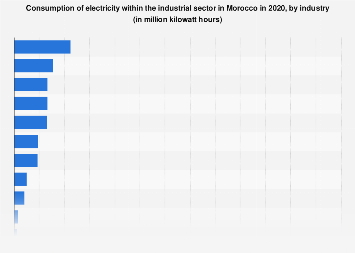
The electricity and water industry, a foundational element of national infrastructure, emerged as the most significant consumer of electrical energy within the secondary sector. This segment alone accounted for a substantial portion of the total industrial electricity usage, estimated at around 5.5 billion kilowatt hours. Such high demand is intrinsically linked to the energy-intensive processes involved in water treatment, desalination, and power generation itself, which are vital for both domestic and industrial needs across Morocco. The continuous operation of these facilities, often 24/7, necessitates a consistent and robust supply of electricity, making this sector a cornerstone of national energy consumption patterns.
Following closely, the building industry, encompassing construction and related activities, registered a considerable demand for electrical energy, consuming roughly 2.5 billion kilowatt hours. This figure reflects the ongoing urban development, infrastructure projects, and the production of building materials that are prevalent in Morocco. The mechanization of construction sites, the operation of machinery, and the manufacturing of cement, brick, and other essential components all contribute to this significant energy footprint. As Morocco continues its ambitious infrastructure development agenda, including new cities, transportation networks, and housing projects, the electricity demand from the building sector is expected to remain a crucial component of the nation’s overall industrial energy profile.
While the provided data offers a snapshot of consumption in 2020, a deeper dive into the specifics of industrial energy use in Morocco reveals a complex interplay of factors. The industrial sector’s total electricity consumption is a vital indicator of economic output and diversification. According to broader economic analyses, Morocco has been actively working to modernize its industrial base, moving towards higher value-added manufacturing and the development of key sectors such as automotive, aerospace, textiles, and phosphates processing. These industries, by their nature, often require substantial amounts of electricity to power sophisticated machinery, maintain precise temperature controls, and drive complex production lines.
The statistics, though detailed for specific sub-sectors, do not fully capture the nuances of electricity consumption across the entire industrial spectrum. For instance, the phosphates industry, a significant contributor to Morocco’s economy, is known to be energy-intensive, particularly in its processing and fertilizer production phases. Similarly, the burgeoning automotive sector, with its assembly plants and component manufacturers, relies heavily on electricity for various manufacturing processes, including stamping, welding, and painting. The textile industry, while perhaps less energy-intensive per unit of output than heavy manufacturing, still represents a considerable aggregate demand due to the sheer volume of production and the energy required for machinery operation and climate control.
The figures for 2020 should also be viewed within the context of Morocco’s national energy policies and its ambitious renewable energy targets. The Kingdom has been a frontrunner in Africa in investing in solar and wind power, aiming to significantly increase the share of renewables in its energy mix. This strategic shift towards cleaner energy sources has implications not only for environmental sustainability but also for the cost and availability of electricity for industrial consumers. As renewable energy projects mature and contribute a larger proportion to the national grid, industrial sectors may benefit from more stable and potentially lower energy costs, further incentivizing production and expansion.
Global comparisons can offer further perspective on Morocco’s industrial electricity consumption. Developed economies often exhibit higher per capita industrial electricity consumption due to advanced manufacturing techniques and a higher proportion of heavy industry. However, emerging economies like Morocco are experiencing rapid growth, and their industrial electricity demand is escalating as they industrialize. The challenge for Morocco, as for many nations, is to balance this increasing demand with the imperative of sustainable energy production and consumption. The country’s focus on renewable energy is a testament to this understanding, aiming to decouple economic growth from traditional fossil fuel reliance.
The economic impact of industrial electricity consumption is multifaceted. It directly influences the operational costs for businesses, affecting their competitiveness both domestically and internationally. High energy costs can deter investment, while reliable and affordable power can attract foreign direct investment and foster domestic entrepreneurship. Furthermore, the energy sector itself is a significant employer and economic driver. Investments in power generation, transmission, and distribution create jobs and stimulate related industries. For Morocco, optimizing its industrial electricity supply chain, enhancing energy efficiency across sectors, and continuing its transition to renewables are crucial for sustained economic growth and industrial competitiveness.
The specific data points, even with masked values, suggest a hierarchical pattern of electricity demand among industrial sub-sectors. The significant consumption by the electricity and water industry and the building industry indicates their foundational and expansionary roles in the Moroccan economy. Understanding these specific demands allows policymakers and industry stakeholders to better target investments, implement energy efficiency programs, and develop infrastructure to meet future needs. As Morocco continues its trajectory of economic development, the management and evolution of its industrial electricity consumption will remain a critical determinant of its success. Future analyses will likely focus on the trends in these consumption patterns, the impact of technological advancements, and the effectiveness of national energy policies in shaping a sustainable and robust industrial future for the Kingdom.