

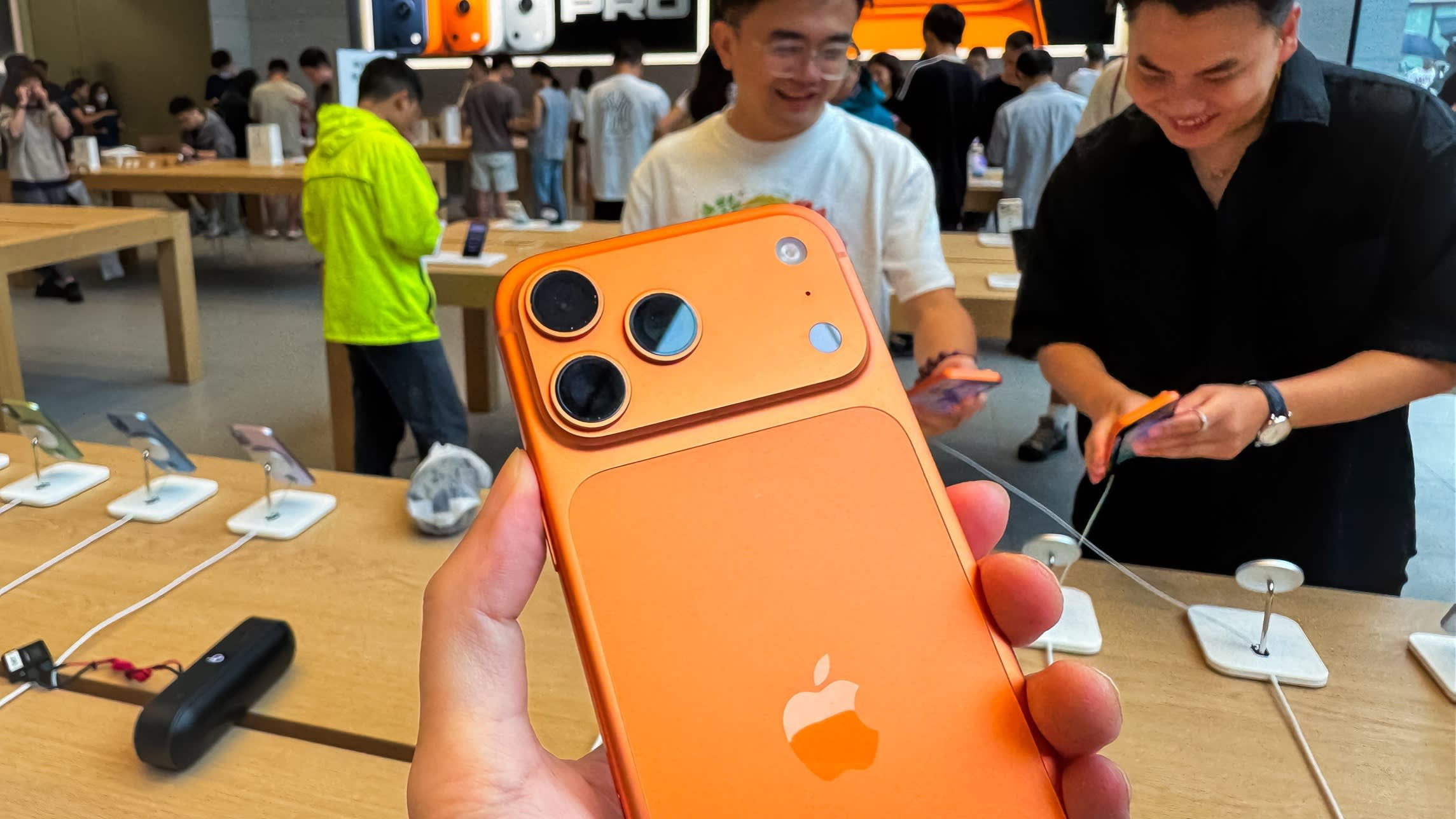
The vibrant hue of a premium leather goods brand has become an unlikely catalyst for a technological resurgence in the world’s most competitive smartphone market. As the latest iterations of the iPhone began appearing in the hands of consumers across Beijing, Shanghai, and Shenzhen, a specific shade of "Desert Titanium"—frequently likened by local social media influencers to the iconic orange of the French luxury house Hermès—signaled a pivotal shift in consumer sentiment. This aesthetic pivot, combined with strategic pricing and a deepening of the brand’s luxury positioning, has allowed Apple to orchestrate a significant comeback in China, a territory where it had recently faced its most daunting challenges in a decade.
For several quarters, the narrative surrounding Apple’s performance in the Greater China region was one of managed decline. The Cupertino-based giant faced a perfect storm of headwinds: the meteoric rise of a resurgent Huawei, a cooling domestic economy, and a growing "buy local" sentiment fueled by geopolitical tensions. However, recent shipment data and retail performance metrics suggest that the tide is turning. By leaning into the "premiumization" of its hardware and capitalizing on the psychological link between high technology and high fashion, Apple is successfully defending its moat against domestic rivals that had briefly threatened to eclipse it in the high-end segment.
The significance of the Chinese market to Apple’s global balance sheet cannot be overstated. Accounting for roughly 20% of the company’s total revenue, China serves as both a critical manufacturing hub and a massive consumer base. When Apple’s market share dipped earlier this year, slipping out of the top five vendors in some monthly tracking reports, industry analysts expressed concern that the brand was losing its "aspirational" edge. The resurgence of Huawei’s Mate series, equipped with sophisticated domestically produced chips, had captured the imagination of the Chinese middle class, positioning the domestic brand as a symbol of national technological self-reliance.
To counter this, Apple’s strategy has evolved beyond mere iterative hardware updates. The company has doubled down on the iPhone as a luxury accessory. The "Hermès orange" phenomenon—referring to the warm, sophisticated glow of the new titanium finishes—taps into a specific cultural zeitgeist in China where the smartphone is the most visible signifier of social status. In Tier 1 cities, where luxury spending remains relatively resilient despite broader economic cooling, the new aesthetic has proven to be a major draw. Market analysts note that for many Chinese consumers, the choice of a smartphone is less about technical specifications and more about the "hand-feel" and the visual statement the device makes in professional and social settings.
Beyond the aesthetics, the economic data supports a narrative of recovery. Early sales figures for the latest iPhone cycle in China showed a double-digit percentage increase compared to the previous year’s launch window. This growth is particularly notable given the broader stagnation in the global smartphone market. Data from regional market intelligence firms indicates that Apple has regained its position as the top-selling brand in the premium segment (devices priced above $600 USD), effectively stemming the outflow of users to Huawei, Xiaomi, and Vivo. This recovery has been bolstered by aggressive promotional campaigns on major e-commerce platforms like Tmall and JD.com, where Apple has occasionally authorized rare price cuts to maintain volume during key shopping festivals.
However, the competition remains fierce. The Chinese smartphone landscape is characterized by a level of innovation and rapid product cycles that often outpace the West. Local manufacturers have integrated sophisticated artificial intelligence features and foldable screen technology at a breakneck pace. Huawei, in particular, continues to leverage its "HarmonyOS" ecosystem to create a seamless experience across devices, appealing to a sense of national pride. To remain competitive, Apple has had to navigate a complex regulatory environment, particularly regarding its "Apple Intelligence" suite. The delay in rolling out its full AI capabilities in the Chinese language—due to stringent local data regulations and the need for a domestic AI partner—remains a potential vulnerability.
The geopolitical dimension adds another layer of complexity to Apple’s Chinese operations. As the U.S. and China continue to navigate trade frictions and technological decoupling, Apple has had to perform a delicate balancing act. On one hand, it is diversifying its supply chain by expanding production in India and Vietnam; on the other, it is deepening its research and development footprint within China. Recent visits by senior Apple executives to Chinese government officials and the opening of flagship retail stores in high-profile locations like Shanghai’s Jing’an district underscore the company’s long-term commitment to the region.
From an economic perspective, the "iPhone comeback" serves as a barometer for Chinese consumer confidence. While the real estate sector has struggled and traditional luxury sales have seen some softening, the "affordable luxury" of a high-end smartphone continues to attract spend. This suggests that while consumers are becoming more discerning, they are still willing to pay a premium for brands that offer a combination of perceived quality, ecosystem stability, and status. The success of the "Hermès-adjacent" color palette demonstrates that Apple’s marketing department has a profound understanding of these local nuances.
Expert insights suggest that Apple’s resilience in China is also a result of its superior retention rates. Once a consumer is embedded in the iOS ecosystem—utilizing services like iCloud, Apple Music, and the App Store—the friction of switching to an Android-based system remains high. In China, where WeChat serves as the primary operating layer for almost all digital life, the hardware becomes the vessel for this essential software. Apple’s ability to ensure that the iPhone remains the most "prestigious" vessel for WeChat is a core component of its strategy.
Global comparisons further highlight the uniqueness of the Chinese market. In North America and Europe, iPhone upgrades are often driven by carrier subsidies and technical obsolescence. In China, the upgrade cycle is more frequently driven by fashion and the desire for the "latest and greatest" visual design. This is why a change in color or material, such as the shift from stainless steel to titanium, has a disproportionately large impact on sales volume in the Chinese market compared to other regions.
Looking ahead, the sustainability of this comeback will depend on several factors. First is the eventual integration of localized AI features. If Apple can successfully partner with a Chinese AI giant—such as Baidu or Alibaba—to provide a localized version of its "Intelligence" features that complies with Beijing’s regulations, it could unlock a new wave of upgrades. Second is the company’s ability to manage its price architecture. As domestic rivals produce increasingly capable "flagship killers" at lower price points, Apple must ensure that the perceived value of the iPhone justifies its premium.
The broader economic impact of Apple’s performance in China extends to the global tech supply chain. Thousands of Chinese suppliers, from lens manufacturers to assembly partners, rely on the volume generated by a successful iPhone cycle. A strong performance by Apple in China provides a stabilizing force for the regional manufacturing economy, even as the company explores "China Plus One" strategies for its global logistics.
In summary, the resurgence of the iPhone in China is a testament to the power of brand prestige and the strategic use of luxury aesthetics. By capturing the "Hermès orange" moment, Apple has proved that it can still captivate the world’s most demanding consumers. While challenges regarding AI regulation and domestic competition persist, the current momentum suggests that Apple has successfully navigated its most difficult period in the region. The smartphone is no longer just a piece of technology in the Chinese market; it is a statement of identity, and for now, Apple remains the most sought-after author of that statement. As the company prepares for the next fiscal year, its ability to blend Silicon Valley innovation with a Parisian sense of style may well be the blueprint for its continued success in the East.