


The resignation of Peter Mandelson from the House of Lords marks the end of a sixteen-year tenure in the upper chamber of the British Parliament, but more significantly, it heralds a calculated pivot toward a new chapter in the United Kingdom’s international statecraft. As one of the primary architects of the "New Labour" movement that dominated British politics at the turn of the millennium, Mandelson’s departure is being viewed by Westminster insiders and global financial markets not as a retirement, but as a strategic clearance of the decks. The move comes at a critical juncture for the incumbent Labour administration, which is currently seeking to redefine the UK’s post-Brexit identity through a blend of "securonomics" and a revitalized "Special Relationship" with the United States.
While Mandelson has served in various capacities—most notably as the Business Secretary and the European Commissioner for Trade—his decision to relinquish his life peerage is widely interpreted as the final formal step required to assume a major diplomatic or public-sector role. Speculation has reached a fever pitch regarding his potential appointment as the British Ambassador to the United States. In the protocols of British governance, active members of the House of Lords are generally restricted from holding certain high-level diplomatic posts that require strict political neutrality and a full-time commitment to the executive branch’s foreign policy objectives. By stepping down, Mandelson has effectively removed the primary legislative hurdle standing between him and a posting in Washington D.C.
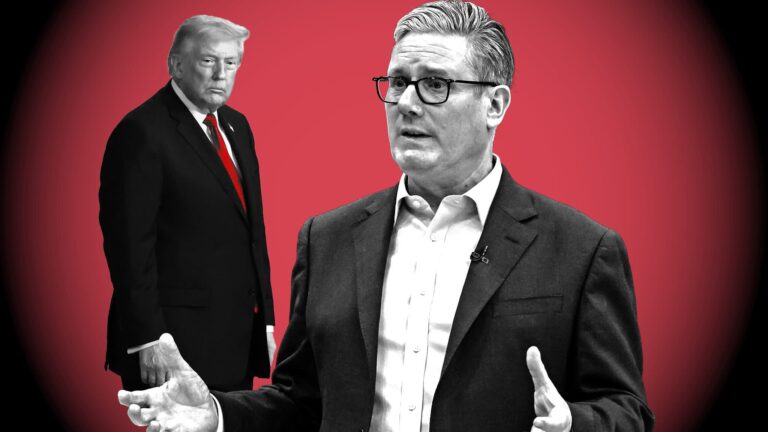
The timing of this resignation is particularly salient given the volatility of the global macroeconomic environment. The United Kingdom is currently grappling with stagnant productivity growth, a complex trade relationship with the European Union, and the looming shadow of protectionist sentiment in North America. For Prime Minister Keir Starmer, the appointment of a political heavyweight like Mandelson to Washington would represent a "heavy artillery" approach to diplomacy. Mandelson possesses a rare combination of deep-rooted connections within the Democratic Party establishment and a pragmatic, business-first reputation that could appeal to the more transactional elements of the American political spectrum.
From an economic perspective, the stakes of the UK-US relationship have never been higher. The United States remains the UK’s largest single-country trading partner, with total trade in goods and services reaching approximately £310 billion in the four quarters to the end of Q1 2024. However, the prospect of a comprehensive Free Trade Agreement (FTA), once touted as the "pot of gold" at the end of the Brexit rainbow, has remained elusive. Under the Biden administration, the U.S. moved away from traditional market-access deals in favor of the Atlantic Declaration, which focuses on critical and emerging technologies and supply chain resilience. Should Mandelson take up a role in Washington, his primary mandate would likely involve navigating the Inflation Reduction Act’s (IRA) subsidies and ensuring that British firms are not collateral damage in the escalating trade tensions between Washington and Beijing.
Mandelson’s background as an EU Trade Commissioner provides him with a level of technical expertise that few career diplomats can match. During his time in Brussels, he managed complex disputes over aircraft subsidies (the long-running Boeing-Airbus saga) and navigated the collapse of the Doha Round of World Trade Organization talks. This experience in "economic statecraft" is precisely what the current British government requires as it attempts to position the UK as a "bridge" between the regulatory environment of the EU and the high-growth, high-tech economy of the U.S.
However, Mandelson’s exit from the Lords also brings his private sector involvements into sharper focus. As the co-founder and chairman of Global Counsel, a strategic advisory firm with offices in London, Brussels, Washington, and Doha, Mandelson has spent the last decade advising multinational corporations on navigating political risk and regulatory shifts. Critics have often pointed to the "revolving door" between his advisory work and his political influence as a point of contention. A move into a formal diplomatic role would necessitate a complete severance of these commercial ties to avoid unprecedented conflicts of interest, especially given Global Counsel’s roster of clients in the technology, energy, and financial services sectors.
The internal dynamics of the Labour Party also play a role in this transition. Since Keir Starmer took the leadership, he has sought to distance the party from the radicalism of the Jeremy Corbyn era, pivoting back toward the pro-business, centrist pragmatism that Mandelson helped define in the 1990s. Mandelson’s resignation from the Lords suggests that he is fully integrated into the "Starmer Project," serving as an elder statesman who can provide the institutional memory and international gravitas that a relatively green cabinet might lack. His departure from the upper house allows him to operate with a degree of executive flexibility that a peerage, with its attendant voting responsibilities and parliamentary scrutiny, does not permit.
Comparatively, the move mirrors the actions of other international political figures who have transitioned from legislative bodies to executive diplomatic roles to meet the demands of a "polycrisis" world. In an era where trade policy is increasingly indistinguishable from national security policy, the traditional model of the "career diplomat" is being augmented by the "political envoy"—individuals with the personal telephone numbers of CEOs and heads of state.
The economic impact of a successful Mandelson-led diplomatic offensive in Washington could be measured in billions of pounds of inward investment. The UK is currently competing for capital in a world where the U.S. and the EU are engaged in a subsidy race for green energy and semiconductor manufacturing. The British government’s "Industrial Strategy," recently unveiled, relies heavily on attracting foreign direct investment (FDI) to modernize the UK’s aging infrastructure and power the transition to Net Zero. Mandelson’s role would be to convince American institutional investors and tech giants that the UK offers a stable, rule-of-law environment that serves as a more efficient entry point to the European market than its continental rivals.
Furthermore, the geopolitical context cannot be ignored. With the ongoing conflict in Ukraine and the shifting security architecture in the Indo-Pacific, the UK-US intelligence and defense partnership remains the bedrock of British foreign policy. Mandelson’s long-standing relationship with key figures in the U.S. foreign policy establishment—dating back to the Clinton and Obama administrations—would be an asset in maintaining a unified front on issues ranging from NATO funding to the regulation of Artificial Intelligence.
The vacancy created by Mandelson’s resignation also opens a broader conversation about the reform of the House of Lords itself. The Labour government has pledged to modernize the chamber, potentially removing the remaining hereditary peers and introducing a mandatory retirement age. Mandelson, by choosing to exit on his own terms to pursue an executive mission, perhaps signals a broader shift in how the party views the upper house: not as a permanent retirement home for political veterans, but as a fluid pool of talent that can be deployed where the national interest requires it most.
As the dust settles on this announcement, the focus now shifts to the formal appointment process. If Mandelson is indeed headed for the British Embassy on Massachusetts Avenue, he will face a Washington that is more polarized and protectionist than the one he dealt with during the Blair years. His success will depend on his ability to translate his "Prince of Darkness" reputation for strategic cunning into a "Prince of Diplomacy" era, where the currency of success is not just political survival, but the securing of the UK’s economic future in a fragmented global order. For now, the resignation stands as a clear signal of intent: the British government is moving its most experienced pieces across the global chessboard, preparing for a period of intense negotiation that will define the country’s prosperity for a generation.