


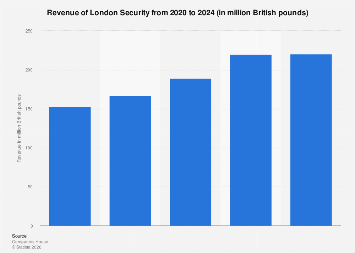
The security industry in London is on a trajectory for significant expansion throughout 2024, fueled by a dynamic interplay of escalating global threats, rapid technological innovation, and an increasing demand for comprehensive protection solutions across both public and private sectors. This burgeoning market is not merely a reflection of heightened security concerns but also a testament to the city’s role as a global financial hub and a magnet for international business, where robust security infrastructure is paramount. Projections indicate a substantial uptick in revenue, underscoring the critical importance of safeguarding assets, data, and personnel in an increasingly complex and interconnected world.
The demand for advanced security measures is being shaped by a confluence of factors. Geopolitical instability, the persistent threat of cyberattacks, and the rise of sophisticated criminal enterprises necessitate continuous investment in state-of-the-art security technologies and services. London, as a prime target for both physical and digital threats, stands at the forefront of this evolving security landscape. Businesses and governmental bodies are increasingly allocating larger budgets towards security solutions, ranging from physical surveillance and access control systems to cutting-edge cybersecurity platforms and threat intelligence services. This heightened awareness translates directly into market growth, with security providers experiencing a surge in demand for their expertise and offerings.
Market research and analysis firms project a strong performance for the London security sector in 2024. While precise figures are often proprietary and subject to detailed subscription models, industry indicators consistently point towards a substantial increase in market value. This growth is not uniform across all segments but is particularly pronounced in areas such as cybersecurity, where the volume and sophistication of cyber threats continue to escalate at an alarming pace. The financial services sector, a cornerstone of London’s economy, is a major driver of this demand, investing heavily in protecting sensitive data and maintaining operational continuity against sophisticated cyber intrusions.
The cybersecurity segment, in particular, is experiencing exponential growth. With the proliferation of cloud computing, the Internet of Things (IoT), and remote workforces, the attack surface for malicious actors has expanded dramatically. Consequently, businesses are seeking multi-layered security strategies that encompass threat detection, prevention, response, and recovery. This includes investments in areas such as artificial intelligence (AI) and machine learning (ML) powered security analytics, advanced endpoint protection, robust data encryption, and comprehensive identity and access management solutions. The increasing frequency of high-profile data breaches and ransomware attacks serves as a constant reminder of the vulnerabilities that organizations face, compelling them to prioritize and enhance their digital defenses.
Beyond the digital realm, the physical security market in London is also witnessing a robust expansion. This encompasses a wide array of solutions, including advanced video surveillance systems with AI-powered analytics for anomaly detection, sophisticated access control technologies, biometric authentication, and integrated security management platforms. The demand for these services is driven by the need to secure critical infrastructure, corporate offices, retail spaces, and public areas. Moreover, the increasing adoption of smart city initiatives in London is creating new opportunities for integrated physical security solutions that enhance public safety and urban resilience.
The competitive landscape within London’s security industry is characterized by a mix of established global players and agile, specialized local firms. This dynamic environment fosters innovation and drives service quality as companies vie for market share. Larger corporations often focus on providing comprehensive, end-to-end security solutions, leveraging economies of scale and broad technological capabilities. Meanwhile, smaller, niche providers excel in offering specialized expertise in areas such as penetration testing, incident response, or specific industry compliance requirements. This healthy competition ultimately benefits clients by providing a wider range of tailored and effective security solutions.
Economic impact analysis reveals that the growth of London’s security sector has significant ripple effects across the broader economy. The industry is a substantial employer, creating high-skilled jobs in areas such as cybersecurity analysis, security engineering, risk management, and technical support. Furthermore, the increased security assurance provided by these services enables businesses to operate more confidently, fostering investment and economic activity. A secure business environment is fundamental to attracting and retaining both domestic and international investment, as it signals stability and reliability. The continuous innovation within the security sector also contributes to the development of new technologies and intellectual property, further bolstering the UK’s position in the global technology landscape.
Global comparisons further highlight the strategic importance and growth trajectory of London’s security market. Major global financial centers such as New York, Tokyo, and Singapore also exhibit strong demand for security services, driven by similar economic imperatives and threat landscapes. However, London’s unique position as a preeminent European financial hub, coupled with its proactive approach to embracing new technologies and regulatory frameworks, positions it for sustained leadership. The UK government’s emphasis on cybersecurity and national security, often translated into policy and investment initiatives, further bolsters the domestic security industry.
The evolving nature of threats necessitates a forward-looking approach to security. This includes a growing emphasis on proactive threat hunting, predictive analytics, and the development of resilient security architectures that can withstand and recover from sophisticated attacks. The integration of physical and digital security systems, often referred to as converged security, is also becoming increasingly prevalent. This holistic approach aims to break down traditional silos between IT security and physical security teams, enabling a more coordinated and effective response to security incidents.
Looking ahead, the outlook for London’s security market in 2024 and beyond remains exceptionally positive. The persistent and evolving nature of threats, coupled with ongoing technological advancements, ensures a continuous demand for sophisticated security solutions. Businesses and governments will continue to recognize security not as a cost center but as a strategic imperative, essential for operational resilience, data protection, and the safeguarding of reputation. The sustained investment in this sector will not only enhance security postures but also contribute significantly to London’s economic vitality and its standing as a secure and trusted global city.