


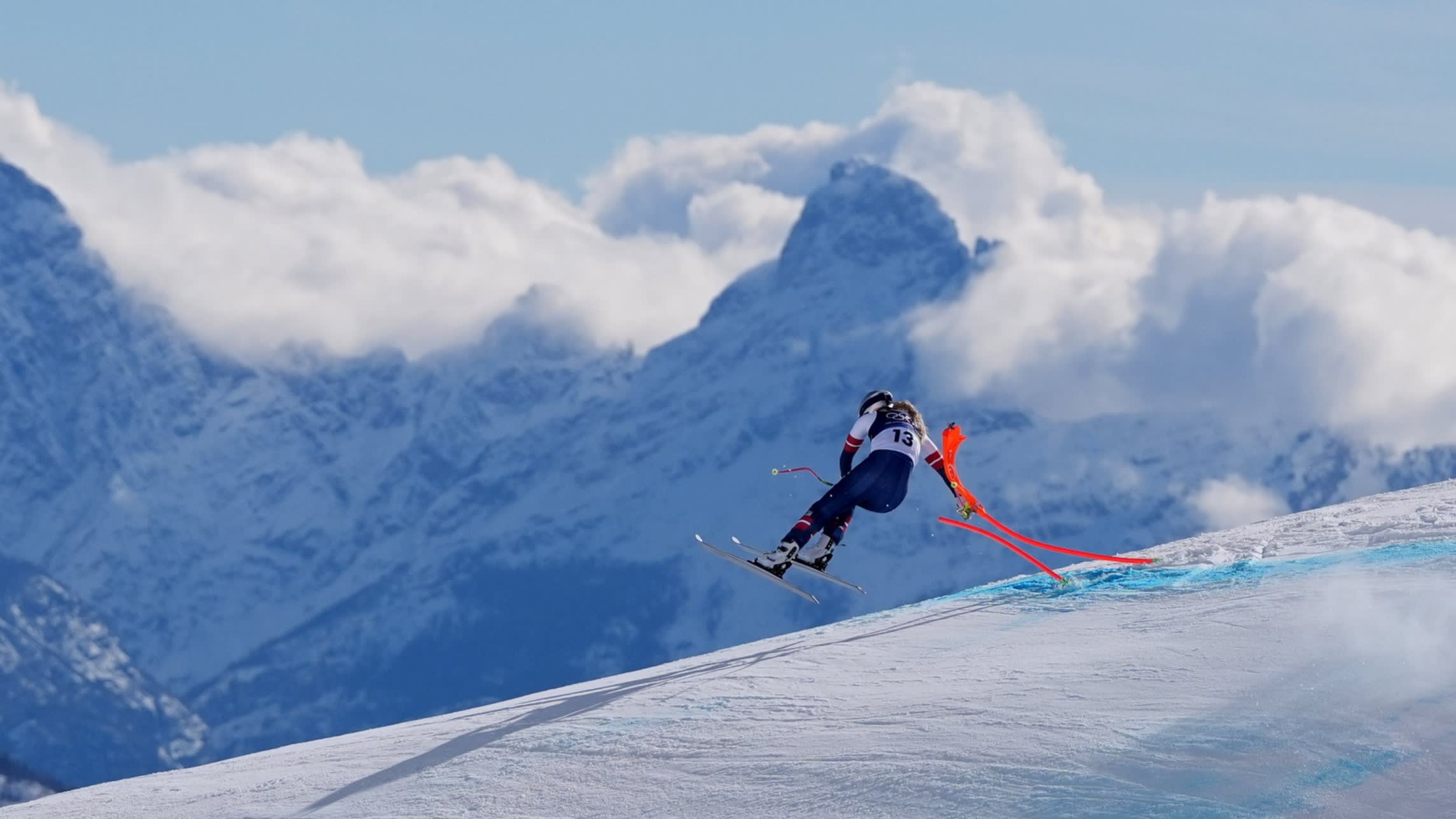
The high-altitude drama of the Winter Olympics took a sobering turn this week as Lindsey Vonn, the most decorated female ski racer in history, suffered a high-impact crash during the downhill event, sending shockwaves through the sports world and the multi-billion-dollar industries that orbit her career. While the immediate concern remains centered on the physical recovery of an athlete who has become synonymous with the limits of human endurance, the incident serves as a stark reminder of the volatile intersection between extreme physical risk and high-stakes commercial investment. In the world of professional Alpine skiing, where victory is measured in hundredths of a second and failure is often measured in orthopedic surgeries, the crash of a marquee star is not merely a sporting setback; it is a significant disruption of human capital with far-reaching economic consequences for sponsors, broadcasters, and the sport’s global governing bodies.
To understand the gravity of Vonn’s crash, one must first view her not just as a competitor, but as a central pillar of the winter sports economy. Over a career spanning two decades, Vonn has cultivated a brand equity that transcends the narrow confines of the World Cup circuit. With a portfolio of endorsements including Red Bull, Under Armour, Head, and Rolex, she represents a rare crossover appeal that bridges the gap between niche mountain sports and mainstream global marketing. When an athlete of this caliber hits the safety netting, the impact is felt in boardroom meetings across several continents. For sponsors, the ROI of a multi-year contract is predicated on visibility—specifically, visibility on the podium and in the prime-time broadcasts of major championships. A serious injury effectively silences a high-value marketing channel, forcing brands to pivot their messaging from "performance and victory" to "resilience and recovery," a shift that, while narratively compelling, often lacks the immediate commercial conversion of a gold-medal win.
The economics of injury in elite sports are governed by a complex web of insurance and risk mitigation. For top-tier skiers like Vonn, whose annual earnings from endorsements and prize money can reach the mid-seven figures, the cost of disability or career-ending trauma is astronomical. Lloyd’s of London and other specialty insurers have long dominated this space, underwriting policies that protect athletes against the loss of future earnings. However, as the speeds in downhill racing continue to increase—often exceeding 80 miles per hour on injected ice—the premiums for such coverage have surged. Industry analysts suggest that the "risk premium" for Alpine athletes is among the highest in professional sports, rivaled only by Formula 1 drivers and professional jockeys. Each crash like Vonn’s recalibrates the actuarial tables, potentially making it more expensive for the next generation of skiers to secure the financial safety nets necessary to pursue the sport at its highest levels.
Furthermore, the broadcasting landscape of the Winter Olympics is heavily reliant on "tentpole" stars to drive viewership numbers in an increasingly fragmented media market. Networks like NBC, which paid billions for Olympic rights, build their entire marketing campaigns around a handful of recognizable faces. Vonn has long been the protagonist of the American Olympic narrative. When the protagonist is sidelined, the narrative loses its gravitational pull, posing a direct threat to television ratings and, by extension, the value of advertising slots. Data from previous Winter Games indicates a measurable "star power" correlation: viewership in the United States often dips significantly when top-tier American athletes are absent from the finals. In a digital age where engagement is tracked in real-time, the loss of a social media powerhouse—Vonn boasts millions of followers across platforms—represents a significant loss in "earned media" for the International Olympic Committee (IOC) and its commercial partners.
The technical side of the industry also faces scrutiny in the wake of such incidents. The equipment manufacturers, specifically those in the "Race Room" departments of companies like Head and Atomic, invest millions in Research and Development to shave milliseconds off descent times. However, there is a growing tension between the pursuit of speed and the requirements of safety. Vonn’s crash will undoubtedly trigger a fresh round of analysis regarding the efficacy of current safety gear, including the wearable airbags that have become mandatory in many FIS (International Ski Federation) events. From a business perspective, the safety industry is a burgeoning sub-sector of the winter sports market. Innovations that begin on the World Cup circuit eventually trickle down to the consumer market, influencing the purchasing decisions of millions of recreational skiers. A high-profile crash serves as both a tragedy and a data point, driving the demand for more sophisticated protection technology in the retail sector.
On a global scale, the economic impact of athlete attrition is felt most acutely in the traditional Alpine hubs of Europe. In countries like Austria, Switzerland, and Italy, ski racing is a national industry that drives tourism and equipment sales. The "Vonn Effect" has historically been a major driver of interest in the sport within the lucrative North American market, which European resorts and manufacturers are desperate to capture. When the sport’s biggest international star is sidelined, the momentum of the entire circuit can stall. This is particularly concerning at a time when the winter sports industry is grappling with the existential threat of climate change, which has shortened seasons and increased the costs of snowmaking and mountain maintenance. The sport needs its icons to remain visible and active to justify the continued investment in the infrastructure of Alpine racing.
Expert insights into the psychology of athletic brands suggest that Vonn’s career-long battle with injury has actually created a unique "resilience premium." Unlike athletes who retire at the first sign of physical decline, Vonn’s repeated comebacks have endeared her to a demographic that values grit and perseverance. This has allowed her to maintain her sponsorship value even during long periods of rehabilitation. However, there is a mathematical limit to this strategy. The "law of diminishing returns" applies to the human body; each subsequent surgery increases the recovery time and decreases the probability of returning to the top of the podium. For the investors backing her, the question becomes one of transition: how to move the Vonn brand from "active competitor" to "legacy ambassador" without losing the edge that made her a household name.
The broader economic context of the Winter Olympics also reveals a shift in how host cities and national committees view the value of the Games. With the costs of hosting skyrocketing into the tens of billions, the pressure to deliver a "perfect" event is immense. The injury of a star athlete is a variable that organizers cannot control, yet it impacts the "vibe" and perceived success of the Games. For the host nation, the presence of global icons like Vonn is a key component of their soft-power strategy, showcasing their ability to host the world’s best on a grand stage. When the stars fall, the spectacle loses some of its luster, complicating the post-Games economic analysis that seeks to justify the massive public expenditure.
As the dust settles on the mountain and the medical evaluations begin, the focus will inevitably shift to the future of the sport. The FIS has been under increasing pressure to re-evaluate course settings and the "aggressiveness" of the snow preparation to prevent the high-velocity crashes that have plagued the current season. Any significant changes to the rules of the sport would have economic ripples, potentially affecting equipment specifications and the way the sport is marketed to fans who crave high-speed thrills. The balance between entertainment value and athlete safety remains the most precarious tightrope in the business of sports.
In conclusion, Lindsey Vonn’s crash is more than a momentary lapse in a single race; it is a significant event in the macro-economy of professional sports. It highlights the fragility of the "athlete-as-asset" model and the vast network of financial interests that depend on the physical integrity of a few extraordinary individuals. As the industry watches her recovery, the focus will remain on the resilience of her brand and the broader lessons the sporting world must learn about managing risk in an era of unprecedented speed and commercial pressure. The mountain, as always, remains indifferent to the spreadsheets and the sponsorships, reminding all stakeholders that in the high-stakes world of Alpine racing, the greatest cost is often the one that cannot be measured in dollars alone.