


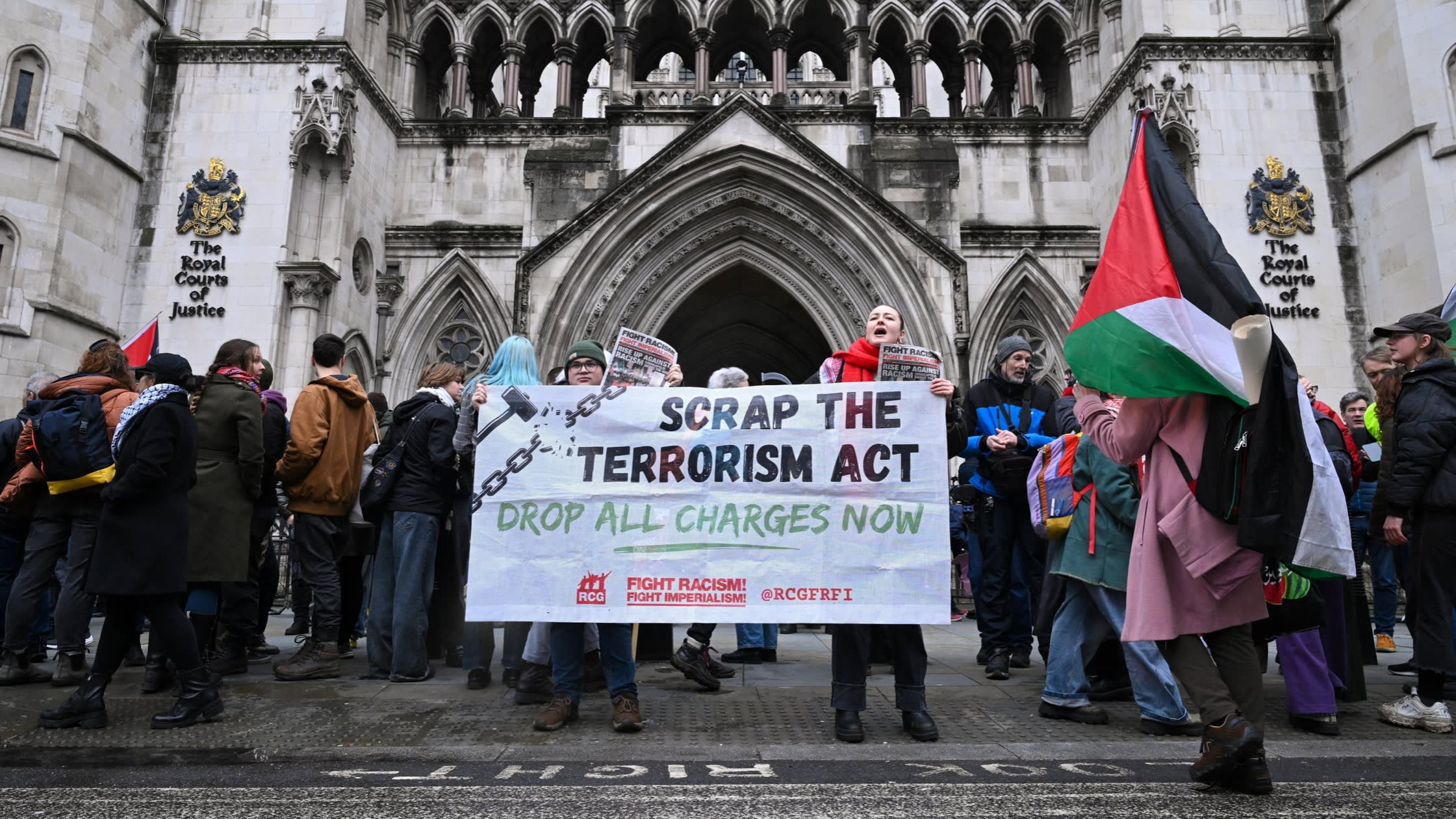
In a landmark decision that carries significant implications for the intersection of civil liberties, national security, and the global defense trade, the UK judiciary has ruled that government-imposed restrictions and bans targeting the activist group Palestine Action are unlawful. The ruling marks a pivotal moment in the ongoing legal battle between the British state and direct-action movements, signaling a robust judicial check on the executive branch’s attempts to curtail protest activities through administrative measures. The verdict not only vindicates the legal standing of the activist collective but also forces a re-evaluation of how the UK government balances its diplomatic and economic commitments to international defense partners with the fundamental rights enshrined in the Human Rights Act and the European Convention on Human Rights (ECHR).
The legal challenge centered on the government’s attempts to utilize broad discretionary powers to suppress the activities of Palestine Action, a group that has gained notoriety for its aggressive campaigns against UK-based facilities owned by Elbit Systems and other defense contractors linked to the Israeli military. For several years, the group has engaged in "direct action," which includes occupying factory roofs, dismantling equipment, and dousing buildings in red paint to symbolize bloodshed. The government had sought to categorize these actions not merely as civil disobedience but as a form of coordinated extremism that warranted a pre-emptive ban or severe curtailment of their operational capacity. However, the High Court found that the measures taken exceeded the legal authority of the Home Office, citing a failure to meet the threshold of proportionality and an overreach in the interpretation of public order statutes.
From a legal perspective, the ruling underscores the sanctity of Articles 10 and 11 of the ECHR, which protect the freedom of expression and the freedom of assembly, respectively. The presiding judges noted that while the state has a legitimate interest in protecting private property and maintaining public order, these interests do not grant the executive a "blank cheque" to outlaw specific political organizations simply because their tactics are disruptive or their messaging is unpalatable to the government of the day. The court emphasized that existing criminal laws—covering trespass, criminal damage, and assault—are sufficient to address specific illegal acts without the need for broad, discriminatory bans that target the existence of the group itself.
The economic ramifications of this ruling are felt most acutely within the UK’s aerospace and defense sector, a cornerstone of the national economy that contributes over £25 billion in annual exports. Elbit Systems UK, a primary target of Palestine Action, operates several sites across the country, including facilities in Oldham, Bristol, and Leicester. The persistent disruptions caused by activists have imposed significant operational costs on these firms, including heightened security expenditures, insurance premium hikes, and delays in supply chain logistics. In some instances, the pressure has led to the permanent closure of specific sites, such as the Elbit Ferranti factory in Oldham, which the group claimed as a major victory. This ruling suggests that defense firms cannot rely on the state to simply "regulate away" their opposition through administrative bans, but must instead continue to navigate a complex landscape of physical security and legal maneuvering.
Furthermore, the verdict arrives at a time when the UK’s legislative framework regarding protest is under intense scrutiny. The previous administration’s introduction of the Police, Crime, Sentencing and Courts Act 2022 and the Public Order Act 2023 significantly expanded police powers to shut down protests that are deemed "too noisy" or "too disruptive." This ruling acts as a judicial counterweight to this legislative trend, asserting that even within a tightened statutory environment, the executive cannot bypass due process to silence specific ideological movements. Legal analysts suggest this may embolden other direct-action groups, such as Just Stop Oil or Insulate Britain, to challenge similar restrictive measures in the courts, potentially leading to a "lawfare" environment where the boundaries of permissible protest are constantly litigated.
The geopolitical dimension of the case is equally profound. The UK remains one of Israel’s most significant European defense partners, with a relationship built on decades of intelligence sharing and industrial collaboration. The British government has consistently defended its right to grant export licenses for military equipment to Israel, despite mounting pressure from human rights organizations and international bodies. By failing to uphold a ban on Palestine Action, the government faces a diplomatic challenge: how to reassure international partners of their safety and the stability of their UK operations while adhering to a judicial system that protects the rights of those seeking to dismantle those very partnerships.
Market data indicates that the "security tax" on defense firms operating in the UK is rising. For companies involved in controversial sectors, the cost of doing business now includes a permanent line item for civil unrest mitigation. Investors are increasingly looking at ESG (Environmental, Social, and Governance) profiles not just as a matter of ethics, but as a matter of risk management. The inability of the government to unilaterally ban activist groups means that corporate resilience must be built from within, rather than mandated from the Home Office. This shift is likely to drive innovation in industrial security and may influence future decisions on where global defense conglomerates choose to locate their manufacturing hubs.
Comparatively, the UK’s judicial approach contrasts with other Western democracies. In Germany, for instance, the government has taken a much harder line against groups associated with anti-Israel activism, utilizing strict post-war laws against anti-semitism and public disorder to enact swifter bans. Conversely, in the United States, the First Amendment provides a high bar against government interference with political organizations, though "domestic terrorism" statutes are increasingly invoked in cases of property damage. The UK High Court’s ruling places Britain in a middle ground—maintaining a robust framework for criminal prosecution of specific acts while fiercely guarding the right to political association.
Expert insights suggest that the government’s defeat in court was a result of "procedural impatience." By attempting to use administrative shortcuts to solve a complex policing and political problem, the Home Office inadvertently created a scenario where the court had no choice but to intervene. The ruling highlights a growing tension between the "securitization" of domestic policy—where political dissent is viewed through the lens of national security—and the traditional British commitment to the rule of law.
In the long term, this judgment may force a pivot in government strategy. Rather than seeking to outlaw groups, the state may instead focus on the "Prevent" strategy and other counter-extremism programs to delegitimize the ideology behind direct action, while leaving the policing of physical protests to local constabularies. However, this approach requires a level of nuance that is often lost in the heat of political rhetoric. For Palestine Action, the ruling is a significant tactical victory that secures their right to exist as an entity, even as their individual members continue to face the risk of imprisonment for the specific acts they commit during their campaigns.
Ultimately, the High Court’s decision serves as a reminder that in a constitutional democracy, the ends do not justify the means when it comes to the suppression of dissent. The ruling reaffirms that the UK’s legal system remains independent of the executive’s immediate political objectives, providing a shield for even the most controversial forms of activism against the overreach of the state. As the defense industry grapples with the fallout, and as the government considers its next legislative moves, the boundary between "protest" and "extremism" remains one of the most contested and consequential frontiers in British law and economics. The cost of maintaining this democratic balance is high, but as the judiciary has made clear, the cost of abandoning it—through unlawful bans and executive overreach—is far higher for the integrity of the nation’s institutions.