

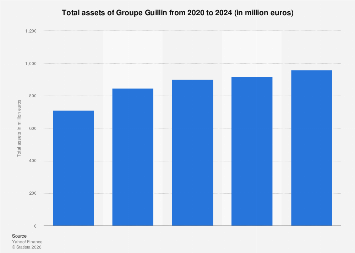
As the global economic landscape continues its dynamic recalibration, understanding the financial health and strategic positioning of key industrial players is paramount for investors, analysts, and industry observers. Groupe Guillin, a significant entity in the packaging sector, particularly for food products, is a case in point. While precise, real-time total asset figures for specific private companies often remain proprietary and require direct access to financial databases, an examination of their operational scope, market trends, and typical financial reporting structures can offer substantial insights into their potential asset valuation and economic significance in 2024.
The valuation of a company’s total assets is a critical metric, reflecting its accumulated resources, investments, and operational capacity. For a company like Groupe Guillin, which operates in a capital-intensive industry focused on manufacturing and supply chain logistics, its asset base would likely comprise a diverse portfolio. This typically includes tangible assets such as land, buildings, manufacturing machinery, and transportation fleets, as well as intangible assets like intellectual property, brand recognition, and established customer relationships. The ongoing evolution of the packaging industry, driven by sustainability mandates, technological advancements, and shifting consumer preferences, directly influences the composition and value of these assets.
In 2024, the packaging industry is experiencing a pronounced shift towards eco-friendly materials and circular economy principles. Companies that have invested heavily in research and development for biodegradable, recyclable, or compostable packaging solutions, or have upgraded their manufacturing processes to reduce waste and energy consumption, are likely to see the value of their intangible assets and modern, efficient tangible assets appreciate. Conversely, older, less sustainable infrastructure might face revaluation challenges or require significant capital expenditure for modernization. Groupe Guillin’s strategic investments in these areas would be a key determinant of its asset valuation. Market data from industry research firms often highlights that companies with a strong commitment to ESG (Environmental, Social, and Governance) principles tend to attract more investment and command higher valuations.
Globally, the packaging market is projected to continue its growth trajectory, albeit with regional variations and evolving segment demands. The Asia-Pacific region, for instance, is a major driver of growth due to its expanding middle class and increasing demand for packaged food and beverages. European markets, on the other hand, are heavily influenced by stringent environmental regulations, pushing innovation in sustainable packaging. North America presents a mature market with a focus on convenience and advanced materials. Groupe Guillin’s international presence and its ability to cater to these diverse regional demands would significantly impact its overall asset base and revenue streams. For example, the presence of state-of-the-art manufacturing facilities in high-growth emerging markets could contribute substantially to its total asset value.
Analyzing Groupe Guillin’s financial statements, particularly its balance sheet, would provide a detailed breakdown of its asset categories. Current assets, such as cash, accounts receivable, and inventory, offer a snapshot of its short-term liquidity and operational efficiency. Non-current assets, including property, plant, and equipment (PP&E), as well as investments and long-term receivables, represent the company’s long-term productive capacity and strategic holdings. The depreciation and amortization policies applied to PP&E, as well as any revaluation of assets, would directly affect the reported total asset figure.
Expert financial analysts often point to several key indicators when assessing a company’s asset strength. The asset turnover ratio, which measures how efficiently a company uses its assets to generate sales, is a crucial performance metric. A higher ratio suggests more effective asset utilization. For Groupe Guillin, this would involve examining how effectively its manufacturing plants, logistics networks, and warehousing facilities contribute to its revenue generation. Furthermore, the debt-to-asset ratio provides insight into a company’s financial leverage and risk profile. A lower ratio generally indicates a stronger financial position, with a greater proportion of assets funded by equity rather than debt.
In the context of 2024, economic factors such as inflation, interest rates, and supply chain disruptions continue to exert pressure on asset valuations. Inflation can increase the replacement cost of tangible assets, potentially inflating their book value, but it can also impact the cost of raw materials and labor, affecting profitability and the value of work-in-progress inventory. Rising interest rates can increase the cost of capital, making it more expensive to finance new asset acquisitions or expansions, and can also lead to higher discount rates used in the valuation of future cash flows, potentially impacting the valuation of intangible assets. Supply chain disruptions, particularly those affecting the availability of raw materials and components, can lead to increased inventory holding costs and delays in production, impacting asset utilization and value.
For Groupe Guillin, navigating these complexities requires agile management and strategic foresight. Investments in digitalization and automation within its manufacturing and logistics operations are increasingly becoming standard practice to enhance efficiency, reduce costs, and improve responsiveness to market changes. These technological investments, while representing significant capital expenditure, can also lead to the creation of valuable intangible assets in the form of proprietary software, optimized processes, and enhanced operational intelligence. The return on these investments would be a key factor in their long-term asset valuation.
Furthermore, the competitive landscape within the packaging industry is intense. Groupe Guillin competes with both large multinational corporations and smaller, specialized players. Its ability to maintain and grow its market share, secure long-term contracts with major food producers, and adapt to evolving regulatory and consumer demands directly influences its financial performance and, consequently, its asset valuation. The company’s strategic partnerships, mergers, and acquisitions, if any, would also play a significant role in shaping its asset portfolio and overall financial standing.
While specific asset figures for Groupe Guillin in 2024 are not publicly disclosed in a readily accessible format, a comprehensive understanding of its operational sector, market dynamics, and general financial reporting practices allows for an informed perspective. The company’s commitment to innovation, sustainability, operational efficiency, and its strategic response to global economic trends will collectively shape its total asset valuation and its standing in the international business arena. As the packaging industry continues to transform, Groupe Guillin’s ability to adapt and invest strategically will be the cornerstone of its sustained financial strength and market relevance.