

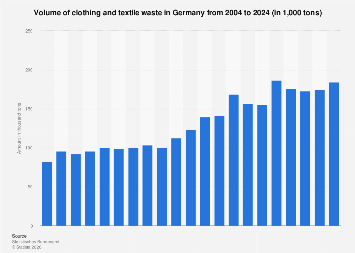
Germany, a global economic powerhouse and a significant player in the European fashion market, is grappling with an escalating challenge: the sheer volume of textile waste generated annually. As of 2024, the nation’s consumption patterns and the inherent lifecycle of clothing are contributing to a burgeoning environmental burden, demanding urgent attention from policymakers, industry leaders, and consumers alike. This mounting pile of discarded garments represents not only an ecological concern but also a missed economic opportunity, highlighting the urgent need for innovative solutions in textile recycling, circular economy models, and sustainable consumption practices.
The statistics paint a stark picture. While specific, up-to-the-minute figures for 2024 are often compiled with a time lag, historical data and current trends indicate a persistent and significant problem. Germany has long been among the leading European countries in terms of per capita textile consumption. This high demand, fueled by fast fashion trends, accessibility of affordable clothing, and evolving consumer preferences, directly translates into substantial waste generation. Millions of tons of textiles are discarded each year, a significant portion of which ends up in landfills or incinerators, despite efforts to promote reuse and recycling.
The economic implications of this waste are multifaceted. On one hand, the textile industry is a vital contributor to Germany’s economy, employing thousands and generating billions in revenue. However, the linear "take-make-dispose" model that currently dominates much of the industry is inherently wasteful. The raw materials used in clothing production – cotton, synthetics derived from fossil fuels, and others – are resource-intensive to cultivate or extract. Discarding these materials after a relatively short lifespan represents a squandering of valuable resources and energy. Furthermore, the costs associated with waste management, including collection, transportation, and disposal, place a burden on municipalities and taxpayers.
The global context underscores the scale of Germany’s challenge. Similar trends are observed in many developed nations, where rising disposable incomes and globalized supply chains have made clothing more accessible than ever. However, Germany’s commitment to environmental stewardship and its position within the European Union’s ambitious Green Deal framework place it under particular scrutiny. The EU is actively promoting circular economy principles, aiming to reduce waste and keep resources in use for as long as possible. For Germany, this means aligning its textile sector with these broader sustainability goals.
Experts in the field of waste management and circular economy highlight several key drivers behind the escalating textile waste problem. The rise of fast fashion has been a primary culprit, with brands producing large volumes of low-cost, trend-driven clothing that is often of lower quality and designed for a shorter lifespan. Consumers, influenced by social media and marketing, are encouraged to frequently update their wardrobes, leading to a rapid turnover of garments. This disposable mindset, coupled with the convenience of online shopping and easy returns, contributes to a cycle of consumption and discard.
Moreover, the complexity of textile materials presents a significant hurdle for effective recycling. Modern garments are often made from blended fibers, combining natural materials like cotton with synthetic ones like polyester. Separating these fibers for effective reprocessing is technically challenging and economically unviable for many recycling facilities. This means that even textiles collected for recycling often end up being downcycled into lower-value products or, in many cases, are still destined for landfill or incineration if they cannot be processed.
The economic value locked within textile waste is substantial. Globally, the textile industry is a multi-trillion-dollar market. The materials that are currently discarded represent a potential source of raw materials for new products, thus reducing the need for virgin resources. Developing robust and scalable textile recycling infrastructure, along with innovative technologies for fiber separation and material reprocessing, could unlock significant economic opportunities for Germany. This could include the creation of new jobs in the recycling sector, the development of new businesses focused on sustainable fashion, and a reduction in reliance on imported raw materials.
Furthermore, the concept of "product-as-a-service" or clothing rental models is gaining traction. These models aim to extend the lifecycle of garments by keeping them in use for longer periods, either through professional cleaning and repair services or by facilitating their resale or donation. Such initiatives not only reduce waste but also offer consumers more sustainable and potentially more affordable ways to access fashion.
The German government and the European Union are increasingly recognizing the urgency of this issue. Policy interventions are being considered and implemented to encourage greater producer responsibility, promote sustainable design, and invest in advanced recycling technologies. Extended Producer Responsibility (EPR) schemes, for instance, could place a greater onus on clothing manufacturers and retailers to manage the end-of-life of their products. Investment in research and development for innovative recycling processes, as well as public awareness campaigns to encourage more mindful consumption, are also crucial components of a comprehensive strategy.
However, the transition to a truly circular textile economy requires a concerted effort from all stakeholders. Consumers play a pivotal role in demanding more sustainable products, making conscious purchasing decisions, and adopting behaviors that extend the life of their clothing, such as repairing, swapping, and donating. Brands and retailers have the responsibility to design for durability and recyclability, invest in sustainable materials, and support take-back and recycling programs. The technology sector has a role to play in developing advanced sorting and recycling solutions.
The economic impact analysis of transitioning to a circular textile economy in Germany is complex but overwhelmingly positive in the long term. While initial investments in new infrastructure and technologies may be significant, the potential benefits include reduced resource dependency, creation of green jobs, innovation within the fashion sector, and a strengthened brand image for Germany as a leader in sustainability. Moreover, the environmental benefits, such as reduced greenhouse gas emissions, water usage, and land pollution, are immeasurable and essential for future well-being.
As Germany navigates the challenges of 2024 and beyond, addressing its textile waste crisis will be a critical test of its commitment to a sustainable and prosperous future. The path forward lies in embracing innovation, fostering collaboration across the value chain, and fundamentally rethinking our relationship with clothing – moving from a culture of disposability to one of enduring value and circularity. The economic and environmental imperative is clear: the time for decisive action on textile waste is now.