


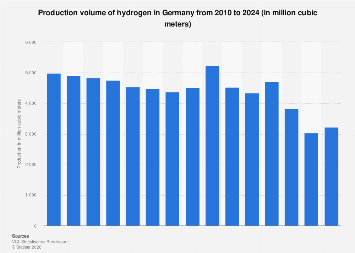
As the global race to decarbonize intensifies, Germany has positioned itself as a frontrunner in the development and deployment of green hydrogen. In 2024, the nation’s strategic investments and policy frameworks aim to establish a robust domestic production capacity, a critical component in its transition away from fossil fuels and towards a sustainable energy future. However, the ambitious targets are met with significant economic hurdles, including high production costs, infrastructure development challenges, and the need for substantial international collaboration to secure affordable and reliable supply chains.
The German government has outlined a comprehensive National Hydrogen Strategy, backed by substantial funding initiatives, to foster both the production and utilization of hydrogen, particularly its "green" variant produced through electrolysis powered by renewable energy sources. This strategy is driven by the recognition that hydrogen can play a pivotal role in decarbonizing hard-to-abate sectors such as heavy industry, long-haul transport, and aviation, areas where direct electrification remains technically or economically challenging. The target is not merely to import hydrogen but to build a significant domestic production capability, reducing reliance on external markets and bolstering energy security.
Estimates for the required scale of green hydrogen production within Germany by 2030 are substantial, with projections suggesting tens of gigawatts of electrolysis capacity will be needed. This translates into a demand for vast amounts of renewable electricity, necessitating a parallel acceleration in wind and solar power expansion. The interplay between renewable energy generation and electrolyzer deployment is crucial. Insufficient renewable capacity will directly constrain green hydrogen output, while surplus renewable energy could be channeled into hydrogen production, offering a valuable storage and flexibility solution for the grid.
The economic viability of domestic green hydrogen production remains a key area of focus. Currently, the cost of producing green hydrogen is significantly higher than that of grey hydrogen (produced from natural gas) or blue hydrogen (grey hydrogen with carbon capture). This cost premium is primarily attributed to the expense of electrolyzers, the cost of renewable electricity, and the operational expenses. To bridge this gap, Germany is employing a multi-pronged approach: direct subsidies for production, tax incentives, and the development of large-scale tenders for green hydrogen procurement. These measures are designed to de-risk investments for private companies and create a stable market signal.
Industry experts highlight that achieving cost parity will require both technological advancements to lower electrolyzer costs and a substantial increase in the scale of production, thereby benefiting from economies of scale. Furthermore, the increasing penetration of renewables into the electricity mix is expected to drive down the cost of green electricity, a major input for electrolysis. However, the volatility of renewable energy generation poses a challenge. Electrolyzers need a stable and continuous power supply to operate efficiently, prompting discussions about dedicated renewable energy parks for hydrogen production and advanced grid management solutions.
The infrastructure required to transport and store hydrogen also presents a considerable economic and logistical challenge. Germany is actively investing in building a dedicated hydrogen pipeline network, often repurposing existing gas infrastructure, and developing liquefaction and storage facilities. The European Hydrogen Backbone initiative, a collaboration of European gas infrastructure companies, aims to create a pan-European network that will facilitate the cross-border trade of hydrogen. This international dimension is vital, as Germany acknowledges that it cannot meet its entire hydrogen demand through domestic production alone and will need to import significant quantities from regions with abundant renewable resources.
Global comparisons offer valuable context for Germany’s efforts. Countries like Australia, Chile, and Saudi Arabia are leveraging their vast renewable energy potential to become major exporters of green hydrogen. These nations often have lower land and labor costs, and more favorable conditions for renewable energy generation, potentially offering a cost advantage in production. Germany’s strategy, therefore, is not just about domestic production but also about securing competitive and sustainable import partnerships, ensuring diversification of supply and avoiding over-reliance on any single region.
The economic impact of a successful green hydrogen ecosystem in Germany is projected to be substantial. It is expected to create new jobs in manufacturing, installation, operation, and research and development. Moreover, it will support the competitiveness of German industries by providing a clean fuel source, enabling them to meet stringent climate targets and adapt to evolving regulatory landscapes. The chemical industry, steel production, and manufacturing sectors are seen as key beneficiaries, as they can transition from fossil fuels to hydrogen, thereby reducing their carbon footprint and enhancing their long-term sustainability.
However, the timeline for realizing these economic benefits is contingent on overcoming the current cost barriers and scaling up production and infrastructure rapidly. The next few years will be critical in demonstrating the efficacy of Germany’s policy interventions and its ability to attract the necessary private investment. Challenges such as permitting processes for new renewable energy plants and hydrogen infrastructure, as well as the availability of skilled labor, will need to be addressed proactively.
The European Union’s broader hydrogen strategy also plays a significant role, fostering a coordinated approach across member states and creating a larger, more integrated market. This harmonization of regulations and support mechanisms is crucial for enabling cross-border investments and ensuring that Germany’s domestic efforts are complemented by a robust European hydrogen economy. The success of Germany’s 2024 hydrogen production initiatives will be a bellwether for the broader European transition, setting precedents and influencing the pace of decarbonization across the continent and beyond. The nation’s commitment to green hydrogen is clear, but the path to economic feasibility and widespread adoption is complex and requires sustained innovation, investment, and international cooperation.