


The geopolitical landscape of international development is undergoing a seismic shift as the United Kingdom, once self-styled as a "development superpower," moves toward a fiscal contraction in its foreign assistance budget that threatens to be more profound than the aggressive "America First" policies championed by Donald Trump. For decades, the UK was one of the few major economies to consistently meet the United Nations’ target of spending 0.7% of gross national income (GNI) on Official Development Assistance (ODA). However, a combination of domestic economic pressures, a mounting "fiscal black hole," and the internal reallocation of funds toward domestic refugee costs has placed the British aid budget on a downward trajectory that exceeds the percentage-based reductions historically sought by the Republican platform in the United States.
This retrenchment marks a significant departure from the post-Cold War consensus that positioned foreign aid as a primary pillar of "soft power." While the Trump administration’s rhetoric frequently targeted foreign aid as wasteful spending, often proposing cuts of up to 30% to the State Department and USAID budgets, many of these proposals were ultimately checked by a bipartisan consensus in the U.S. Congress. In contrast, the UK’s reduction from 0.7% to 0.5% of GNI, initially framed as a temporary pandemic-era measure, appears increasingly permanent. When adjusted for the massive internal diversion of these funds to cover the costs of housing asylum seekers within British borders, the actual capital reaching the world’s most vulnerable regions has plummeted to levels not seen in a generation.
The economic rationale provided by the British Treasury centers on the need for fiscal discipline following the twin shocks of the COVID-19 pandemic and the energy crisis sparked by the war in Ukraine. Chancellor of the Exchequer Rachel Reeves and her predecessors have argued that the restoration of the 0.7% target is contingent upon the national debt falling and the country achieving a sustainable surplus. Yet, economists warn that the "opportunity cost" of these cuts may far outweigh the immediate fiscal savings. By withdrawing support from health programs, education, and climate resilience in the Global South, the UK risks exacerbating the very drivers of mass migration and regional instability that it seeks to mitigate domestically.
In the United States, the Trump administration’s approach to aid was characterized by transactionalism. The "America First" doctrine sought to tie development dollars directly to diplomatic loyalty and trade concessions. While this approach was widely criticized by the international community, the sheer scale of the U.S. economy ensured that even a diminished American aid budget remained the world’s largest in absolute terms. The UK, however, lacks that same economic buffer. As a mid-sized power relying heavily on its diplomatic influence and "Global Britain" branding, a sharp withdrawal from the development stage leaves a vacuum that is rapidly being filled by other actors, most notably China and its Belt and Road Initiative.
The diversion of the ODA budget to domestic purposes is perhaps the most contentious element of the UK’s current strategy. Under current OECD rules, the first year of costs for supporting refugees within a donor country can be counted as foreign aid. In recent years, the UK has utilized this loophole to an unprecedented degree. Billions of pounds intended for clean water projects in sub-Saharan Africa or girls’ education in South Asia have instead been redirected to pay for hotel accommodation for asylum seekers in British towns. This internal "cannibalization" of the aid budget means that while the official figure may sit at 0.5% of GNI, the effective amount of money crossing the border is significantly lower—potentially dropping below the relative levels maintained during the most isolationist periods of recent American history.
Market analysts and development experts point to the long-term trade implications of this retreat. Foreign aid is often the "seed capital" for future emerging markets. By funding infrastructure and institutional capacity in developing nations, donor countries establish the legal and physical frameworks necessary for private-sector investment. When the UK withdraws this support, it effectively cedes future market share to competitors. For instance, in Southeast Asia and Africa, British firms have historically benefited from the technical standards and governance frameworks established through UK-funded programs. As these programs are shuttered, the influence of British commercial standards wanes, replaced by the models of nations that are currently increasing their overseas footprints.
Furthermore, the comparison with the Trump administration’s policies reveals a difference in institutional stability. While the Trump era was marked by volatile proposals and executive orders, the UK’s shift represents a structural legislative change. The merger of the Department for International Development (DFID) into the Foreign and Commonwealth Office (FCO) to create the Foreign, Commonwealth & Development Office (FCDO) was a clear signal that development was being subordinated to immediate diplomatic objectives. This institutional shift has led to a "brain drain" of development specialists, further eroding the UK’s ability to deliver high-impact, value-for-money programming even with limited funds.
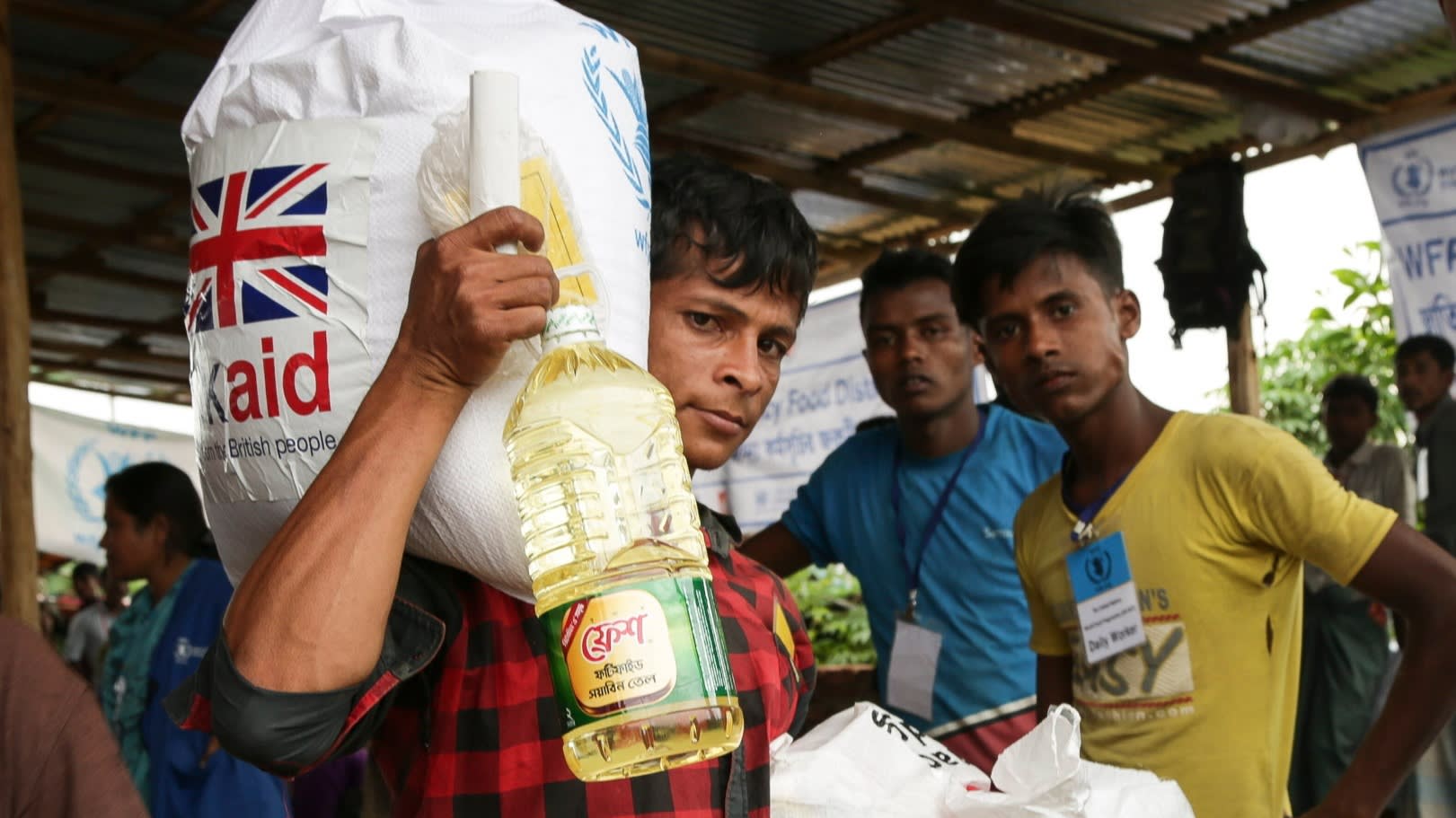
The humanitarian impact of these fiscal decisions is already being felt globally. Programs targeting neglected tropical diseases, polio eradication, and maternal health have seen their funding slashed by as much as 60% to 80% in certain regions. International organizations such as the Global Fund to Fight AIDS, Tuberculosis and Malaria, and Gavi, the Vaccine Alliance, have expressed concern that the UK’s retreat could trigger a domino effect among other G7 donors. If a traditionally leading voice in development can walk away from its commitments, it provides political cover for other nations facing their own domestic populist pressures to do the same.
In the context of the climate crisis, the UK’s aid cuts are particularly poignant. As the host of COP26, the UK positioned itself as a leader in climate finance for developing nations. However, the reduction in ODA has made it increasingly difficult for the government to meet its climate finance pledges without further gutting other essential development sectors. This "robbing Peter to pay Paul" approach has led to friction with developing nations, who argue that the Global North is failing to honor the financial commitments made under the Paris Agreement.
The geopolitical consequences extend to the halls of the United Nations and other multilateral institutions. The UK’s "soft power" has historically been bolstered by its ability to lead through development. By providing significant funding and expertise, the UK earned a seat at the head of the table in global health and education policy. As the funding dries up, so too does the diplomatic leverage. Critics argue that the "Global Britain" slogan rings hollow when the nation’s primary tool for international engagement is being systematically dismantled.
Looking ahead, the prospect of a "Trump 2.0" administration in the United States adds another layer of complexity. Should a future U.S. administration move to further decouple from international institutions and slash foreign assistance, the world would typically look to Europe and the UK to maintain the global development architecture. If the UK is already in a state of deep retrenchment, the collective ability of Western liberal democracies to influence the development trajectory of the Global South will be severely compromised.
The debate over the aid budget is not merely a question of altruism versus national interest; it is a fundamental debate about how a nation perceives its role in the 21st-century global economy. While the Trump administration’s attacks on aid were often seen as an aberration from American tradition, the UK’s current path suggests a more permanent reassessment of national priorities. As the British government continues to grapple with its fiscal constraints, the gap between its global ambitions and its financial commitments continues to widen, potentially leaving the UK with less international influence than even the most isolationist versions of the United States.
Ultimately, the trajectory of UK overseas aid serves as a bellwether for the broader trend of "de-globalization" and the inward-looking turn of Western politics. If the UK’s cuts continue to outstrip those of the Trump era, the legacy of Britain as a development leader will be replaced by a new reality: a nation that, in seeking to solve its domestic fiscal problems, inadvertently accelerated its own strategic marginalization on the world stage. The economic and human costs of this shift will be measured not just in pounds and pence, but in the lost opportunities for global stability and the erosion of a decade’s worth of progress in international cooperation.