


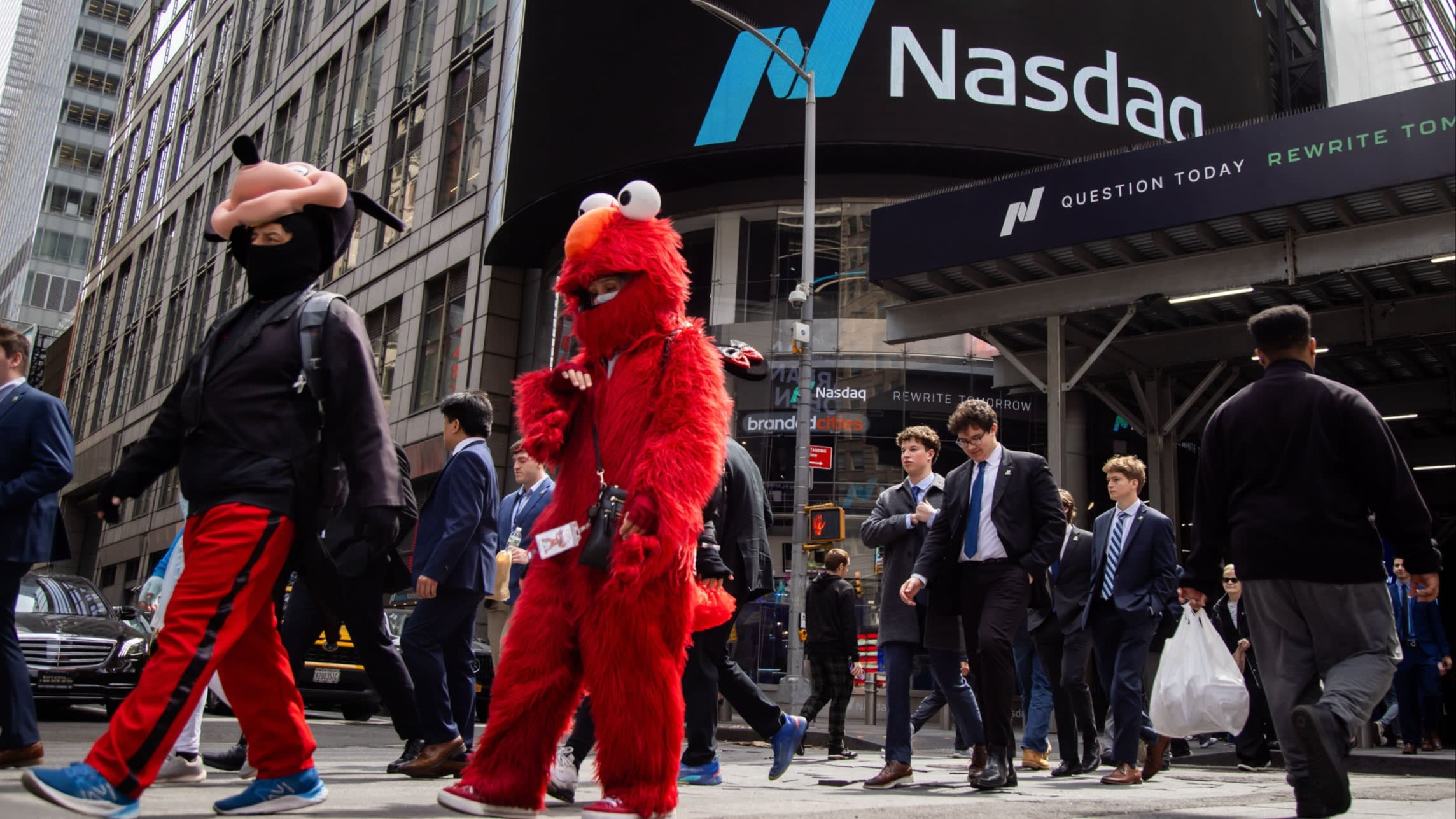
For much of the past eighteen months, the global equity markets have been defined by a singular, relentless narrative: the transformative power of generative artificial intelligence. This optimism fueled a historic rally, propelling the "Magnificent Seven" and a select group of semiconductor giants to valuations that often defied traditional fundamental analysis. However, a recent shift in investor psychology suggests that the era of blind faith in the AI trade is coming to an abrupt end. The reflexive "buy the dip" strategy, which served as a safety net for tech investors throughout 2023, is being replaced by a more disciplined, skeptical approach. As market volatility returns, the overarching question for institutional and retail investors alike has shifted from "how do I get in?" to "when will the investment pay off?"
The recent turbulence in the technology sector is not merely a routine correction but rather a fundamental re-evaluation of the AI timeline. Investors are beginning to grapple with the "monetization gap"—the growing distance between the massive capital expenditures required to build AI infrastructure and the actual revenue generated by AI-powered products. While the first phase of the AI boom was dominated by the hardware providers, most notably Nvidia, the second phase requires software and service providers to prove that AI can move the needle on their bottom lines. As quarterly earnings reports reveal staggering "capex" (capital expenditure) figures from the likes of Microsoft, Alphabet, and Meta, shareholders are demanding more than just vision statements; they are demanding a clear path to profitability.
To understand the current reluctance to buy the dip, one must look at the sheer scale of investment currently being poured into data centers and specialized silicon. Estimates suggest that the world’s largest technology firms are on track to spend well over $200 billion collectively on AI-related infrastructure in the coming fiscal year. For companies like Alphabet and Microsoft, this represents a significant portion of their operating cash flow. While these firms argue that under-investing poses a greater existential risk than over-investing, the market is beginning to question the return on invested capital (ROIC). If the killer apps for generative AI—beyond coding assistants and basic chatbots—do not materialize quickly, these massive data centers could become the "dark fiber" of the 2020s: expensive, underutilized infrastructure built for a demand that took much longer to arrive than anticipated.
The semiconductor industry, which acted as the vanguard of the AI rally, has been particularly susceptible to this change in sentiment. Nvidia, which briefly became the world’s most valuable company, has seen its stock price fluctuate wildly as investors weigh its dominant market share against the threat of "digestion." There is a growing concern that the initial rush to acquire H100 and Blackwell chips has reached a point of saturation, or at least a plateau, where customers must now figure out how to deploy the hardware they have already purchased. When a stock is priced for perfection—trading at high double-digit multiples of forward earnings—any hint of a slowdown in order velocity can lead to a violent sell-off. The fact that investors are no longer rushing to buy these pullbacks suggests a fear that the "peak growth" narrative may finally be taking hold.
Economic data and macroeconomic shifts are also playing a critical role in this cooling sentiment. For much of the AI rally, investors were operating in an environment of high but stabilizing interest rates and a surprisingly resilient U.S. economy. However, as the Federal Reserve pivots toward a rate-cutting cycle, the "risk-free rate" calculation is changing. While lower rates generally benefit growth stocks by reducing the discount rate applied to future earnings, they also signal a potential cooling of the broader economy. If the U.S. enters a period of slower growth or a mild recession, the massive corporate spending on AI initiatives may be the first item to be slashed from enterprise budgets. This creates a "double whammy" for AI stocks: high valuations that require a perfect economic backdrop, meeting a reality where corporate belt-tightening could stifle the very growth those valuations depend on.
Furthermore, the global nature of the AI supply chain has introduced geopolitical risks that are becoming harder for investors to ignore. The ongoing "chip war" between the United States and China, characterized by tightening export controls and domestic subsidization programs like the CHIPS Act, has created a fragmented market. For companies like ASML in the Netherlands or TSMC in Taiwan, the ability to navigate these regulatory waters is as critical as their technological prowess. Investors are increasingly pricing in a "geopolitical risk premium," recognizing that a sudden escalation in cross-strait tensions or new trade barriers could disrupt the entire AI ecosystem overnight. This structural uncertainty makes the "buy the dip" mentality far more dangerous than it was during the relatively stable period of globalization in the previous decade.
Expert insights from Wall Street strategists suggest that the market is currently in a "show me" phase. This is a classic transition in any technological revolution, drawing parallels to the dot-com era of the late 1990s. While the internet did indeed change the world, the stocks that led the first wave of the boom were not always the ones that survived the eventual crash. Analysts point out that in 1999, companies were spending billions on routers and fiber-optic cables; the infrastructure was necessary, but the valuations were unsustainable because the consumer applications—streaming, e-commerce, and social media—were still years away from reaching critical mass. Today, the market is looking for the "Uber of AI"—a transformative service that justifies the hundreds of billions spent on GPUs. Until that happens, the appetite for high-valuation tech will likely remain tempered.
The economic impact of AI also faces a "productivity paradox." While proponents argue that AI will boost global GDP by trillions of dollars through automation and efficiency, the actual data in labor statistics has yet to show a meaningful spike in productivity. For businesses, implementing AI is not as simple as flipping a switch; it requires data restructuring, employee retraining, and a total overhaul of legacy workflows. These "hidden costs" of AI adoption are beginning to weigh on corporate margins. If the productivity gains are slower to arrive than the costs are to accumulate, the inflationary pressure of the AI build-out could become a drag on the broader economy, rather than a catalyst for growth.
Another factor contributing to investor hesitation is the burgeoning regulatory landscape. From the European Union’s AI Act to emerging frameworks in the United States and China, the "move fast and break things" era of AI development is meeting a wall of legal scrutiny. Issues surrounding data privacy, copyright infringement for training models, and the ethical implications of algorithmic bias are no longer theoretical concerns. They are potential liabilities. For an investor, the threat of a multi-billion dollar fine or a forced change in a business model is a significant deterrent, especially when the stock is already trading at a premium.
As we look toward the final quarters of the year, the "AI scare" has served as a necessary reality check. The transition from a momentum-driven market to a value-driven one is often painful, but it is a sign of a maturing cycle. Investors are becoming more discerning, looking past the "AI" buzzword in earnings calls and focusing instead on specific metrics: churn rates for AI subscriptions, the cost-per-query of large language models, and the durability of hardware demand. The "dip" is no longer seen as a guaranteed profit opportunity, but as a potential warning sign of a shifting fundamental floor.
In conclusion, the reluctance to buy the dip reflects a broader realization that the AI revolution is a marathon, not a sprint. While the long-term potential of the technology remains undisputed, the path to realizing that value is fraught with technical, economic, and geopolitical hurdles. For the global markets, the current period of consolidation and skepticism may actually be a healthy development, clearing out the speculative "froth" and allowing for a more sustainable growth trajectory based on actual utility and profit. However, for those who bought at the peak of the hype, the current market caution serves as a stark reminder that even the most promising technologies are subject to the timeless laws of valuation and economic reality. The era of easy gains in the AI space has ended; the era of rigorous proof has begun.