


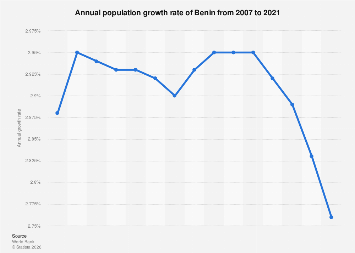
Benin, a West African nation situated along the Gulf of Guinea, has experienced significant demographic shifts between 2007 and 2021, a period marked by robust population growth that has reshaped its socio-economic landscape. This extended timeframe provides a crucial window into the evolving dynamics of birth rates, mortality, and migration, all of which contribute to the overall expansion of the country’s populace. Understanding these trends is paramount for policymakers, development agencies, and businesses seeking to navigate the opportunities and challenges presented by a growing population.
During this 15-year span, Benin’s population has not merely increased; it has done so at a rate that places it among the faster-growing nations globally. While specific figures for each year are complex, the overarching trend points to a consistent upward trajectory. This growth is primarily driven by a high fertility rate, a characteristic common across many sub-Saharan African economies. While the crude birth rate has shown some signs of moderation in recent years, it remains substantially higher than the crude death rate, resulting in a substantial natural increase in population. This demographic dividend, if managed effectively, can translate into a larger workforce and a growing consumer base. However, it also presents considerable pressure on public services, infrastructure, and resource allocation.
The implications of this sustained population increase are multifaceted. On the economic front, a larger population can fuel domestic demand for goods and services, potentially stimulating sectors such as agriculture, manufacturing, and retail. It also signifies a growing pool of potential labor, which could be an engine for economic development, provided that sufficient job creation and skills development initiatives are in place. However, the flip side of this demographic expansion is the potential for increased unemployment and underemployment if the economy cannot absorb the influx of young people entering the labor market. The age structure of Benin’s population, heavily skewed towards the younger demographic, underscores this point. A significant portion of the population falls within the reproductive and working-age brackets, a demographic profile that requires strategic planning for education, healthcare, and employment.
From a social perspective, population growth places considerable demands on essential services. The healthcare system faces the challenge of providing adequate maternal and child health services, as well as addressing the broader health needs of an expanding population. Educational institutions are tasked with accommodating a larger student body, necessitating investment in school infrastructure, teacher training, and curriculum development to ensure quality education for all. Furthermore, the demand for housing, clean water, sanitation, and energy resources intensifies, requiring substantial and sustained investment in public infrastructure. Urbanization, often a consequence of population growth, further exacerbates these pressures, concentrating demand and straining existing urban services.
Comparing Benin’s population growth to other nations provides valuable context. While many developed economies grapple with aging populations and declining birth rates, sub-Saharan Africa, as a region, continues to experience some of the highest population growth rates in the world. Benin’s trajectory aligns with this regional trend, reflecting similar socio-economic factors, including access to family planning services, education levels, and cultural norms surrounding family size. However, the specific pace of growth and its impact can vary significantly due to differences in national policies, economic structures, and levels of development. For instance, countries with diversified economies and robust social safety nets may be better positioned to manage rapid population growth than those reliant on a narrow economic base.
The period between 2007 and 2021 likely saw fluctuations in mortality rates, influenced by factors such as improvements in healthcare access, disease control efforts, and nutritional standards. While infant and child mortality rates have generally been declining across much of Africa, including Benin, they remain a key indicator of public health and development. Similarly, life expectancy has likely seen a gradual increase, contributing to a larger overall population size. However, the impact of potential health crises or natural disasters, though not explicitly detailed in the general trend, can introduce temporary deviations in mortality patterns.
Migration, both internal and external, also plays a role, albeit often a less dominant one than natural increase, in shaping population figures. Internal migration, predominantly from rural to urban areas, is a significant factor contributing to the growth and challenges of Beninese cities. External migration, while present, is less likely to be a primary driver of the overall national population increase during this period, though it can influence specific regional demographics or skill compositions.
Economically, the high dependency ratio – the proportion of dependents (children and the elderly) to the working-age population – is a critical consideration. A young and growing population implies a larger proportion of children, placing a substantial burden on the working population to support them. This necessitates policies that promote both family well-being and economic productivity. The long-term economic prosperity of Benin will depend heavily on its ability to harness the demographic dividend by investing in human capital, fostering job creation, and ensuring inclusive economic growth that benefits its rapidly expanding population.
In conclusion, Benin’s population growth from 2007 to 2021 represents a dynamic demographic phenomenon with profound implications. The sustained expansion, driven by high fertility rates, presents both opportunities for economic dynamism and significant challenges for public service provision and resource management. Understanding these intricate population dynamics is not merely an academic exercise; it is a fundamental prerequisite for informed policymaking, strategic development planning, and the cultivation of a prosperous and sustainable future for Benin and its people. The nation’s ability to adapt to these demographic realities will be a defining factor in its long-term development trajectory.