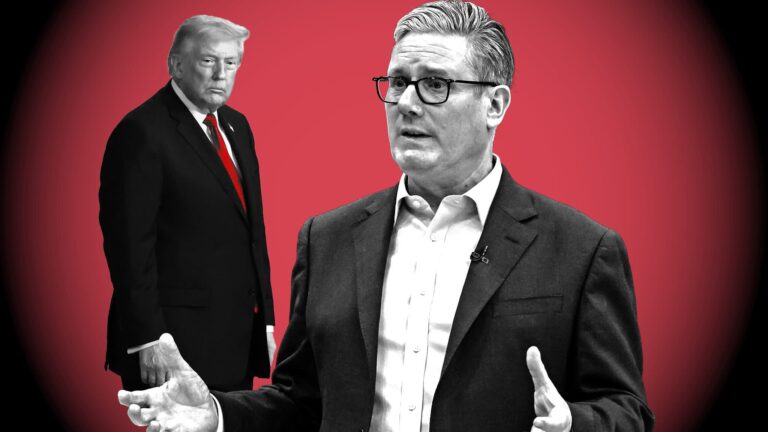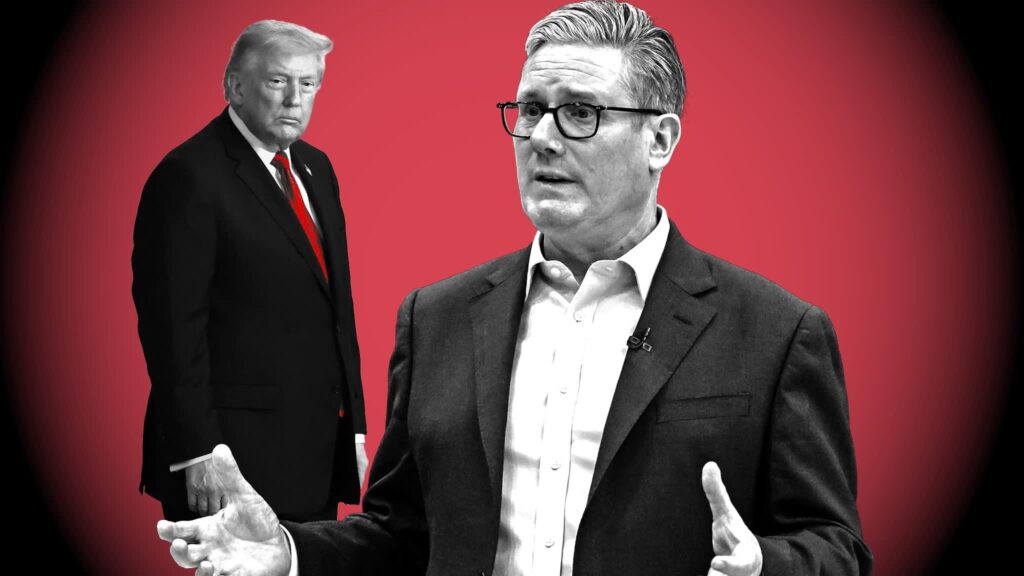


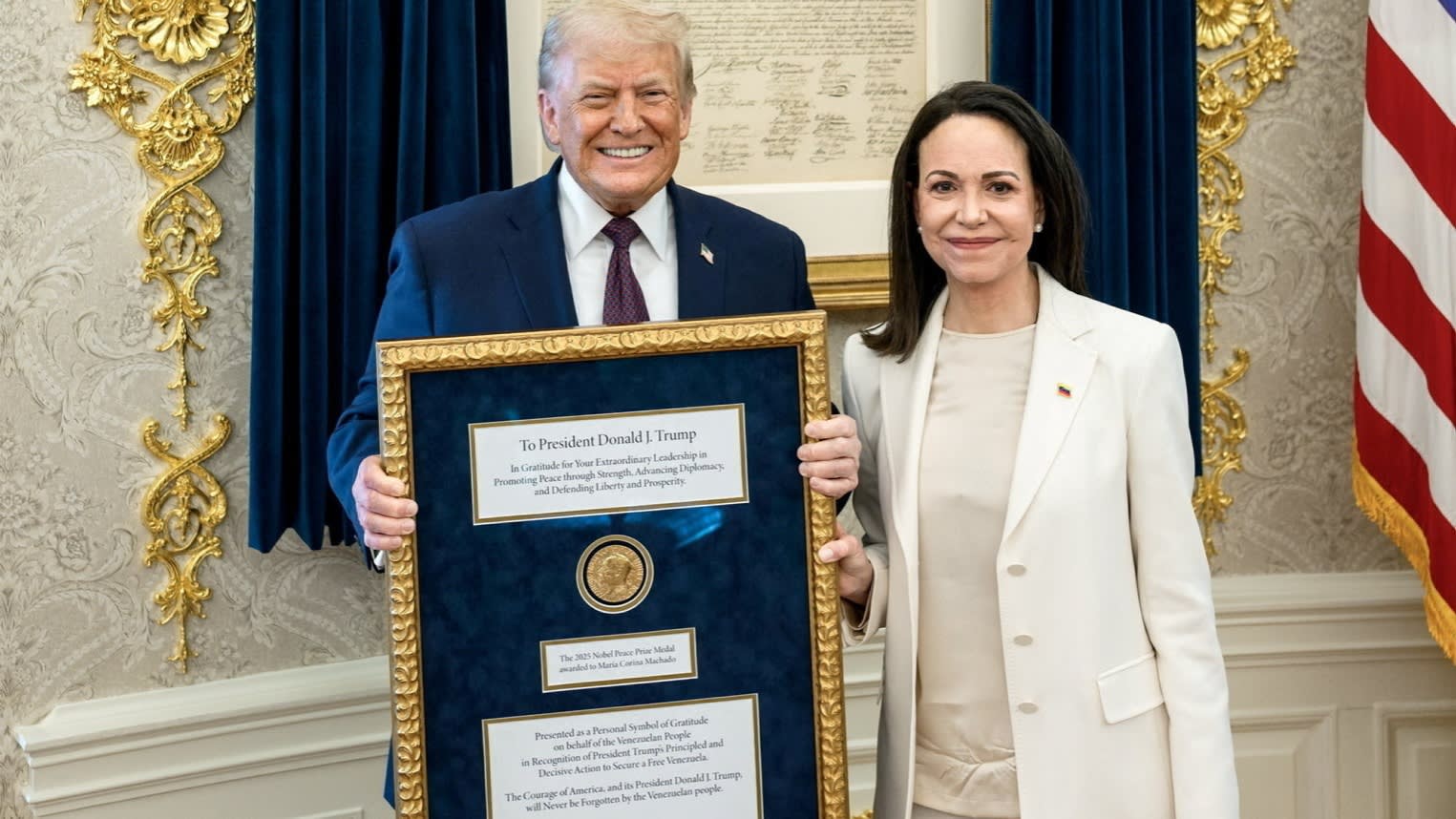
The intersection of high-stakes Latin American politics and American foreign policy reached a symbolic crescendo this week as Maria Corina Machado, the prominent leader of the Venezuelan opposition, delivered a prestigious medal of recognition to former U.S. President Donald Trump. This gesture, far from being a mere exchange of accolades, represents a calculated realignment of the Venezuelan democratic movement as it seeks to navigate the complexities of a shifting global order and a potential return to the "maximum pressure" campaign that defined Washington’s approach to Caracas during the previous decade. By tethering her movement’s highest honors to the American political figure most associated with aggressive interventionism in the Caribbean basin, Machado has signaled that the fight for Miraflores Palace is entering a volatile and potentially decisive new chapter.
The timing of this symbolic offering is deeply intertwined with the deteriorating economic and political landscape in Venezuela. Following the disputed presidential election of July 2024, in which the opposition provided voluminous evidence of a landslide victory for Edmundo González Urrutia while the incumbent Nicolás Maduro claimed a third term amidst widespread allegations of fraud, the country has remained in a state of precarious paralysis. For Machado, who remains the primary architect of the opposition’s current strategy despite being barred from holding office by the Maduro-controlled judiciary, the gesture toward Trump serves as an invitation for the United States to reclaim its role as the primary external arbiter of Venezuelan democracy. It is a move that acknowledges the reality of power: without significant external leverage, the domestic momentum generated by the opposition risks being suppressed by the state’s security apparatus.
From a geopolitical perspective, the move is a high-stakes gamble. By aligning so publicly with Trump, Machado is betting that a more transactional and aggressive U.S. foreign policy will succeed where the multilateral, sanctions-relief-oriented approach of the subsequent years has struggled. Under the current global framework, Venezuela has managed to circumvent many Western restrictions by deepening ties with an alternative bloc of allies, including Russia, China, and Iran. This "axis of resistance" against Western sanctions has provided the Maduro administration with a financial lifeline, primarily through the opaque sale of crude oil to Asian markets and the exchange of mineral wealth for technical and military support. Machado’s outreach to Trump suggests a belief that only a disruptive force in Washington can break this stalemate.
The economic implications of this political pivot are staggering, particularly concerning the global energy sector. Venezuela sits atop the world’s largest proven oil reserves—estimated at over 300 billion barrels—yet its production remains a fraction of its 1990s peak. The decay of Petróleos de Venezuela, S.A. (PDVSA), the state-owned oil giant, has been a primary driver of the country’s 80% GDP contraction over the last decade. Market analysts suggest that a renewed Trump-led policy could take one of two paths: a total embargo aimed at choking off the remaining revenue streams of the Maduro government, or a negotiated "Oil for Democracy" framework that could see Western supermajors return to the Orinoco Belt in exchange for verifiable political concessions.
Currently, the presence of Chevron in Venezuela—operating under a special license that allows it to produce and export oil to the U.S. to recoup debts—serves as a barometer for the broader investment climate. A return to the more stringent "Maximum Pressure" era would likely place such licenses under intense scrutiny. However, if Machado’s alliance with Trump leads to a perceived path toward regime change or a transition government, the "Venezuela trade" could become the most lucrative opportunity in emerging markets. Wall Street remains cautiously observant; Venezuelan sovereign bonds and PDVSA debt, which have languished in default for years, often see speculative rallies whenever the prospect of a political breakthrough in Caracas emerges.
Furthermore, the humanitarian dimension of the Venezuelan crisis continues to exert immense pressure on the Western Hemisphere. With over 7.7 million Venezuelans having fled the country since 2014, the migration crisis has transformed into a regional economic challenge. Countries like Colombia, Peru, and Ecuador have integrated millions of refugees, straining their public services and social fabrics. In the United States, Venezuelan migration has become a central pillar of the domestic political debate. Machado’s strategy appears to link the resolution of the migration crisis directly to a change in governance in Caracas, arguing that the only way to stem the flow of people—and potentially encourage a mass return—is to restore economic viability through a democratic transition.
Expert insights suggest that Machado’s gesture is also a response to the perceived fatigue within the international community. The "Guaidó era," characterized by the recognition of an interim government that ultimately failed to seize territorial control, left many diplomatic allies wary of further symbolic maneuvers. By focusing on a direct relationship with the "America First" wing of U.S. politics, Machado is attempting to bypass traditional diplomatic channels that she views as too slow or overly cautious. This approach mirrors the "Iron Lady" persona she has cultivated domestically—a leader who is uncompromising and willing to break established norms to achieve a total restoration of the constitutional order.
However, the risks of this alignment cannot be overstated. Critics of the strategy argue that by becoming so closely identified with a specific faction of American politics, the Venezuelan opposition risks losing the broad, bipartisan support it has historically enjoyed in the U.S. Congress. If the political winds in Washington shift, or if a future administration views the Venezuelan struggle as a secondary priority to other global conflicts, the opposition could find itself isolated. Moreover, the Maduro administration has historically used the "imperialist puppet" narrative to galvanize its own base and justify the crackdown on dissent. Every high-profile interaction between Machado and U.S. leadership provides the Caracas government with propaganda fodder to frame the democratic movement as a foreign-led insurgency rather than a domestic uprising.
Economically, the path to recovery for Venezuela, regardless of the political outcome, remains daunting. The country requires an estimated $200 billion in infrastructure investment just to return its oil production to 2.5 million barrels per day. The electrical grid is in a state of near-collapse, and the hyperinflation that decimated the bolívar has left the economy de facto dollarized, creating a massive wealth gap between those with access to foreign currency and the millions reliant on state subsidies. Any transition government supported by Washington would face the Herculean task of restructuring massive debts while simultaneously implementing austerity measures that could prove unpopular with a weary populace.
As the medal of recognition makes its way into the hands of the former U.S. president, the world watches to see if this symbolic act will translate into tangible policy shifts. The Venezuelan crisis is no longer just a localized conflict; it is a flashpoint for the broader struggle between democratic norms and the rising tide of authoritarianism globally. For the energy markets, it represents the "wild card" of supply—a potential surge of 2 million barrels per day that could reshape global pricing dynamics. For the millions of Venezuelans living in exile or under the shadow of economic ruin, it represents a desperate hope that a new alliance might finally break the decade-long deadlock.
Ultimately, Maria Corina Machado’s decision to honor Donald Trump is a testament to the "all-in" nature of the current Venezuelan struggle. Having exhausted domestic legal and electoral avenues, the opposition is now leveraging the currency of international recognition and personal diplomacy. Whether this gesture becomes a footnote in a long history of failed interventions or the catalyst for a fundamental shift in the regional balance of power will depend on the evolving priorities of the United States and the resilience of the Venezuelan people. In the theater of global politics, symbols often precede substance, and Machado has just raised the curtain on what promises to be a high-stakes finale.