


Despite relentless military aggression and profound economic disruption, Ukraine’s financial sector has demonstrated remarkable resilience, a testament to rapid reforms, aggressive digital innovation, and robust international collaboration. This steadfastness, highlighted by international observers, underscores a strategic pivot that is not only preserving stability amidst conflict but also laying the groundwork for the nation’s post-war economic resurgence. The ongoing hostilities present immediate operational hurdles, from ensuring staff safety and availability to mitigating the impact of physical infrastructure attacks, energy disruptions, and pervasive cyber threats. Yet, it is precisely these challenges that have spurred the development of some of the world’s most sophisticated defense mechanisms against financial system vulnerabilities.
A recent assessment by the Organisation for Economic Co-operation and Development (OECD) commended Ukraine’s enduring strength, noting that "Three years into Russia’s war of aggression, Ukraine continues to show strong resilience. Despite the ongoing hostilities, policymakers and regulators are continuing to work hard to ensure the stability and resilience of the financial system, and to support households and businesses. At the same time, they are progressing reforms to increase transparency, accountability, and efficiency in the regulatory framework for financial markets and corporate governance, in line with international standards and in partnership with multilateral organisations and partner countries." This official endorsement reflects a broader narrative of innovation in operational models, particularly the significant shift towards digital engagement and service delivery, a development that holds considerable pride for Ukrainians and is reshaping the country’s financial landscape.

The war has acted as a potent accelerant for the digitalization of Ukrainian society and business, building upon existing efforts to modernize and shed the complexities of Soviet-era bureaucracy. Olena Sotnyk, Managing Director of Rasmussen Global Ukraine and a policy advisor to Ukraine’s Deputy Prime Minister for European Integration, observed at a recent London event that even traditionally conservative institutions have embraced rapid change. "I can see, because I work in this area, how even very old-style institutions are ready to change quickly. They are ready to sacrifice their business-as-usual [models] and that has created momentum for Ukraine to switch from the heritage of the Soviet Union legacy to a really western model." This rapid digital transformation has, in many respects, placed Ukraine ahead of established Western economies. "We already have something which even the European Union doesn’t have with digitalization as that has helped to digitalize the whole country, because when you can’t physically get services or when you can’t physically get documents, approvals etc, you look for more efficient ways in how to do that. Digitalisation is one of the answers we have," Sotnyk added.
The immediate impact of the full-scale invasion in February 2022, however, was undeniably severe. Alina Golubieva, CEO and Co-founder of Karpatia Benefits, a Kyiv-based financial advisory and insurance firm, recounted the significant dislocation experienced by businesses and their clients. "We had a few clients in Kharkiv, we had clients in Kherson and in Mykolaiv, which wasn’t invaded, but still badly affected. And we had a lot of clients with employees in Mariupol as well. So basically, they relocated to either other parts, or we just saw the numbers there drop drastically." She cited an example of a client with approximately 600 employees in Kharkiv, whose workforce was reduced to just 50 on-site, with others relocated within Ukraine or abroad. "So, for example, one of our clients, they had about 600 people in Kharkiv. Now it is only 50 people and 200 people are in other parts of Ukraine. Some of the people are relocated outside of Ukraine, but the war affected business immensely."
Despite initial anxieties about potential business collapse, Karpatia Benefits weathered the storm with remarkable fortitude. "We were expecting to lose about 80 percent of our portfolio, but we lost only 30 percent because we haven’t stopped working and we are a digital business. Every day we were online and we were answering clients’ questions." Golubieva attributed this success to an "amazing team effort" and a proactive response. "On February 24, 2022, we regrouped quickly. Some of our people relocated to safer areas of Ukraine if they were able to. We didn’t store any paper-based agreements or anything like that. So we closed the office for two months and it didn’t affect our work at all." The firm’s digital infrastructure and client focus proved instrumental, enabling continued operations even as clients and their employees relocated globally.

This operational agility was underpinned by swift regulatory adjustments and concerted efforts to maintain capital flows, signifying a fundamental re-engineering of Ukraine’s financial ecosystem. The National Bank of Ukraine (NBU) immediately implemented emergency measures, placing the banking system on a war footing. This included stringent controls on capital and foreign exchange outflows, alongside a relaxation of regulations concerning loan forbearance and grace periods to facilitate necessary debt restructuring. These actions were contextualized against the backdrop of a banking sector undergoing significant transformation since the 2014 Revolution of Dignity. Prior to the full-scale invasion, the sector was characterized by fragmentation and undercapitalization, with 71 banks operating in Ukraine. Notably, five major banks were Russian-controlled, including Alfa Bank, which, despite attempting to rebrand as Sense Bank, was nationalized by the NBU in July 2023 due to persistent ties to Russian ownership.
The insurance sector also saw significant shifts, with the withdrawal of Russian-controlled entities. Providna, a prominent Ukrainian insurer, had its license revoked by the NBU in March 2023 for failing to provide sufficient proof of beneficiary ownership, mirroring similar actions against Ingosstrakh. The insurance subsidiary of Alfa Bank also faced license cancellation. In total, 23 insurers exited the market as the Ukrainian regulator accelerated plans to tighten capital requirements, driven by concerns over the viability of firms facing potentially escalating losses.
The increased state involvement in the banking sector has been a crucial factor in maintaining stability, though its long-term implications require careful consideration. Experts from the European Bank for Reconstruction and Development (EBRD), Alexander Pivovarsky and Ralph De Haas, noted in a report for the Centre for Economic Policy Research that "Deepening Ukraine’s banking sector will require the privatisation of most of its main state lenders, which will account for an even greater majority of all banking assets after the war." They highlighted a critical challenge: "An important problem to be addressed urgently is that state banks remain reluctant to write off or restructure debt in a way that would reduce the value of any (collateralised) state assets. While there is no legal restriction on financial restructuring by state banks, in practice the perception is that any loan restructuring that entails a (partial) write-off may be challenged by law enforcement agencies and considered as misappropriation or damage to state property."
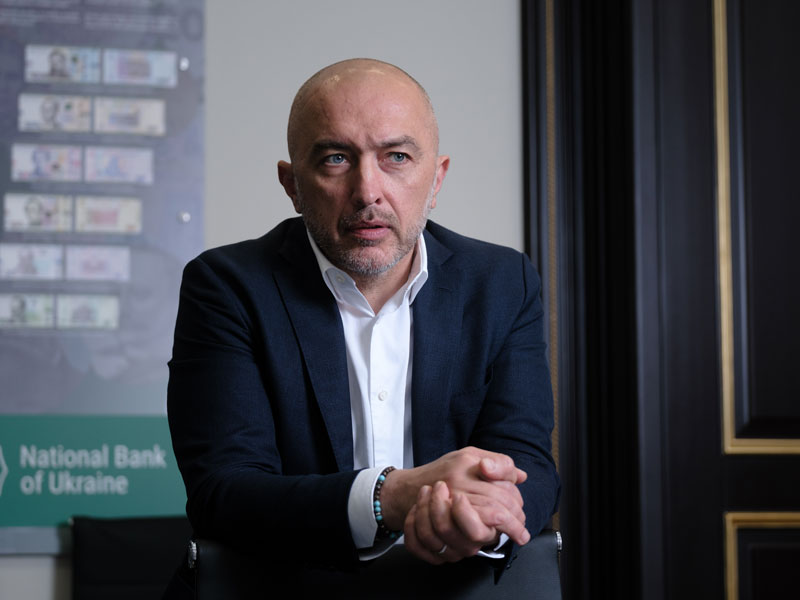
A cornerstone of the NBU’s efforts to ensure continuous access to financial services was the "Power Banking" initiative, spearheaded by NBU Governor Andriy Pyshnyy. This program established a unified network of over 1,000 branches belonging to systematically important banks across 200 cities and villages, designed to function collaboratively even during power outages. The initiative focused on ensuring backup electricity, connectivity, and cash availability, a feat described by Governor Pyshnyy as unprecedented globally. Complementing this, the NBU prioritized the elimination of dependence on software and systems developed by Russian or Belarusian companies, a strategic move to bolster resilience against anticipated cyberattacks. Investment in Ukraine’s burgeoning IT sector was deemed essential to facilitate this technological transition. The Power Banking initiative is evolving into a long-term program aimed at enhancing financial inclusion, particularly in frontline and recently re-occupied regions where banking access remains limited. The NBU plans to enable large retail and postal service companies with existing branch networks to operate with limited banking licenses, leveraging their infrastructure to provide financial services to local residents and small businesses.
The international community has played an indispensable role in bolstering Ukraine’s financial stability. In its first year of the war, the World Bank mobilized over $38 billion in emergency financing, commitments, and pledges, including grants, guarantees, and parallel financing from key partners such as the United States, the United Kingdom, Canada, and European nations. This funding was critical in ensuring the timely payment of state pensions and salaries for public sector employees, achieving a target of 98.5 percent of pension payments.
Mainstream banks have concurrently focused on building greater internal resilience. The ratio of loans to bank assets has decreased significantly, from 36 percent in December 2021 to 23.6 percent in 2024, while liquid instruments like cash and deposits at the NBU have increased from 27.1 percent to 43 percent over the same period, signaling a prevailing atmosphere of caution and robust contingency planning.

In August 2025, the Ukrainian Ministry of Finance unveiled a revised national financial sector development strategy. This plan explicitly targets the enhancement of capital markets infrastructure and the consolidation of accounting and trading systems, with a primary objective of attracting foreign investment. The strategy also reaffirms the NBU’s commitment to aligning its regulations with European Union standards and to further improving transparency and eradicating any residual corruption linked to past Russian influence.
Beyond governmental and institutional support, Western financial institutions have provided crucial assistance. Local insurers faced challenges accessing the international reinsurance market, prompting US insurance broker giant Aon and the EBRD to establish a scheme facilitating this access for three Ukrainian insurers: Ingo, Colonnade, and Uniqa. A specialized marine insurance package was also developed to support grain shipments from Odesa, and innovative capital-raising mechanisms through global investment funds within the wholesale banking sector are under development.
In March 2025, global reinsurer MS Amlin introduced a reinsurance scheme offering up to €1 billion annually in war risk cover for Ukrainian SMEs insured by local Ukrainian firms. This initiative aims to stimulate business activity and support post-war reconstruction efforts. This was followed in August by a memorandum of understanding signed in Rome between the Ukrainian government and representatives of leading insurance companies, including Marsh McLennan, Aon, MS Amlin, Fairfax Insurance Group, and the National Association of Insurers of Ukraine. The memorandum seeks to foster the development of Ukraine’s insurance market. Yulia Svyrydenko, First Deputy Prime Minister and Minister of Economy of Ukraine, emphasized the strategic intent: "We are sending a clear signal: Ukraine is actively looking for ways to reduce risks for business. This memorandum demonstrates our common intention to form a modern insurance market with flexible products that will provide comfort to investors." These measures are viewed as essential prerequisites for attracting the substantial international finance required for Ukraine’s post-war reconstruction.

The estimated recovery and reconstruction needs for Ukraine over the next decade are projected at $486 billion, a figure nearly three times Ukraine’s nominal GDP in 2023. As the conflict persists and infrastructure attacks intensify, these financial requirements are likely to escalate. The continued functionality and development of capital markets and financial institutions will be paramount in attracting the necessary foreign investment and fostering domestic financial growth. Ultimately, the determination of the Ukrainian people to rebuild their nation, coupled with their unwavering belief in its future, forms the bedrock of this resilience. Even amidst the prolonged hardship of war, this spirit is evident in symbolic gestures, such as the co-working office in Kyiv named "Nepemora," meaning "Victory," a powerful statement of defiance and enduring hope for the nation’s future.