

Gary Stevenson, a self-made multimillionaire and former high-flying financial trader, finds himself at the vanguard of a burgeoning movement advocating for a significant shift in global economic policy: the implementation of a targeted wealth tax on fortunes exceeding £10 million. His journey from the rarefied echelons of investment banking to a vocal proponent of social justice and economic redistribution is not merely a personal narrative; it represents a broader trend of influential figures leveraging their platforms and experiences to challenge established economic paradigms and reframe public discourse. Stevenson’s mission, amplified through his popular YouTube channel and public appearances, is to steer conversations away from divisive, often superficial political debates towards a more nuanced and equitable approach to wealth distribution and societal well-being.
The current media landscape, particularly within the digital sphere, is often characterized by an amplification of polarized viewpoints and the simplification of complex issues. Online platforms, driven by algorithmic engagement, frequently reward sensationalism and outrage, contributing to an environment where nuanced discussion struggles to gain traction. Stevenson, however, has strategically utilized long-form content, such as his appearances on podcasts like "Diary of a CEO," to foster a more in-depth exploration of economic challenges. In a notable two-and-a-half-hour special, Stevenson engaged in a passionate, yet remarkably respectful, debate with serial entrepreneur Daniel Priestley. Both men, despite offering differing perspectives on solutions to widening inequality, presented well-researched arguments, underscoring the possibility of constructive dialogue even on contentious economic matters. This approach stands in stark contrast to the often inflammatory rhetoric that dominates mainstream political discourse, where complex issues are frequently reduced to easily digestible, albeit oversimplified, narratives.
Stevenson’s critique extends to the deliberate manipulation of media narratives. In one of his widely viewed "Gary’s Economics" videos, he meticulously dissects how media outlets, potentially influenced by what he terms "wealthy elites," can strategically shift public attention away from critical economic issues like wealth inequality and taxation. He posits that by elevating topics such as immigration or social unrest, complex systemic problems that might necessitate a re-evaluation of the existing wealth distribution are sidelined. This tactic, Stevenson argues, serves to protect the interests of those who benefit most from the current economic structure by directing public scrutiny towards more manageable, and often scapegoated, issues. The result, he contends, is a populace more focused on peripheral concerns than on the fundamental drivers of economic disparity.
The emergence of individuals like Gary Stevenson signals a growing trend of "influencer politics," where individuals with substantial online followings and unique personal experiences are actively shaping public opinion and policy debates. Stevenson’s personal trajectory is a compelling element of his advocacy. Having risen from a working-class background, excelled academically at the London School of Economics, and achieved significant success in the demanding world of financial trading, he possesses an intimate understanding of both the opportunities and the potential pitfalls of the capitalist system. His subsequent disillusionment with certain aspects of wealth accumulation, coupled with the personal toll his demanding career took, has fueled his commitment to reforming the very structures that facilitated his own ascent. He now channels his considerable intellect and influence into making complex economic concepts accessible to a broad audience, particularly those from similar backgrounds to his own.
His popular YouTube channel, boasting millions of subscribers, features him discussing economic principles from his kitchen table, often using simple diagrams to illustrate his points. This unpretentious approach, combined with his firsthand experience and articulate delivery, has resonated deeply with a public often alienated by traditional economic discourse. As a member of the "Patriotic Millionaires," an organization advocating for higher taxes on the wealthy, Stevenson actively engages with his past and present communities, articulating that his motivation stems from a desire to prevent future generations from experiencing the poverty he witnessed and overcame. His call for action is not abstract; it is rooted in a tangible concern for the economic well-being of ordinary citizens.
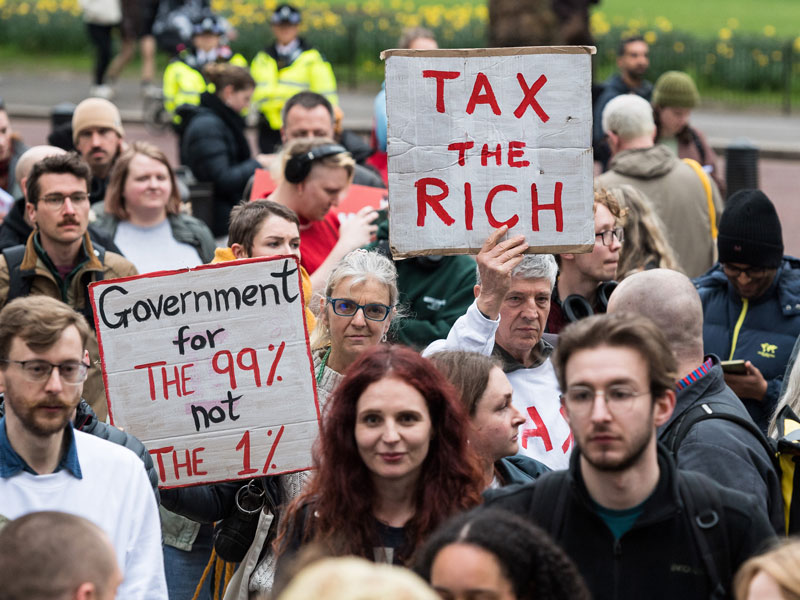
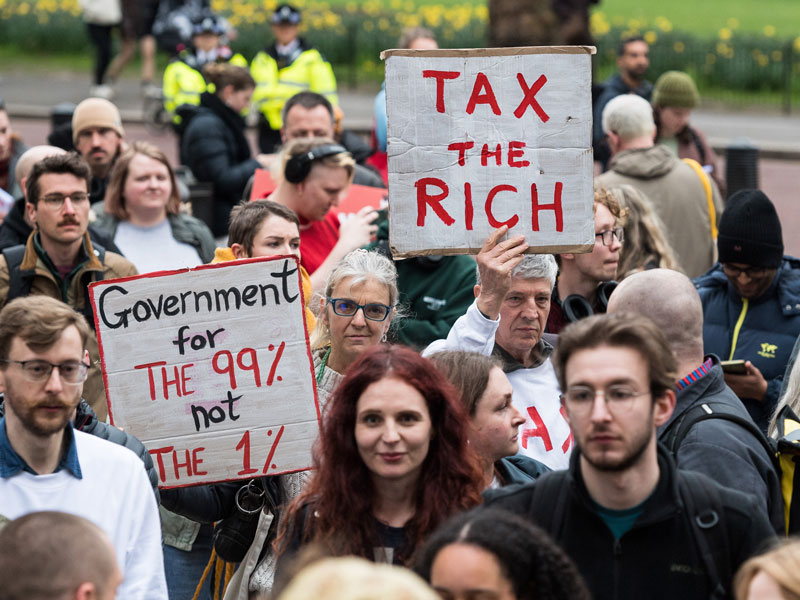
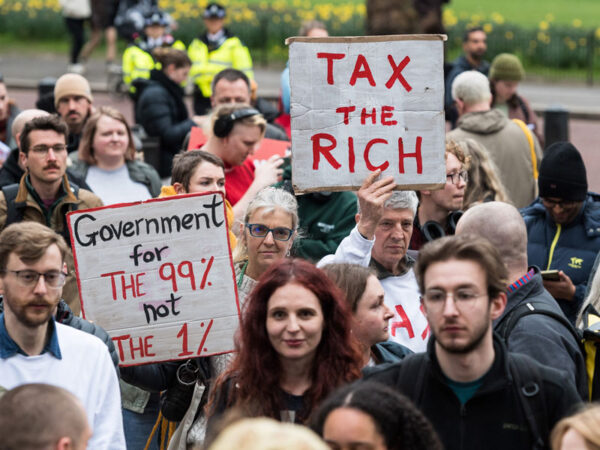
At the heart of Stevenson’s advocacy lies the proposal for a 1-2% wealth tax on assets exceeding £10 million. This specific policy focus is deliberate; he emphasizes that his concern is not with increasing income taxes for the majority, but rather with addressing the exponential accumulation of wealth that occurs independently of active labor or even high salaries. This compounding of existing wealth, he argues, is a primary driver of extreme inequality and the stagnation of economic opportunity for the broader population. He contends that such a tax would not only generate significant revenue for public services but also curb the practice of wealth hoarding, which he believes can stifle economic dynamism by limiting access to capital for aspiring entrepreneurs and individuals seeking homeownership or starting families.
A common counterargument to wealth taxation centers on the potential for capital flight, with the wealthy relocating their assets and residences to jurisdictions with more favorable tax regimes. Stevenson acknowledges this concern but suggests that the primary driver for such moves is not necessarily taxation alone, but the overall economic health and spending power of a nation. He posits that a more equitable distribution of wealth would lead to increased consumer spending, thereby strengthening the domestic economy and making it a more attractive place to invest and reside. Furthermore, he highlights the increasing global mobility of ultra-high net worth individuals and their businesses, facilitated by technology, which complicates national efforts to tax wealth effectively. This systemic challenge, he admits, might necessitate international cooperation for maximum impact, a complex undertaking in an era of competitive tax policies.
Stevenson’s influence appears to be extending beyond online platforms and into the political arena. The Green Party in the UK, under its newly elected leader Zack Polanski, has also begun advocating for a wealth tax, proposing a 2% levy on wealth exceeding £10 million. Polanski, who has actively engaged with Stevenson, has made the wealth tax a prominent plank of his party’s economic platform. This alignment suggests that the discourse initiated by figures like Stevenson is gaining traction within established political bodies, potentially emboldened by the current climate of identity politics and a desire to offer distinct economic alternatives.

As the next general election approaches, Stevenson’s efforts to popularize the concept of wealth taxation are becoming increasingly crucial. The challenge lies in maintaining public engagement and translating complex economic arguments into compelling political propositions that can capture the imagination of voters. The current political landscape in the UK, marked by stark ideological divisions and a perceived convergence of traditional parties, creates an environment where alternative economic visions might find fertile ground. Stevenson’s work, therefore, could play a significant role in shaping the narrative and influencing electoral outcomes, particularly if voters are presented with a clear choice between different economic philosophies.
The dynamic nature of Stevenson’s campaign is underscored by his recent announcement of an extended break from his YouTube channel, citing exhaustion from the demanding nature of his advocacy. This decision, framed as a strategic pause rather than an abandonment of his cause, reflects the marathon nature of challenging deeply entrenched economic systems. While his opponents may hope for his message to dissipate, Stevenson has proactively provided his followers with alternative avenues for support, prominently featuring organizations like the Patriotic Millionaires and political allies such as Zack Polanski, ensuring that the momentum for wealth redistribution continues even in his temporary absence. His work illustrates a powerful fusion of personal experience, digital influence, and political engagement, aimed at fundamentally reshaping the economic landscape.