


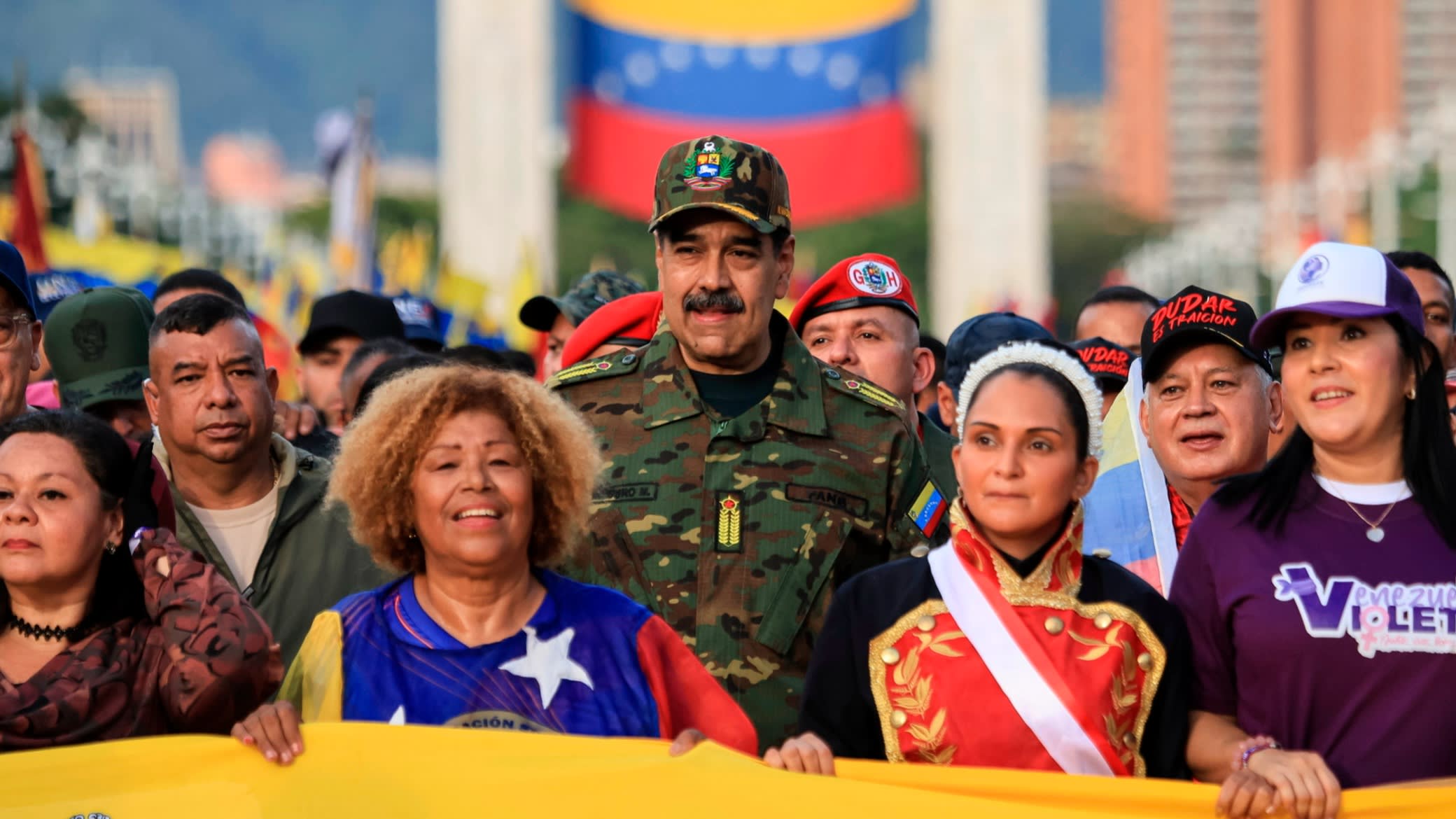
The political trajectory of Nicolás Maduro, the former bus driver who ascended to the presidency of Venezuela following the death of Hugo Chávez in 2013, represents one of the most complex case studies in modern geopolitical resilience and economic catastrophe. Once viewed as a mere placeholder for the charismatic Chávez, Maduro has defied years of domestic unrest, international isolation, and a "maximum pressure" campaign led by the United States to remain the central figure in a nation that sits atop the world’s largest proven oil reserves. However, as the global political landscape shifts and the prospect of a second Donald Trump administration looms, Maduro finds himself in a paradoxical position: a revolutionary leader whose survival is increasingly dictated by the very "imperialist" forces he publicly decries.
To understand Maduro’s current standing, one must examine the systematic disintegration of the Venezuelan economy over the last decade. Since Maduro took office, Venezuela has experienced an economic contraction unparalleled in a country not at war. According to data from the International Monetary Fund (IMF) and the United Nations, Venezuela’s Gross Domestic Product (GDP) shrunk by approximately 75% between 2014 and 2021. This collapse was precipitated by a combination of chronic mismanagement of the state-owned oil giant, Petróleos de Venezuela, S.A. (PDVSA), and a plummeting global oil price in 2014. The subsequent hyperinflation, which peaked at an astronomical 1,000,000% in 2018, rendered the national currency, the bolívar, virtually worthless and pushed over 90% of the population below the poverty line.
This economic vacuum set the stage for the intense confrontation with the Trump administration starting in 2017. Washington’s strategy was predicated on the belief that Maduro’s government was a "house of cards" that would fold under the weight of comprehensive financial sanctions. By targeting Venezuela’s ability to trade oil in US dollars and freezing billions of dollars in overseas assets—including Citgo, the US-based refining arm of PDVSA—the Trump administration sought to sever the regime’s lifeline. The 2019 recognition of Juan Guaidó, then-president of the National Assembly, as the legitimate interim leader of Venezuela by the US and over 50 other nations was intended to be the final blow.
Yet, Maduro’s survival mechanism proved more robust than Western analysts anticipated. He successfully pivoted Venezuela’s geopolitical dependencies, deepening ties with Russia, China, Iran, and Turkey. These nations provided the necessary technical assistance, fuel swaps, and "dark fleet" shipping networks to bypass US sanctions. Russia’s Rosneft and various Chinese state-owned enterprises became essential intermediaries for Venezuelan crude, often accepting oil as payment for billions in outstanding debt. This shift not only preserved Maduro’s grip on power but also transformed Venezuela into a critical theater for broader great-power competition, complicating any unilateral US efforts to enact regime change.
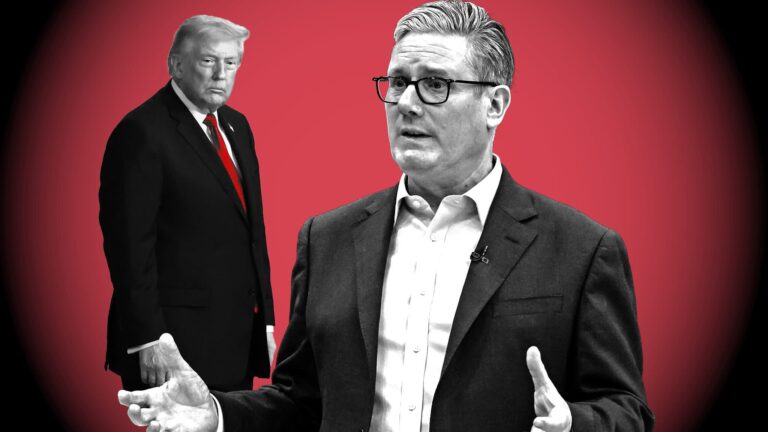
The "captive" nature of Maduro’s presidency becomes most evident when analyzing the role of Donald Trump. During his first term, Trump’s rhetoric regarding Venezuela was characterized by a mix of bellicose threats—famously stating that "all options are on the table"—and personal fascination with the idea of a "strongman" adversary. For Maduro, Trump became the ultimate foil, a personification of the "Yankee imperialism" used to justify domestic repression and the suspension of democratic norms. However, the sanctions also created a trap; Maduro cannot fix the Venezuelan economy without the lifting of US sanctions, yet the conditions for lifting those sanctions—free and fair elections—pose an existential threat to his administration.
The Biden administration attempted a more calibrated approach, utilizing the "carrot and stick" method. The 2023 Barbados Agreement, brokered between the Maduro government and the Unitary Platform opposition, offered temporary sanctions relief in exchange for a roadmap toward competitive elections in 2024. This led to a brief resurgence in Venezuelan oil production, which climbed back toward 800,000 barrels per day (bpd) after hitting historic lows of 300,000 bpd during the height of the pandemic. However, the subsequent disqualification of leading opposition candidate María Corina Machado and the disputed results of the July 2024 election have largely derailed this diplomatic thaw, prompting Washington to reimpose several key restrictions.
From a market perspective, the stakes of the Maduro-US relationship extend far beyond Caracas. Venezuela’s heavy crude is a vital component for complex refineries on the US Gulf Coast, which were specifically designed to process Venezuelan grades like Merey. The total absence of Venezuelan oil from Western markets has contributed to global supply tightness, especially following the disruptions caused by the war in Ukraine. This has created a geopolitical irony where the US, in its quest for energy security and lower domestic gasoline prices, has had to periodically negotiate with a regime it officially labels a dictatorship.
The human cost of this prolonged stalemate is staggering. The UN estimates that more than 7.7 million Venezuelans have fled the country since 2015, creating one of the largest displacement crises in the world. This exodus has had profound economic implications for the entire Western Hemisphere. While countries like Colombia, Peru, and Chile have shown remarkable resilience in integrating these migrants, the strain on public services and the political backlash in host nations have reshaped regional dynamics. For Maduro, the migration serves as a pressure valve, removing potential dissidents and generating a steady stream of remittances that now account for a significant portion of the country’s household income.
As the US enters a new electoral cycle, the prospect of "Trump 2.0" looms large over Miraflores Palace. A second Trump term could see a return to the uncompromising "maximum pressure" tactics, potentially including a full secondary sanctions regime similar to the one applied to Iran. Such a move would aim to punish any third-party entity—regardless of nationality—that does business with Venezuela. Conversely, some analysts suggest that Trump’s transactional approach to foreign policy could lead to an unexpected "grand bargain" if he perceives Maduro as a more stable partner than a fractured opposition.
Maduro’s internal strategy remains focused on "authoritarian upgrading." By dollarizing the economy de facto and allowing a degree of private enterprise to flourish in sectors like retail and tourism, he has created a "bubble economy" in Caracas that benefits a loyalist elite. This "Crony Capitalism" ensures the continued support of the military leadership, which controls key sectors of the economy, including mining and food distribution. The military’s loyalty remains the primary pillar of Maduro’s power, reinforced by an extensive intelligence apparatus reportedly advised by Cuban operatives.
In the global context, Venezuela’s situation is often compared to that of Cuba or Iran—states that have endured decades of US sanctions without collapsing. However, Venezuela’s unique position as a former middle-income country with deep cultural and economic ties to the West makes its decline particularly poignant. The degradation of its infrastructure, from the electrical grid to the health system, represents a massive loss of human capital and physical assets that will take decades to rebuild, regardless of who holds power.
The path forward for Nicolás Maduro is fraught with risk. He remains "captured" by a cycle of dependency on autocratic allies who extract high costs for their support, and by a US policy framework that remains largely paralyzed by domestic political considerations in Florida and beyond. For the international business community, Venezuela remains the ultimate "frontier market"—a land of immense potential wealth guarded by a political minefield.
As 2025 approaches, the central question is whether Maduro can transition from a leader defined by survival to one capable of some form of stabilization. Without a fundamental shift in the relationship with the United States, Venezuela is likely to remain in a state of "managed decline," a nation where the revolutionary rhetoric of the past is increasingly at odds with a grim, dollarized reality. The world watches closely, as the fate of Venezuela continues to serve as a barometer for the efficacy of economic statecraft and the endurance of authoritarianism in the 21st century.