


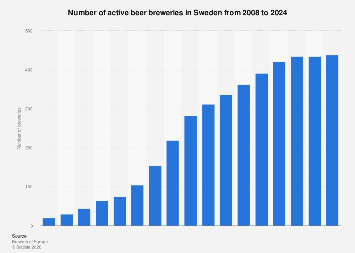
The Swedish beer market has undergone a significant transformation over the past decade and a half, marked by a surge in the number of breweries and a palpable shift in consumer preferences. From 2008 to 2024, the nation has witnessed a dramatic expansion in its brewing sector, moving from a landscape dominated by a few large players to a vibrant ecosystem of craft and microbreweries. This evolution reflects broader global trends in the beverage industry, where artisanal production and diverse offerings are increasingly valued.
The period between 2008 and the present has been characterized by a consistent upward trajectory in the establishment of new brewing entities. While precise, publicly available figures for the exact number of breweries operating annually are often proprietary, industry analyses and trade association data suggest a multiplicative growth. In 2008, Sweden’s brewing scene was relatively consolidated, with a handful of major companies holding the lion’s share of the market. However, by the mid-2010s, a distinct craft beer movement began to take root, mirroring similar developments in countries like the United States and the United Kingdom. This movement was fueled by a confluence of factors: changing consumer tastes seeking more complex and varied flavors, a growing appreciation for local and artisanal products, and a more accessible regulatory environment for smaller businesses.
The proliferation of microbreweries and brewpubs has been a defining feature of this era. These smaller operations, often driven by passionate brewers, have introduced a wide array of styles, from hoppy IPAs and rich stouts to traditional lagers and experimental brews. This diversification has not only enriched the market for consumers but has also spurred innovation and competition, forcing larger breweries to adapt and diversify their own portfolios. Market research from the period indicates a growing demand for craft beer, with consumers willing to pay a premium for unique and high-quality products. This segment, though smaller in volume compared to mainstream lagers, has been crucial in driving revenue growth and brand loyalty.
The economic impact of this burgeoning brewery sector extends beyond direct sales. The rise of craft brewing has created new employment opportunities, not only within the breweries themselves (brewers, sales, marketing, and distribution staff) but also in supporting industries. This includes suppliers of raw materials like malt and hops, packaging manufacturers, and even the hospitality sector, as pubs and restaurants increasingly feature local craft beers on their menus. Furthermore, many of these smaller breweries have become tourist attractions, drawing visitors interested in brewery tours and tasting experiences, thereby contributing to local economies.
Global comparisons offer valuable context for Sweden’s brewing renaissance. While countries like Germany and Belgium boast centuries of brewing heritage and a deeply ingrained beer culture, Sweden’s recent surge represents a rapid adaptation to modern consumer trends. The United States, which experienced its own craft beer revolution earlier, has seen a similar pattern of diversification and a challenging of established norms by smaller players. Sweden’s market, though smaller in absolute terms, has mirrored this dynamic with remarkable speed. Data from international brewing associations often highlight the significant contribution of craft breweries to overall market value in developed economies, a trend clearly observable in Sweden.
The competitive landscape has consequently become more dynamic. While large corporations still hold significant market share, their dominance has been challenged by the agility and innovation of smaller breweries. This has led to increased marketing efforts, product development, and a greater focus on brand storytelling by all players. For consumers, this translates into a wider selection, more informed purchasing decisions, and an elevated overall beer-drinking experience. The demand for transparency regarding ingredients, production methods, and sustainability practices has also grown, with many craft breweries leading the way in these areas.
Looking ahead, the trajectory of the Swedish beer industry appears to be one of continued evolution. While the initial explosive growth of new breweries might moderate, the focus is likely to shift towards consolidation, brand building, and international expansion for successful players. Sustainability in production, including water usage and waste management, is also becoming an increasingly important consideration for both producers and consumers. Moreover, the ongoing digitalization of commerce and marketing presents new avenues for breweries to reach consumers directly, bypassing traditional distribution channels and fostering a more intimate connection with their customer base. The market will likely continue to see a segmentation of offerings, catering to a broad spectrum of tastes and occasions, from everyday drinking to specialty and limited-edition releases. The commitment to quality, local sourcing, and unique flavor profiles that characterized the recent growth phase is expected to remain a cornerstone of the Swedish beer industry’s success.