


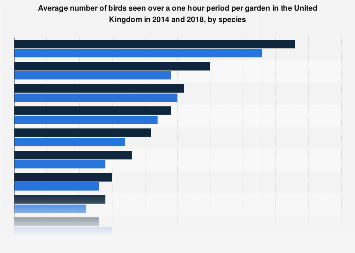
In 2018, a comprehensive survey of garden bird populations across various regions provided a detailed look into the presence and prevalence of different avian species in urban and suburban environments. This extensive data, gathered through citizen science initiatives and expert ornithological monitoring, offers a valuable baseline for understanding the health of bird populations and the ecological factors influencing their distribution. While the raw numbers of individual birds might fluctuate year-on-year due to weather, breeding success, and food availability, the 2018 data highlights distinct trends for specific species, signaling potential shifts in biodiversity and habitat suitability.
The survey’s findings underscore the importance of domestic gardens and green spaces as critical habitats for a surprising diversity of birdlife. These areas, often overlooked in broader conservation discussions, provide essential food sources, nesting sites, and refuge from predators. The data collected in 2018 allows for a granular analysis, moving beyond aggregate numbers to identify which species are thriving, which are facing challenges, and what implications these trends might have for the broader ecosystem. Understanding these species-specific dynamics is crucial for informing targeted conservation efforts and urban planning strategies.
One of the key takeaways from the 2018 survey was the robust presence of common garden birds such as the house sparrow ( Passer domesticus ) and the European robin ( Erithacus rubecula ). These species, known for their adaptability to human-altered landscapes, consistently appeared in high numbers across many surveyed areas. Their resilience can be attributed to a combination of factors, including their opportunistic feeding habits, ability to utilize human-provided resources like bird feeders, and their tolerance for urban noise and activity. For instance, the house sparrow, despite experiencing declines in some agricultural areas due to changes in farming practices, has maintained a strong foothold in urban environments. Similarly, the European robin, with its charming demeanor and willingness to approach humans, often benefits from garden maintenance that provides insects and other invertebrates.
However, the survey also shed light on species experiencing more nuanced or concerning trends. Certain corvids, like the carrion crow ( Corvus corone ), while present, showed varied distribution patterns. In some regions, their numbers remained stable, benefiting from available food scraps and nesting opportunities in larger trees. In others, competition for resources or localized predator pressures might have influenced their presence. The Eurasian blackbird ( Turdus merula ), another widespread species, also demonstrated regional variations. While generally abundant, factors such as the availability of soft fruit and invertebrates in gardens, as well as the intensity of pesticide use, likely played a role in its localized population densities.
The impact of climate change and habitat fragmentation on bird populations is a growing concern, and the 2018 data offers some early indicators. While not explicitly a climate survey, the distribution patterns of certain species can be influenced by subtle shifts in temperature and weather events. For example, species that rely on specific insect life cycles or early spring blooming plants might be more sensitive to changes in seasonal timing. The presence of migratory birds, though not the primary focus of a garden survey, can also be indirectly affected by broader environmental changes, which in turn can influence the availability of certain food sources for resident species.
Beyond the immediate ecological implications, the trends observed in garden bird populations have economic dimensions. A vibrant and diverse bird population can contribute to the aesthetic appeal of residential areas, potentially influencing property values and local tourism. Furthermore, the sale of bird feed, feeders, and related garden products represents a significant market. Understanding which species are prevalent and what resources they require can inform businesses operating in this sector. For instance, if the survey indicated a decline in a particular seed-eating bird species, it might lead to a shift in the types of bird feed being marketed.
The economic value of biodiversity extends beyond direct consumer spending. Birds play a vital role in pest control, consuming large quantities of insects that could otherwise damage crops and gardens. They also contribute to seed dispersal, aiding in the propagation of plant species. A decline in the populations of insectivorous birds, for example, could lead to an increase in pest populations, necessitating greater use of pesticides, which in turn has its own economic and environmental costs.
Comparing the 2018 data with historical records, where available, provides a more comprehensive picture of long-term trends. Many ornithological organizations have been monitoring bird populations for decades, allowing for the identification of species that have shown consistent declines or increases. For example, studies in the UK have documented significant declines in the populations of several common farmland birds, and while garden surveys focus on a different environment, they can sometimes reflect broader ecological pressures. The success of species like the great tit ( Parus major ) in urban settings, often linked to their adaptability and ability to exploit food sources provided by humans, contrasts with the struggles of some more specialized species.
The methodology employed in the 2018 survey is crucial for its reliability. Citizen science projects, where volunteers record bird sightings, can generate vast amounts of data but require rigorous quality control. Expert-led surveys, while more resource-intensive, provide a higher degree of accuracy. The combination of both approaches, as is often the case in large-scale surveys, offers a balanced perspective. The geographic scope of the survey is also important; data from a single region might not be representative of national or international trends. The 2018 data likely encompassed a broad geographical spread, allowing for the identification of regional variations and broader patterns.
Looking ahead, the insights gleaned from the 2018 garden bird survey can inform future research and conservation strategies. Identifying species that are particularly vulnerable to habitat loss, climate change, or specific environmental pressures allows for the prioritization of conservation efforts. This could involve promoting the planting of native species in gardens that provide suitable food and shelter, reducing pesticide use, or creating and protecting urban green corridors. For policymakers, this data can inform urban planning decisions, ensuring that new developments incorporate green spaces and consider the ecological needs of local wildlife.
The economic implications of these conservation efforts are also considerable. Investment in biodiversity conservation can lead to long-term economic benefits through ecosystem services, ecotourism, and the development of sustainable industries. Furthermore, a healthy environment, supported by a diverse range of species, contributes to human well-being and public health. The seemingly simple act of observing birds in our gardens, when aggregated and analyzed scientifically, provides a powerful lens through which to view the health of our planet and the intricate web of life that sustains us. The 2018 survey, therefore, serves not just as a statistical record, but as a vital piece of evidence in the ongoing effort to understand and protect the natural world.