


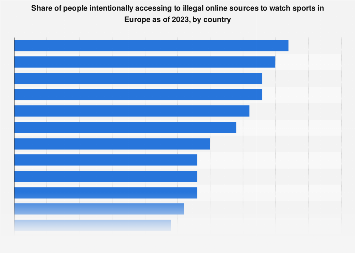
The European sports broadcasting landscape in 2023 is increasingly defined by a significant and persistent challenge: the widespread illegal access to live sporting events. While legitimate streaming services and traditional broadcasters invest billions to secure rights for popular leagues and tournaments, a substantial portion of the continent’s fan base is turning to illicit channels for their viewing pleasure. This burgeoning shadow market not only erodes revenue streams for rights holders and broadcasters but also raises complex questions about consumer behavior, technological accessibility, and the future of sports monetization across Europe.
Recent analyses of the European sports streaming market reveal a deeply entrenched pattern of illegal consumption. This phenomenon is not a niche concern but rather a mainstream behavior influencing millions of fans. The allure of free or significantly cheaper access to premium content, particularly high-stakes football matches, Grand Slam tennis tournaments, and major athletic competitions, proves a powerful draw. The economic models of many legitimate sports broadcasters and streaming platforms, often built on subscription fees and advertising revenue, are directly threatened by this widespread circumvention of payment systems. This, in turn, can lead to reduced investment in content production, fewer lucrative broadcast deals for sports organizations, and ultimately, a potentially diminished experience for legitimate paying customers.
The statistics paint a stark picture of the scale of this issue. While precise figures for illegal streaming are notoriously difficult to quantify due to their clandestine nature, industry estimates suggest that the economic impact runs into billions of euros annually. This figure encompasses not only lost subscription revenue but also the diminished value of broadcast rights, the cost of anti-piracy measures, and the potential for decreased sponsorship and advertising opportunities as audiences fragment across legitimate and illegitimate platforms. For example, a significant percentage of European households reportedly access live sports through unofficial means, often facilitated by easily accessible, albeit illegal, streaming websites and applications. These platforms are frequently supported by intrusive advertising, including malware, further complicating the user experience and posing security risks to consumers.
Several factors contribute to the persistence and growth of illegal sports streaming in Europe. Firstly, the sheer cost of legitimate sports packages can be prohibitive for many consumers. As broadcast rights fees escalate, so too do the subscription prices for services offering access to major leagues. This economic barrier creates a fertile ground for illicit alternatives, especially in regions with lower average disposable incomes. Secondly, the fragmentation of the legitimate market plays a crucial role. Fans are often required to subscribe to multiple services to follow their favorite teams or sports, leading to subscription fatigue and a search for consolidated, albeit illegal, viewing solutions. The inconvenience of juggling various platforms and the potential for blackouts or regional restrictions on legitimate services further incentivize the use of illegal streams that promise comprehensive and immediate access.
The technological landscape has also been a double-edged sword. While streaming technology has enabled legitimate services to flourish, it has also empowered illicit providers to offer increasingly sophisticated and high-quality streams. The proliferation of smart TVs, media streaming devices, and high-speed internet connections means that illegal content is now accessible on a wide range of devices, mirroring the convenience offered by legal alternatives. Furthermore, the development of VPNs and other circumvention tools makes it easier for users to mask their online activity and access geo-restricted illegal content, further complicating enforcement efforts.
The economic implications for the sports industry are profound. Rights holders, such as football leagues and governing bodies, rely heavily on broadcasting revenue to fund player development, infrastructure, and prize money. When illegal streaming erodes this revenue, the entire ecosystem can suffer. This can lead to reduced investment in grassroots sports, potentially impacting the pipeline of future talent. Broadcasters, who invest heavily in securing exclusive rights, face declining subscriber numbers and advertising revenue, impacting their profitability and their ability to continue bidding for these valuable rights. This dynamic creates a vicious cycle where reduced legitimate revenue can lead to higher prices for remaining legitimate consumers, further pushing some fans towards illegal options.
Globally, the challenge of illegal sports streaming is not unique to Europe. Similar trends are observed in North America, Asia, and other major markets. However, the European context is particularly interesting due to the diverse regulatory environments, varying economic conditions, and the deeply ingrained passion for sports like football across the continent. Different national approaches to copyright enforcement and internet regulation can lead to a patchwork of effectiveness in combating illegal streams, often leading to a game of digital cat and mouse between rights holders and illicit operators.
Industry experts emphasize the need for a multi-pronged approach to address this complex issue. This includes not only robust legal and technological enforcement measures to disrupt illegal streaming operations but also innovative strategies to make legitimate content more accessible and affordable. Some suggest tiered subscription models, the development of more user-friendly and consolidated legal streaming platforms, and educational campaigns to inform consumers about the risks and consequences of illegal streaming. The potential for partnerships between rights holders, broadcasters, and technology companies to develop more effective anti-piracy solutions is also a key area of focus.
The debate around illegal sports streaming also touches upon broader economic principles. It highlights the tension between intellectual property rights and consumer demand for affordable access to entertainment. While copyright holders have a legitimate claim to protect their intellectual property and monetize their content, the persistent demand for cheaper alternatives suggests that current pricing and distribution models may not be fully aligned with the economic realities and expectations of a significant segment of the consumer base. Finding a sustainable balance that satisfies both the economic needs of the industry and the accessibility demands of fans remains a critical challenge for the future of sports broadcasting in Europe and beyond. As technology continues to evolve, the battle against illegal streaming is likely to remain a dynamic and ongoing struggle, requiring continuous adaptation and innovation from all stakeholders involved.