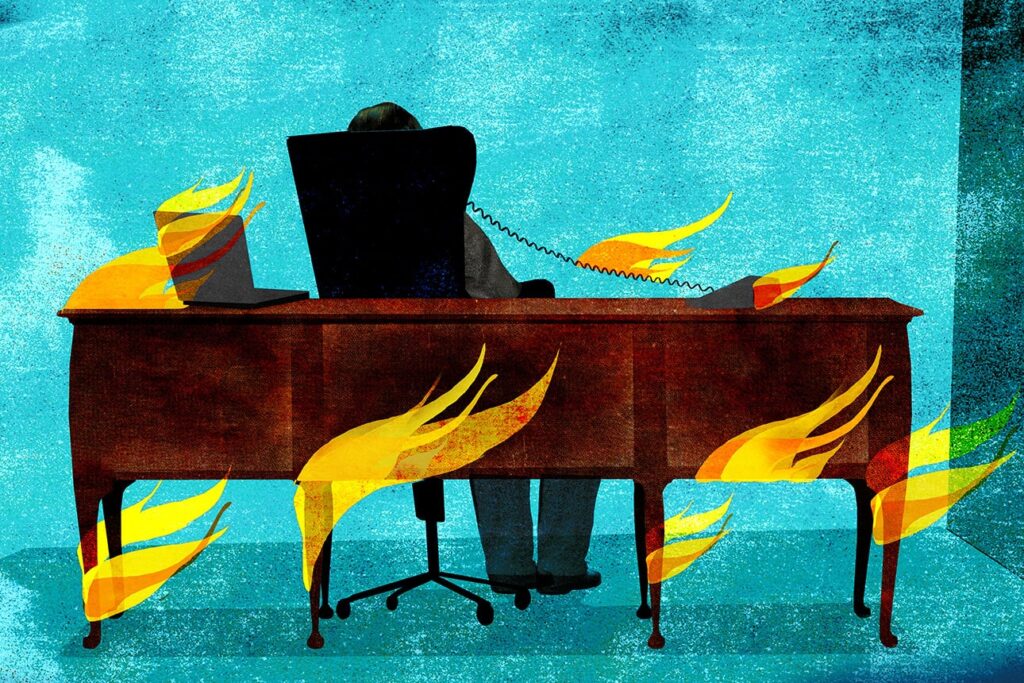


In an increasingly volatile, uncertain, complex, and ambiguous (VUCA) global economy, the relentless pursuit of productivity often overshadows the fundamental human need for well-being, creating a pervasive tension within the modern workforce. Executives across diverse sectors consistently report an environment characterized by an overwhelming deluge of meetings, insufficient time for strategic thought, incessant digital interruptions, and an unsustainable pace that leaves little room for recovery. This dynamic highlights a critical imbalance: the tug-of-war between aggressive output targets and the essential requirement for human nurture. While unchecked productivity can lead swiftly to burnout, a lack of productivity can render an organization fragile. Navigating this inherent tension is not a one-time solution but a continuous, dynamic process demanding a crucial, yet often overlooked, leadership capability: calm.
For over a decade, extensive research into constructing sustainable professional trajectories in an era of extended working lives has revealed an eight-thread framework of essential capabilities. These threads encompass a blend of skills, motivations, and aptitudes, with four focused on enhancing productivity and the other four dedicated to self-nurturing and fostering harmonious work environments. When assessed by executives in leadership development programs globally, a consistent pattern emerges: capabilities related to productivity, such as "mastery" – the accumulation and deepening of expertise – are typically rated as strong. Leaders often excel at identifying their core strengths, pursuing opportunities for specialization, and engaging in work that invigorates them. Conversely, the capability most frequently identified as a weakness is "calm" – defined as the capacity and motivation to deliberately create space for reflection, maintain a centered perspective, and safeguard activities vital for energy restoration.
This revelation often elicits a common refrain from executives: "I understand the necessity of calm, but my professional demands simply don’t permit it." Yet, within every cohort, a distinct minority, typically around 10%, consistently identifies calm as their strongest attribute. These individuals, whom we term the "calm minority," operate under the same intense pressures, responsibilities, and deadlines as their peers. Their unique ability to maintain composure amidst chaos offers invaluable insights into how this critical capability can be cultivated and leveraged.
The distinguishing characteristic of the calm minority is not a reduced workload, but rather their deliberate approach to managing it. Despite confronting identical complexities, rapid demands, and competing priorities, they exhibit a remarkable steadiness that eludes many. This inherent calm typically manifests through three distinct pathways, each rooted in deeper questions of identity – specifically, "Who am I?" – reflecting personal heritage, innate temperament, and formative experiences.
Pathway 1: Calm from Heritage – The Deep Roots of Composure
For some within the calm minority, a predisposition for calm is deeply embedded in their upbringing. They were nurtured in environments where tranquility was an intrinsic part of daily life, whether through cultural practices, familial rituals, or spiritual disciplines. They unconsciously absorbed slower rhythms, recognized the inherent productivity of pauses, and developed a belief in the restorative power of rest. For these individuals, calm wasn’t an adult pursuit but a psychological inheritance, ingrained through the subtle, repeated patterns of their early lives rather than explicit instruction.
Executives recalling this pathway often describe formative figures, such as a grandparent who approached challenges with thoughtful deliberation rather than impulsivity, or a household where conflict was resolved with measured restraint. Others attribute their composure to broader cultural norms that value equanimity and collective support. A Japanese executive might highlight traditions emphasizing intentionality and patience, while a Latin American leader might cite strong familial bonds that foster a collective sense of resilience during crises. This early exposure to calm functions as a powerful form of psychological capital, compounding over time to enhance their ability to navigate professional transitions and market volatility with greater ease and less reactivity. The lesson for those struggling with calm is not to mimic an unfamiliar culture, but to introspectively reconnect with their own formative experiences, identifying individuals or moments that modeled steadiness and leveraging these rediscovered internal resources.
Pathway 2: Calm from Personality – Temperament as an Internal Compass

A second pathway sees calm as an inherent aspect of an individual’s temperament. These members of the calm minority often exhibit traits associated with introversion, lower neuroticism, and a strong orientation towards autonomy, naturally gravitating towards deep, focused work. For them, calm is not an aspiration but a default mode of engagement with the world. However, even for those with this innate predisposition, the demands of contemporary work environments – open-plan offices, incessant digital notifications, and rapid-fire communication – pose significant challenges, eroding the conditions necessary for their natural calm to flourish.
Consequently, these individuals proactively learn to redesign their professional environments and routines to align with their intrinsic needs. They rigorously block out uninterrupted time for high-quality, focused work, protect their mornings for complex tasks, and actively reduce exposure to sensory and cognitive distractions. This pathway underscores the principles of "deep work," popularized by authors like Cal Newport, advocating for sustained, distraction-free concentration on a single task. What makes this pathway particularly instructive is its replicability: even those without such temperamental predispositions can adopt these underlying strategies – prioritizing "deep time," minimizing sensory overload, establishing clear boundaries, and choosing depth over superficial engagement. Organizations can facilitate this by promoting flexible work arrangements, establishing quiet zones, and implementing policies that encourage digital disengagement during non-working hours, thereby unlocking enhanced focus and creativity.
Pathway 3: Calm from Experience – The Forged Resilience
Perhaps the most encouraging pathway to calm is the one shaped by lived experience. Many within the calm minority did not begin their careers with an innate sense of composure; rather, they cultivated it through exposure, deliberate practice, and a gradual reframing of their responses to pressure. These individuals often speak of influential mentors who modeled measured behavior, managers who valued quality over sheer speed, or organizational cultures that actively protected boundaries rather than eroding them. Some attribute their calm to intentional practices such as mindfulness meditation, reflective journaling, or structured periods of stillness, which progressively rewired their habitual reactions. Others point to pivotal moments – a significant project failure, a corporate restructuring, a health crisis, or a poorly handled conflict – that served as catalysts, forcing a shift from reactive impulsivity to grounded, strategic problem-solving.
This pathway unequivocally demonstrates that calm is a trainable skill. While heritage might provide an early foundation and temperament a natural inclination, experience proves that composure can be strengthened at any stage of a career. When executives reflect on the individuals or events that shaped them, they often recognize how they learned to pause, reframe challenges, and choose a more thoughtful response. This pathway reveals that calm is not the absence of speed, but rather the discernment to choose when speed is necessary and when it is counterproductive. The growing investment in corporate wellness programs, mindfulness training, and resilience-building initiatives across global enterprises, estimated to be a multi-billion dollar industry, underscores the increasing recognition of calm as a critical organizational asset, yielding benefits such as reduced stress-related healthcare costs, improved employee retention, and enhanced strategic decision-making.
Synthesizing the insights from these three pathways, it becomes clear that calm is not a passive state but an active, strategic capability. It profoundly influences the quality of decision-making, cultivates a more positive team morale, and shapes the overarching organizational culture. Leaders who embody calm often create a ripple effect, fostering environments of psychological safety where employees feel empowered to contribute their best work without fear of constant urgency or punitive reactivity. In a world grappling with escalating geopolitical tensions, rapid technological shifts, and unprecedented economic fluctuations, the ability to remain centered is a significant competitive advantage. Research consistently shows that calm leadership leads to more robust long-term strategies, reduces the staggering costs associated with employee turnover (estimated to be 100-300% of an employee’s salary), fosters an environment conducive to innovation by allowing space for creative thought, and dramatically improves crisis management. This stands in stark contrast to the outdated "heroic leader" archetype, perpetually busy and stressed, which ultimately proves unsustainable and detrimental to both individual and organizational health.
The journey toward cultivating greater calm begins with self-awareness, recognizing which of the three pathways resonates most with one’s personal and professional history. Whether it’s reconnecting with early influences, proactively designing a more conducive work environment, or embracing deliberate practices to reframe pressure, understanding one’s starting point illuminates existing strengths and identifies areas for growth. The calm minority demonstrates that this capability is built through small, consistent actions: integrating micro-pauses throughout the day, scheduling dedicated time for reflection, practicing digital hygiene to minimize distractions, and actively fostering a culture of psychological safety within teams. For organizations, this means investing in executive coaching, implementing comprehensive wellness programs, and establishing policies that support healthy boundaries, such as meeting-free blocks or designated quiet hours.
In a hyper-connected, relentlessly demanding global landscape, calm transcends being a mere luxury; it is a fundamental form of leadership. For those willing to cultivate it, calm becomes an indispensable source of endurance, clarity, and steady influence, proving to be a capability that grows exponentially more valuable as professional lives extend and the complexity of the world continues to intensify.