


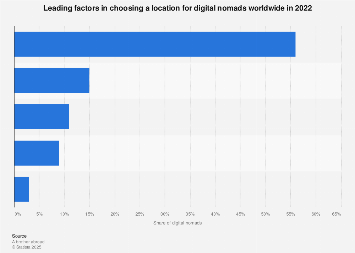
The rise of the digital nomad phenomenon, a lifestyle powered by technological advancements and a desire for flexibility, has fundamentally reshaped how and where individuals choose to live and work. For this growing global community, the ability to connect to the internet is the foundational requirement, enabling them to transcend geographical boundaries and pursue their professional endeavors from virtually any location. However, beyond this basic necessity, a nuanced set of factors dictates their destination choices. In 2022, data indicates that the cost of living and the availability of fast, reliable internet connections emerged as the paramount considerations for digital nomads worldwide. These two elements, intrinsically linked to financial viability and operational efficiency, underscore the pragmatic approach taken by many in this mobile workforce.
Following closely behind these primary drivers, safety emerged as a critical concern, identified as the most significant factor for a substantial, albeit unspecified in the provided data, portion of the digital nomad community. This highlights a crucial aspect of the digital nomad experience: while the allure of adventure and new experiences is strong, personal security and the ability to feel safe in a foreign environment are non-negotiable for sustained remote work. The interplay between affordability, connectivity, and security forms the bedrock upon which digital nomads build their transient careers.
Examining the broader landscape of digital nomad preferences reveals a complex calculus of lifestyle and logistical considerations. While the precise ranking of all factors for 2022 is not fully detailed in the publicly accessible data, insights from industry surveys consistently point to a hierarchy of needs. Beyond the top three, other significant influencers include visa regulations and the ease of obtaining them, the presence of a vibrant digital nomad community for networking and social interaction, and the availability of coworking spaces and reliable infrastructure. The quality of life, encompassing aspects like climate, cultural offerings, and recreational activities, also plays a pivotal role, particularly for those seeking longer stays in a particular location.
The economic implications of this trend are profound. Destinations that actively court digital nomads stand to benefit from increased consumer spending, local business growth, and a diversification of their economies. Cities and countries that successfully implement policies such as digital nomad visas, invest in robust digital infrastructure, and ensure a high level of public safety can attract a highly skilled and globally connected population. This influx of talent can also foster innovation and entrepreneurship within the local ecosystem. For instance, countries like Portugal, Estonia, and Costa Rica have proactively established digital nomad visa programs and developed attractive living conditions, witnessing a significant increase in remote workers. These initiatives are not merely about attracting tourists; they are about cultivating a new segment of residents who contribute to the local economy year-round.
The global internet penetration rate, a key enabler of this lifestyle, continues to climb. According to the International Telecommunication Union (ITU), over 5.3 billion people were using the internet by the end of 2022, representing approximately 66% of the global population. This increasing accessibility, coupled with the proliferation of affordable and high-speed mobile data plans and the widespread availability of Wi-Fi, has democratized the possibility of remote work. However, the quality and consistency of this connectivity vary significantly across regions, making it a crucial differentiator for digital nomads. Locations with a stable and high-speed internet infrastructure are naturally more appealing than those with intermittent or slow connections, which can severely hamper productivity and professional efficacy.
The cost of living is another powerful determinant. Digital nomads often seek locations that offer a more favorable exchange rate for their earnings, allowing them to extend their travel budgets or enjoy a higher quality of life for less. This can range from the notoriously affordable living expenses in Southeast Asian hubs like Chiang Mai or Bali, to the more moderate costs found in certain Eastern European cities compared to Western European capitals. This economic calculus is not solely about finding the cheapest option, but rather about optimizing the value of their income. A 2022 survey by Nomad List, a popular platform for digital nomads, indicated that affordability remains a top concern, with many prioritizing locations where their savings can be stretched further.
Safety, while perhaps less quantifiable than cost or internet speed, is an overarching concern. This encompasses not only personal safety from crime but also political stability, access to quality healthcare, and the general security of one’s belongings. Destinations perceived as unstable or unsafe can deter even the most adventurous remote workers. The Global Peace Index provides a valuable benchmark for assessing the general safety and tranquility of nations, and many digital nomads consult such indices when evaluating potential destinations. A location that offers peace of mind allows nomads to focus on their work and fully immerse themselves in the local culture without undue stress.
The emergence of dedicated digital nomad communities and coworking spaces in popular locales further influences location choices. These hubs provide not only essential amenities like high-speed internet and ergonomic workspaces but also invaluable networking opportunities, social connections, and a sense of belonging. For individuals who are often far from their established social circles, these communities can be crucial for combating isolation and fostering a supportive environment. Cities like Medellín, Colombia, and Canggu, Indonesia, have become magnets for digital nomads partly due to their well-established and thriving nomad ecosystems.
Looking ahead, the factors influencing digital nomad choices are likely to continue evolving. As more countries recognize the economic benefits of attracting this demographic, competition for digital nomad talent will intensify. This could lead to further innovation in visa policies, infrastructure development, and the creation of more attractive living and working environments. Furthermore, as the digital nomad lifestyle matures, there may be a greater emphasis on factors such as sustainability, environmental consciousness, and the opportunity for meaningful engagement with local communities. The long-term success of destinations in capturing this mobile workforce will depend on their ability to adapt to these changing priorities and to offer a holistic experience that balances professional needs with personal well-being and cultural enrichment. The digital nomad is no longer just a traveler with a laptop; they are a discerning consumer seeking a sustainable and fulfilling way of life, and their choices reflect a sophisticated understanding of global opportunities and personal priorities.