



The fundamental tenets of capitalism, once envisioned as a system fostering societal progress and shared prosperity through enterprise, are increasingly being reinterpreted in the 21st century through the lens of financial engineering and short-term shareholder gains. While Adam Smith, often heralded as the father of capitalist thought, believed that individuals pursuing their self-interest within a moral framework would ultimately benefit society, contemporary business practices appear to have drifted significantly from this original intent. The flow of capital, once directed towards building tangible assets, innovation, and job creation, is now frequently channeled into balancing balance sheets, stock buybacks, and other financial maneuvers that prioritize immediate returns over long-term value creation and societal well-being. This shift represents not merely a market distortion but a profound identity crisis for capitalism, risking its evolution into an economy focused on extracting value from existing assets rather than generating new wealth.
The philosophical underpinnings of early capitalism were far removed from the purely transactional and often extractive models prevalent today. Smith, in his seminal works like "The Theory of Moral Sentiments" and "The Wealth of Nations," articulated a vision where self-interest, tempered by innate human sympathy and a moral order, could drive economic activity that benefited the collective. He argued that when individuals pursued their own gain within ethical boundaries, their endeavors often yielded broader societal advantages. This perspective views enterprise not as a cold, calculating machine but as a mechanism capable of aligning personal ambition with public good. The Industrial Revolutions, powered by innovation, trade, and expanding employment, seemed to validate this ethos for over two centuries. Prosperity was synonymous with tangible output – steel, textiles, railways – and the "real economy," rooted in production and infrastructure, served as capitalism’s moral anchor, with enterprise intrinsically linked to progress.
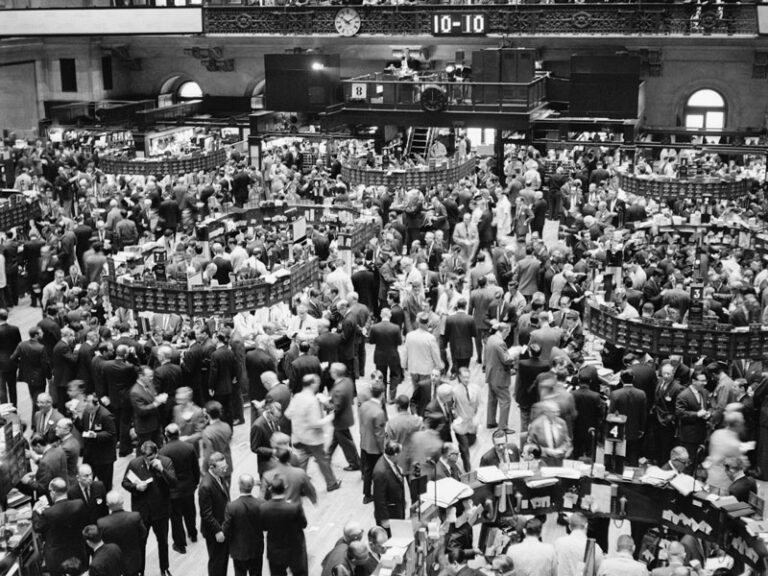
However, the landscape of capitalism began to fundamentally shift with the advent of new financial instruments, the ascendant philosophy of shareholder primacy, and a wave of financial deregulation that gained momentum in the 1980s. The economic turbulence of the 1970s, marked by inflationary pressures and slower growth, led some investors to criticize corporate management for perceived inefficiencies and a lack of focus on shareholder returns. This critique ignited what became known as the "shareholder value revolution," a movement that reoriented corporate priorities away from long-term business building and sustainable growth towards maximizing immediate profits for shareholders. This often came at the expense of investments in human capital, research and development (R&D), and the maintenance and expansion of tangible assets.
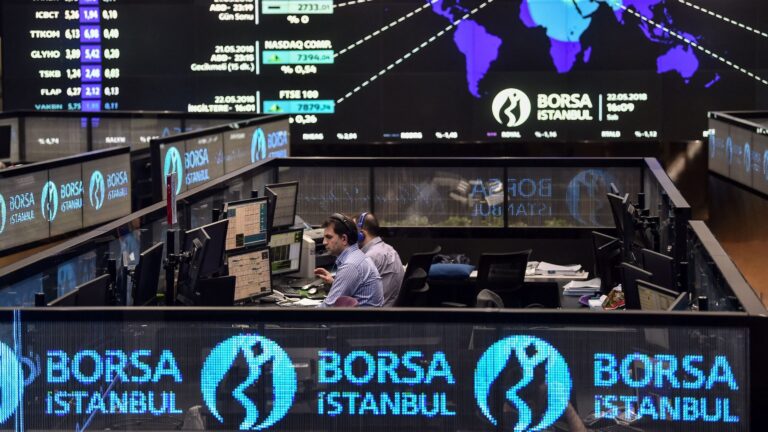
Key regulatory changes in the United States, such as the Securities and Exchange Commission’s (SEC) Rule 10b-18 in 1982, provided companies with a "safe harbor" for stock buybacks. This rule, by setting specific parameters for timing, volume, and price, allowed corporations to repurchase their own shares without the immediate threat of accusations of market manipulation. Concurrently, the Depository Institutions Deregulation and Monetary Control Act of 1980 broadened the scope of activities permissible for financial institutions. In the United Kingdom, the "Big Bang" deregulation of the London Stock Exchange in 1986 dramatically reshaped financial markets by lifting restrictions on foreign ownership, abolishing fixed commissions, and automating trading processes. These legislative and market-driven shifts, amplified by advancements in information technology, created an environment where financial markets could flourish, and the prioritization of shareholder value began to eclipse traditional drivers of industrial growth.

The consequence of this reorientation has been a notable "hollowing out" of enterprise. Stock buybacks, once a relatively niche financial tool, have become a central mechanism for corporations to return capital to their investors. While proponents argue that buybacks can signal a company’s confidence in its future prospects, critics point to the diversion of funds from critical areas such as R&D, employee compensation, and business expansion. This practice is often employed to artificially inflate earnings per share (EPS) and boost stock prices, a strategy further incentivized by executive compensation structures that frequently tie remuneration to short-term stock performance. For instance, a report in 2018 highlighted that S&P 500 firms allocated a substantial 81% of the windfalls from tax cuts towards buybacks and dividends, with a mere 4.6% directed towards R&D.
High-profile examples underscore this trend. In 2024, Apple announced a colossal $110 billion repurchase plan, even while maintaining significant cash reserves, prompting questions about resource allocation between shareholder returns and future innovation. Similarly, Delta Air Lines’ $5 billion stock repurchase in 2018 represented a sum that many argued could have been more productively invested in infrastructure upgrades or enhanced employee benefits. Even in the energy sector, companies experiencing record profits have often favored buybacks over investments in renewable energy initiatives or projects addressing pressing environmental concerns. These instances collectively illustrate a broader pattern of prioritizing financial engineering over investments aimed at fostering long-term growth and generating tangible societal benefits.
The proliferation of stock buybacks in 21st-century capitalism has introduced a significant paradox. While companies may appear more financially robust in the short term, the long-term health of both financial markets and society faces mounting risks. On the surface, by reducing the supply of outstanding shares, buybacks can potentially boost EPS and make a company’s stock more attractive to investors, thereby contributing to price stability. Research, such as a 2021 report by Craig Lewis and Joshua White for the US Chamber of Commerce, has identified several benefits associated with repurchase programs, including enhanced market liquidity, reduced stock price volatility, economic advantages for retail investors, proactive price stabilization, and strategic liquidity provision during periods of uncertainty.
However, this short-term stability often masks deeper underlying issues. The sustained reliance on buybacks can erode a company’s long-term competitiveness by diverting capital that would otherwise be invested in R&D, infrastructure, and workforce development. This can lead to a decline in productivity and increased vulnerability during economic downturns, as companies may lack the innovative capacity and adaptability to weather challenges. The societal implications are equally concerning. When shareholder returns are prioritized over capital investment, wage growth for a significant portion of the workforce often stagnates, exacerbating wealth inequality. Furthermore, as companies increasingly allocate funds to buybacks rather than to tax contributions, as highlighted by reports from organizations like Americans for Tax Fairness, questions arise regarding their commitment to broader societal welfare. As profits increasingly accrue to a select group of shareholders and executives, a growing segment of the population feels left behind, eroding trust in corporations and challenging the perceived fairness and moral legitimacy of the capitalist system.
As the global economy navigates the complexities of the mid-21st century, capitalism, in its current iteration, appears to be in urgent need of a fundamental reevaluation. The challenge lies in realigning economic incentives with long-term societal well-being amidst a complex global financial landscape. Policy reforms offer one avenue for addressing this imbalance. Suggestions include imposing restrictions on excessive stock buybacks, perhaps through increased taxation on repurchases or by treating them analogously to dividends for tax purposes. Crucially, executive compensation structures need to be recalibrated, shifting the focus from short-term financial gains to sustained, long-term performance metrics that encompass broader stakeholder interests.

However, mere policy adjustments may not be sufficient to restore widespread faith in capitalism. A more profound shift is emerging, advocating for a rethinking of how companies invest, grow, and define success. This involves embracing models like stakeholder capitalism and patient capital, where the interests of employees, customers, and communities are valued alongside, or even above, shareholder returns. Investing money with a long-term perspective, rather than for immediate gratification, provides businesses with the necessary space to innovate and achieve sustainable growth. Moreover, governments can play a pivotal role by implementing green industrial policies, strategically directing investment towards clean energy, emerging technologies, and critical infrastructure to accelerate the transition to a low-carbon economy.
The question of whether Adam Smith’s original vision holds true – whether self-interest is only justifiable when it serves the broader societal good – resonates more strongly than ever. Current social commentary suggests that economic systems lacking this alignment risk both inefficiency and moral decay. The loss of trust in a system, much like a damaged reputation, is difficult to regain. Markets driven solely by extraction rather than creation are inherently unstable.
A capitalism imbued with a moral core offers more than just ethical reassurance; it fosters responsible and predictable behavior, thereby promoting stability within business operations and financial markets. Companies that integrate social purpose into their core strategies often cultivate greater loyalty, stimulate innovation, and encourage prudent risk-taking. Empirical evidence suggests that firms committed to Environmental, Social, and Governance (ESG) principles frequently outperform their less-conscious peers, demonstrating that profit and purpose can indeed be complementary.
The act of building businesses and creating wealth is not inherently nefarious, as some contemporary narratives might suggest. However, the absence of an ethical compass, where short-term gains are rewarded at the expense of collective welfare, is what has tarnished capitalism’s reputation. With a restored moral anchor, economic success can be perceived as a means of serving society. This creates a virtuous cycle: companies become stronger and more resilient, communities develop trust in their reinvestment, employees feel valued and recognized, and investors gain confidence in the sustainability of long-term profits. Such a rebalanced approach offers a pathway to a more equitable and enduring form of economic prosperity.