



The era of the U.S. dollar’s unchallenged global supremacy is gradually receding, giving way to a more complex and multipolar financial order, according to prominent economist Professor Kenneth Rogoff. While the greenback is poised to retain its position as the world’s foremost currency, its dominance will likely be confined to a diminished sphere of influence. This nuanced outlook is detailed in Rogoff’s latest book, "Our Dollar, Your Problem," where he dissects the intricate ways the dollar shapes and occasionally destabilizes the global economy amidst evolving geopolitical power dynamics. Rogoff, a Harvard University professor and former Chief Economist at the International Monetary Fund (IMF), brings a unique blend of economic acumen and strategic foresight to his analysis, examining the inherent risks and evolving realities of a financial system still heavily reliant on the dollar, yet increasingly challenged by emerging rivals and internal U.S. political pressures.
Rogoff posits that the perception of the dollar’s influence as solely an "exorbitant privilege" for the United States is an oversimplification. While the dollar’s strength is undeniably linked to the U.S.’s technological prowess, engineering capabilities, and intellectual property, the notion that this strength inherently hollows out domestic manufacturing is largely a secondary concern. The primary driver of manufacturing job displacement, Rogoff argues, is automation, and manufacturing’s share of U.S. Gross Domestic Product (GDP) has, in fact, seen an increase. The significant cost associated with maintaining the dollar’s global standing, he notes, lies in the imperative of sustaining a dominant military power, a commitment far exceeding other associated financial burdens.
The most significant threat to the dollar’s long-standing dominance, according to Rogoff’s research, stems from a slow but discernible erosion of its global share. This decline is occurring within the context of a broadening multipolar system, where the Euro is expanding its reach, and the Chinese Renminbi is solidifying its position as a significant regional currency, potentially extending its influence into parts of Africa and Latin America. Historically, the dollar’s share has fluctuated; its recent peak in 2015 was influenced by the Eurozone crisis and China’s deliberate dollar-centric economic strategy. However, since that period, a gradual decline has been observed, pushing the dollar back towards pre-Eurozone crisis equilibrium levels in terms of reserve holdings and national exchange rate systems. Furthermore, the United States’ "promiscuous use of sanctions" has instilled caution among nations, prompting a concerted effort to diversify away from dollar-denominated financial infrastructure. Rogoff likens the U.S. financial system to the world’s "back office," which facilitates surveillance capabilities, leading a broad spectrum of global actors—from China and Russia to European and Latin American nations—to seek alternative financial pathways.

The escalating U.S. public debt presents a complex challenge, though Rogoff is less concerned about a sudden collapse of confidence among foreign investors in dollar-denominated Treasuries. He acknowledges that rising interest rates will exert pressure on the government to reallocate resources for essential spending. However, for a large economy like the U.S. that issues debt in its own currency, debt crises typically lack the abruptness seen in countries borrowing in foreign denominations. The persistent issue, as highlighted in earlier research by Rogoff and Carmen Reinhart, is the correlation between high national debt and slower economic growth. This slower growth can be attributed to reduced capacity for infrastructure investment and diminished fiscal flexibility in responding to financial crises. While no definitive upper limit for debt accumulation before a crisis is established, Japan’s experience—with a debt-to-GDP ratio exceeding 240% and significantly slower economic growth over the past three decades—serves as a cautionary tale. Japan, once the world’s second-richest nation, now exhibits a per capita income comparable to that of the U.S. state of Mississippi.
The Renminbi’s potential to challenge the dollar’s reserve currency status is viewed as a long-term prospect, rather than an immediate threat. In the near term, its role is expected to solidify as a regional currency within Asia. As China potentially decouples from its dollar peg, its demand for dollar holdings may decrease, influencing its trading partners to hold fewer dollars as they stabilize their own currencies against both the Renminbi and the dollar. While widespread adoption of the Renminbi in Western financial centers like New York remains unlikely in the foreseeable future, its increasing use in markets such as Indonesia and India signifies a growing footprint within a multipolar financial architecture.
Central bank digital currencies (CBDCs), such as the digital Yuan and those being developed by the European Union, are seen as integral to China’s and Europe’s strategies to diminish dollar dominance. These initiatives aim to construct alternative financial "plumbing" and facilitate more convenient cross-border transactions, thereby reducing reliance on the dollar for global settlements. The emergence of alternative payment systems, already established by China and increasingly by nations like Brazil and European countries, coupled with the efficiency of new digital technologies, enhances their ability to compete effectively with the dollar-based system. While the U.S. has explored stablecoins as a countermeasure, Rogoff suggests this approach is unlikely to halt the broader trend towards CBDC adoption and the subsequent shift away from dollar hegemony.
The U.S. approach to digital currencies, particularly under the Trump administration’s apparent embrace of stablecoins and skepticism towards a U.S. digital dollar, can be interpreted through two lenses. One perspective suggests it’s a strategic move to leverage existing strengths in the stablecoin market while lagging in CBDC development. The alternative, more critical view, points to potential undue influence from the cryptocurrency industry, which has reportedly made significant political donations. This could lead to an under-regulated crypto landscape that undermines the Treasury’s tax collection capabilities and facilitates illicit activities, a scenario Rogoff anticipates will be recognized as a significant misstep.

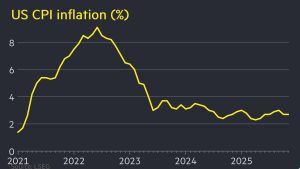
The independence of the Federal Reserve is facing mounting political pressures from both sides of the U.S. political spectrum, a trend Rogoff believes will ultimately weaken the dollar. Regardless of which party prevails, assaults on central bank independence are anticipated, leading to increased inflation volatility and higher, more erratic long-term interest rates. While short-term populist policies might offer perceived benefits, such as temporarily lower interest rates, the long-term consequence is likely to be higher inflation, particularly if further economic shocks occur. This erosion of stability diminishes the attractiveness of safe assets, including the dollar. Europe faces similar challenges, where increased inflation volatility compromises the safety of assets and reduces global demand.
The traditional advantage of the dollar stemming from the rule of law in the U.S. is also being challenged by the current political climate. Rogoff argues that former President Trump’s rhetoric and actions have eroded the perception of an impartial, non-political judicial system, which was a key factor for foreign investors. The increased politicization of court cases and the executive branch’s amplified role over legislative and judicial functions can deter foreign investment. Furthermore, the rise of protectionist trade policies, such as escalating U.S. tariffs and retaliatory measures from other nations, can diminish demand for U.S. assets by creating barriers to capital flows. This geopolitical fracturing, potentially amplified by advancements in artificial intelligence, may necessitate a shift towards more autocratic governance models, leading to a more fragmented global system where the dollar’s influence is proportionally reduced.
Europe’s capacity for the Euro to rival the dollar is intrinsically linked to its geopolitical standing. Rogoff suggests that a significant increase in European defense investment could bolster the Euro’s competitive position. A stronger military presence would enable Europe to offer a security umbrella to allied nations, potentially increasing their inclination to hold Euros, and enhance its leverage in international negotiations. He points to historical instances where U.S. military power has influenced the design of international financial institutions like the IMF and the SWIFT system, underscoring the interconnectedness of military strength and financial influence. Should U.S. foreign policy inadvertently compel Europe to develop greater military capabilities, the Euro might indeed emerge as a more significant global currency.
The prospect of a single world currency remains highly improbable in the foreseeable future, primarily due to the absence of a global governing body. Rogoff draws a parallel to the challenges faced by the Eurozone in coordinating disparate national economies with similar values and income levels, highlighting the far greater complexities of integrating vastly different economies and cultures globally. Initiatives like the IMF’s Special Drawing Rights, while potentially beneficial, are essentially forms of loans and do not represent a viable path to a universal currency without a fundamental shift towards global redistribution of income and a unified global authority. Until such a transformative global political and economic structure emerges, the dominance of a single currency will likely remain tethered to the influence of a leading global power.