
The global commodities market is currently witnessing a transformative shift, led by a relentless surge in copper prices that has sent ripples through the international financial system. Often referred to as "Dr. Copper" for its ability to diagnose the health of the global economy, the metal’s recent performance suggests a complex diagnosis: one where traditional industrial demand is being superseded by a structural, multi-decade shift toward electrification and digital infrastructure. As prices on the London Metal Exchange (LME) and Chicago Mercantile Exchange (CME) hover near historic highs, the narrative is no longer just about cyclical recovery, but about a widening chasm between an insatiable appetite for the "red metal" and a mining industry struggling to keep pace.
The current rally is underpinned by a "perfect storm" of supply-side disruptions and a radical evolution in demand drivers. Historically, copper prices were tethered to the Chinese property market and global manufacturing cycles. While these factors remain relevant, they are now being eclipsed by the "twin transitions" of the 21st century: the global shift to renewable energy and the exponential growth of artificial intelligence. These sectors are not merely incremental consumers of copper; they are fundamental drivers of a new demand paradigm that experts believe could sustain high prices for the foreseeable future.
On the supply side, the mining industry is grappling with an unprecedented set of challenges that have turned a projected surplus for 2024 into a glaring deficit. The sudden closure of First Quantum Minerals’ Cobre Panama mine, which previously accounted for approximately 1.5% of the world’s copper output, served as a catalyst for the current price spike. This disruption was compounded by downward production revisions from major players like Anglo American and Vale, as well as operational hurdles in Chile, the world’s largest producer. In Chile, state-owned giant Codelco has seen production slide to its lowest levels in a quarter-century, plagued by declining ore grades and aging infrastructure that requires billions of dollars in reinvestment just to maintain current output levels.
The geopolitical landscape has further complicated the supply equation. New sanctions imposed by the United States and the United Kingdom on Russian-produced metals have restricted the flow of copper, nickel, and aluminum into the LME and CME warehouses. While Russian copper continues to find its way to markets in Asia, particularly China, the fragmentation of the global trade system has introduced inefficiencies and increased "friction" costs. This "de-risking" strategy by Western nations, aimed at reducing dependence on adversarial regimes, is inadvertently tightening the available float of exchange-deliverable metal, providing a fertile ground for speculative activity and price volatility.
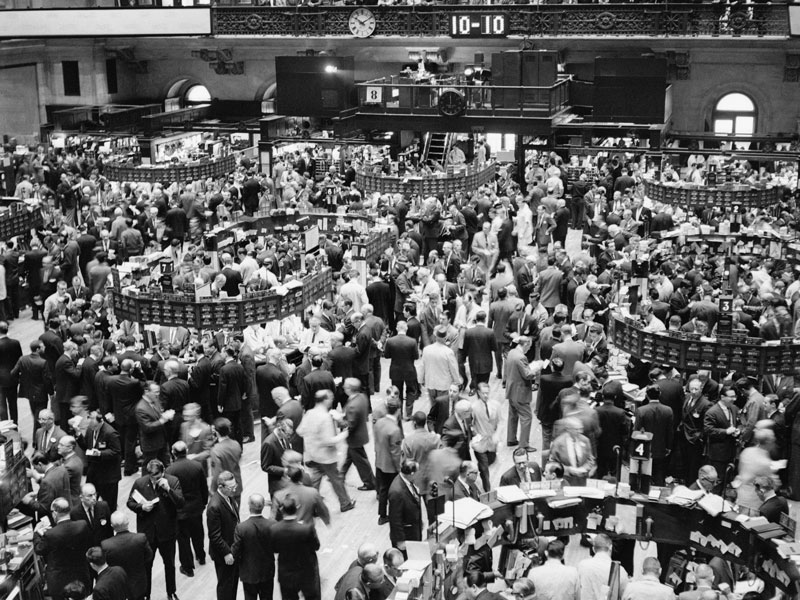
Market dynamics reached a fever pitch recently when a "short squeeze" on the Comex exchange in New York saw prices decouple from those in London and Shanghai. This phenomenon was driven by a rush to cover bearish bets as traders realized that physical metal was not positioned where it was most needed. The disconnect highlighted a broader trend: the financialization of copper. Investors are increasingly viewing copper not just as an industrial input, but as a strategic asset class. Hedge funds and institutional investors have flooded the market, with net-long positions reaching multi-year highs. This influx of capital has exacerbated price swings, as "momentum-following" algorithms amplify moves initiated by fundamental news.
The demand narrative, however, remains the most compelling long-term driver. The transition to a low-carbon economy is fundamentally a metal-intensive endeavor. Electric vehicles (EVs) require up to four times more copper than internal combustion engine vehicles, utilized in everything from batteries and motors to the intricate wiring harnesses. Furthermore, the massive expansion of renewable energy grids—solar farms and wind turbines—demands vast quantities of copper for power transmission and distribution. According to some industry estimates, the world will need to produce as much copper in the next 22 years as it has in the entirety of human history to meet the Paris Agreement’s net-zero targets.
Adding a new layer to this demand profile is the rapid ascent of generative artificial intelligence and the resulting data center boom. Data centers are massive consumers of electricity, and the infrastructure required to power and cool these facilities relies heavily on copper busbars, cables, and heat exchangers. Analysts at Goldman Sachs have estimated that AI-related copper demand could reach 1 million tons per year by 2030. While this is a fraction of the total 25-million-ton global market, it represents a high-growth "kicker" that competes for the same limited supply as the EV and renewable sectors.
The economic implications of this rally extend far beyond the mining sector. For central banks, particularly the U.S. Federal Reserve, the "scorching" metals rally presents a fresh inflationary headache. Copper is a foundational cost for many consumer goods and infrastructure projects; as its price rises, it exerts upward pressure on producer price indices. This "greenflation"—inflation driven by the costs of the energy transition—could complicate the path toward interest rate cuts, as policymakers balance the need to support growth with the imperative of price stability.
Regionally, the impact is uneven. In China, the world’s largest consumer of copper, the rally has been met with a degree of caution. While the Chinese manufacturing sector and its dominant EV industry continue to absorb metal, the country’s beleaguered property sector remains a drag on traditional construction demand. To mitigate the impact of high prices, Chinese smelters—who refine about half of the world’s copper—have discussed production cuts to support their margins, further tightening the global supply of refined cathode. Conversely, for mineral-rich nations in Latin America and Africa, the price surge offers a potential windfall in export revenues and tax receipts, though it also heightens the risk of "resource nationalism" as governments seek a larger share of the profits.
The scarcity of new, "tier-one" mining projects has led to a flurry of merger and acquisition activity as mining majors seek to grow through consolidation rather than discovery. BHP’s recent multi-billion-dollar pursuit of Anglo American is the most prominent example of this trend. For the world’s largest miners, it is often faster and less risky to buy a rival with existing assets than to navigate the decade-long process of permitting and building a new mine. This "buy-not-build" mentality, while rational for individual corporations, does little to solve the systemic supply deficit facing the global economy.
As the market looks ahead, the sustainability of this rally will depend on whether supply can finally respond to the price signal. However, the hurdles are significant. Environmental, social, and governance (ESG) standards are more stringent than ever, making the development of new mines a slow and capital-intensive process. Furthermore, the "easy" copper has already been found; new discoveries are often located in jurisdictions with higher political risk or require deeper, more expensive underground mining techniques.
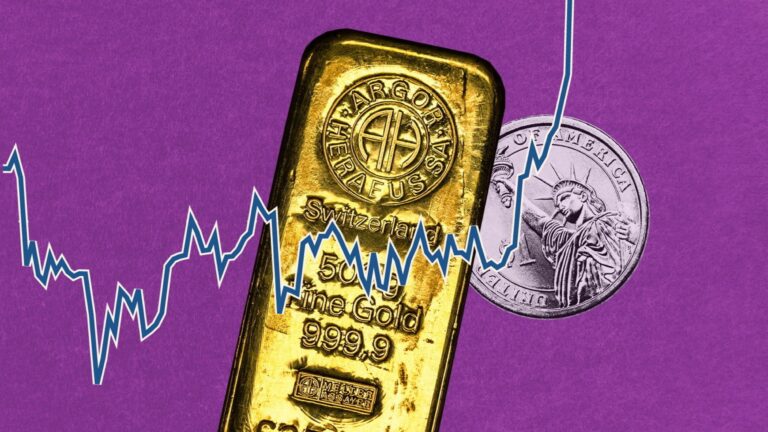
In the broader context of the metals market, copper is not alone in its ascent. Gold has reached record highs as a safe-haven asset amidst geopolitical uncertainty and a weakening outlook for the U.S. dollar, while silver has benefited from its dual role as both a monetary metal and an industrial component in solar panels. However, it is copper that remains the focal point for industrial strategists and macroeconomists alike. It is the essential conduit for the modern age—the physical infrastructure upon which the digital and green economies are built.
The current copper rally is more than a temporary market spike; it is a signal of a world in transition. As global uncertainty persists, the competition for critical minerals is becoming a defining feature of 21st-century geopolitics. Whether through the lens of national security, economic growth, or environmental necessity, the "red metal" has moved to the center of the global stage. For investors and policymakers, the challenge will be navigating a landscape where the traditional cycles of boom and bust are being replaced by a structural era of scarcity, where the price of progress is increasingly measured in the weight of copper.