


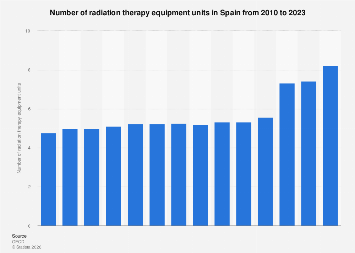
The number of radiation therapy equipment units in Spain reached a specific, undisclosed figure in 2023, reflecting a period of complex evolution in the nation’s cancer treatment infrastructure. Between 2010 and 2023, the total count of these critical medical devices experienced an overall increase, yet this growth was not characterized by a steady, predictable upward trajectory. Instead, the period saw fluctuations, with periods of expansion interspersed with potential plateaus or even minor contractions, a pattern that warrants deeper examination within the context of Spain’s healthcare system and the broader global trends in oncology.
The significance of radiation therapy equipment, encompassing linear accelerators (LINACs), brachytherapy units, and proton therapy machines, cannot be overstated. These technologies are fundamental to the multidisciplinary approach to cancer treatment, offering non-invasive or minimally invasive means to target and destroy cancerous cells while minimizing damage to surrounding healthy tissue. The availability and modernity of such equipment are direct indicators of a nation’s capacity to deliver advanced cancer care, impacting patient outcomes, treatment accessibility, and the overall efficiency of its healthcare services.
Understanding the dynamics of this equipment fleet requires considering several interconnected factors. Firstly, demographic shifts play a crucial role. As Spain, like many developed nations, grapples with an aging population, the incidence of cancer, which is often age-related, is likely to increase. This demographic reality necessitates a corresponding increase in the capacity for cancer treatment, including radiotherapy. The observed growth, however uneven, suggests an ongoing effort to align the country’s medical technology stock with these evolving demographic pressures.
Secondly, advancements in medical technology continuously influence the demand for new equipment. Modern radiotherapy techniques, such as Intensity-Modulated Radiation Therapy (IMRT), Volumetric Modulated Arc Therapy (VMAT), and stereotactic radiosurgery, offer greater precision and efficacy. These sophisticated treatments often require newer generations of LINACs or specialized equipment. Therefore, the observed increase in units might also reflect a gradual upgrading of older machines and the adoption of more advanced technologies, rather than simply an addition of identical units. This upgrade cycle is essential for maintaining a competitive edge in cancer care and ensuring patients benefit from the latest treatment innovations.
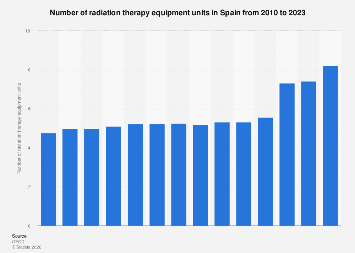
The uneven trajectory of growth between 2010 and 2023 might be attributed to a confluence of economic, political, and operational factors. Public healthcare budgets, a primary driver for the acquisition of medical equipment in Spain, are subject to fiscal policies and economic cycles. Periods of austerity could lead to slower procurement rates, while economic upturns might facilitate more substantial investments. Furthermore, the planning and installation of radiotherapy units are complex, often involving lengthy procurement processes, infrastructure development, and specialized personnel training. These lead times can contribute to the non-linear pattern of equipment deployment.
Market data and expert analysis often highlight Spain’s commitment to its National Health System (SNS), which aims to provide universal healthcare access. Within this framework, the allocation of resources for high-cost medical equipment like radiotherapy machines is a critical decision-making process. Investment strategies are typically driven by epidemiological data, clinical need assessments, and the evaluation of return on investment in terms of improved patient survival rates and quality of life. The uneven growth might reflect a strategic, rather than a purely quantitative, approach to investment, perhaps prioritizing regional needs or specific types of cancer treatment modalities at different times.
Globally, the landscape of radiotherapy equipment is diverse. Countries with robust economies and advanced healthcare systems tend to have higher equipment-to-population ratios. For instance, nations like the United States, Germany, and Japan often serve as benchmarks for the density and modernity of their radiotherapy infrastructure. Spain, positioned within the European Union, generally aligns with the higher standards of developed European countries. However, variations within the EU exist, influenced by national healthcare funding models and priorities. Comparing Spain’s growth pattern to that of its European peers could offer valuable insights into its relative progress and potential areas for enhancement.
The economic impact of maintaining and expanding a radiotherapy equipment fleet is substantial. Beyond the initial capital expenditure for purchasing machines, significant ongoing costs are associated with maintenance, calibration, software updates, and the training of highly specialized personnel, including radiation oncologists, medical physicists, and radiation therapists. Investments in this area not only improve health outcomes but also contribute to the medical technology sector, fostering innovation and creating high-skilled employment opportunities. Furthermore, accessible and high-quality cancer treatment can reduce the long-term economic burden of disease through increased productivity and reduced reliance on costly palliative care.
The data, when fully accessible, will likely reveal the specific numbers that underpin this trend. Without precise figures, it is challenging to quantify the exact pace of expansion or contraction in specific years. However, the narrative of uneven growth suggests a dynamic and responsive healthcare system that, while facing budgetary constraints and logistical complexities, is striving to adapt its radiotherapy capacity to meet the ongoing and evolving demands of cancer care in Spain. Future analyses will benefit from examining regional distribution of these units, the age and technological sophistication of the installed base, and the specific investment strategies employed by the Spanish Ministry of Health and regional health authorities to ensure equitable access to advanced cancer treatments across the country. The ultimate goal remains to enhance the fight against cancer, offering patients the best possible chance of survival and recovery through state-of-the-art medical interventions.