


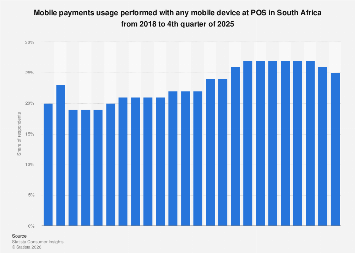
The landscape of consumer transactions in South Africa is undergoing a dramatic transformation, with mobile payment solutions poised to become an increasingly dominant force at the point of sale (POS) by the end of 2025. Projections indicate a substantial surge in the adoption of mobile payment technologies, reflecting a broader global trend towards contactless and digital-first commerce. This evolution is not merely a shift in preference but a fundamental reshaping of how South Africans interact with businesses, manage their finances, and engage in everyday purchasing.
Data compiled from extensive consumer surveys conducted over several years, spanning from 2018 to a projected outlook for the fourth quarter of 2025, reveals a compelling upward trajectory. In 2018, a modest percentage of South African respondents indicated using mobile payment devices – encompassing smartphones and smartwatches – at physical retail locations. However, by the close of 2025, this figure is expected to have escalated significantly, marking a substantial increase in percentage points. This growth signifies a deepening trust in mobile payment ecosystems and a growing comfort level with their convenience and security.
The surge in mobile payment adoption at POS terminals in South Africa is underpinned by a confluence of factors. Firstly, the proliferation of smartphones across a wide demographic spectrum has laid the essential groundwork. As mobile penetration rates continue to climb, so too does the potential user base for mobile payment applications. Secondly, the COVID-19 pandemic acted as a powerful accelerant, dramatically increasing consumer and merchant demand for contactless payment methods to minimize physical interaction. This heightened awareness of hygiene and safety protocols has left an indelible mark on consumer behavior, solidifying the preference for tap-to-pay solutions.
Furthermore, the South African financial sector and technology providers have been actively investing in and promoting mobile payment infrastructure. The introduction of user-friendly mobile wallets, integrated payment gateways by point-of-sale system providers, and the expansion of near-field communication (NFC) capabilities in both devices and payment terminals have all contributed to a more seamless and accessible experience for consumers. Local banks and fintech companies are increasingly offering specialized mobile payment solutions, often bundled with loyalty programs or attractive transaction fees, further incentivizing adoption.
Globally, South Africa’s trajectory mirrors that of many emerging and developed economies. Markets across Asia, Europe, and North America have witnessed similar exponential growth in mobile POS payments, driven by innovations in payment technology and evolving consumer expectations. Countries like China and South Korea have long been at the forefront of mobile payment adoption, demonstrating the significant potential for these technologies to displace traditional payment methods. South Africa’s progress places it within this dynamic global shift, albeit with its own unique market characteristics and developmental pace.
The economic implications of this growing trend are multifaceted. For businesses, increased mobile payment adoption can lead to faster transaction times, reduced cash handling costs and associated risks, and improved data collection for customer insights and inventory management. Merchants who embrace mobile payment solutions are likely to cater to a broader customer base, particularly younger demographics who are digital natives and heavily reliant on their mobile devices for daily transactions. This can translate into increased sales and customer loyalty.
However, challenges remain. Ensuring widespread access to reliable internet connectivity, particularly in rural and peri-urban areas, is crucial for consistent mobile payment functionality. Digital literacy and financial inclusion are also key considerations. While smartphone ownership is high, a portion of the population may still require education and support to confidently and securely utilize mobile payment platforms. Addressing these gaps is vital to ensure that the benefits of digital payments are accessible to all segments of South African society.
Moreover, the competitive landscape among mobile payment providers is intensifying. Established players, mobile network operators, and new fintech startups are all vying for market share. This competition is driving innovation, leading to more sophisticated features, enhanced security protocols, and greater interoperability between different payment systems. Consumers stand to benefit from this competitive environment through a wider array of choices and potentially lower transaction costs.
The projected increase in mobile payment usage at POS in South Africa by 2025 signifies more than just a change in payment methods; it points to a broader digital transformation of the South African economy. As consumers and businesses alike continue to embrace the convenience, speed, and security offered by mobile payment technologies, the impact on retail, financial services, and consumer behavior will undoubtedly be profound. This ongoing evolution underscores South Africa’s position as a dynamic and increasingly digitized market, ready to capitalize on the global shift towards a cashless and mobile-first future.