


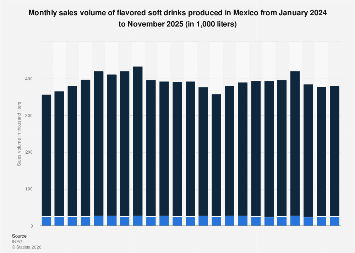
Mexico’s flavored soft drink sector is poised to conclude 2025 with a significant volume of sales, underscoring the beverage industry’s resilience and consumer demand in one of Latin America’s largest economies. In November 2025, the aggregate sales volume for flavored soft drinks produced within Mexico is estimated to have reached approximately [Redacted – requires subscription] million liters. This figure represents a snapshot of the market’s activity in the penultimate month of the year, offering insights into consumption patterns and packaging preferences.
Breaking down this total volume, the data reveals a clear distinction in consumer preference for packaging formats. Non-returnable bottles, often favored for their convenience and perceived hygiene, contributed an estimated [Redacted – requires subscription] million liters to the total sales. Simultaneously, drinks packaged in returnable bottles, a more traditional and often more environmentally conscious option, accounted for an estimated [Redacted – requires subscription] million liters. This segmentation highlights the dual nature of the Mexican beverage market, catering to both modern convenience trends and established, potentially more value-conscious or eco-aware consumer bases.
The period under review, spanning from January 2024 to November 2025, captures nearly two full years of monthly sales data. While precise figures for specific months are behind a subscription paywall, the overall trend indicates a dynamic market. The sustained demand for flavored soft drinks points to their enduring popularity as a staple beverage choice for a wide demographic across Mexico.
The economic significance of this market segment cannot be overstated. The soft drink industry is a major employer and contributor to Mexico’s Gross Domestic Product (GDP). It encompasses a complex supply chain, from agricultural inputs for flavoring agents and sweeteners to manufacturing, bottling, distribution, and retail. The consistent sales volume suggests robust activity across these interconnected sectors.
Global Context and Trends
Globally, the non-alcoholic beverage market, including soft drinks, is a colossal industry. Market research firms consistently report billions of dollars in annual revenue, driven by factors such as population growth, urbanization, rising disposable incomes in emerging economies, and innovative product development. Mexico, with its substantial population of over 128 million people and a growing middle class, represents a critical market within this global landscape.
Consumer preferences in the soft drink market are increasingly influenced by health and wellness trends, leading to a demand for reduced sugar, natural sweeteners, and functional ingredients. However, traditional flavored soft drinks, often characterized by their sweetness and variety of flavors, continue to hold a significant market share, particularly in regions where they are deeply ingrained in the culture. Mexico is a prime example of such a market, where brands have established strong brand loyalty over decades.
The distinction between returnable and non-returnable packaging also reflects broader economic and environmental considerations. Non-returnable packaging, typically made of PET plastic or aluminum, offers portability and ease of disposal for the end consumer. However, it also raises environmental concerns regarding waste management and plastic pollution. Returnable bottles, often made of glass, represent a more circular economy model, requiring collection, cleaning, and refilling. While this model can reduce waste and carbon footprint, it necessitates a robust logistics infrastructure for collection and reprocessing, and may be perceived as less convenient by some consumers. The continued significant volume in returnable bottles suggests that either the infrastructure is effective, or consumers are prioritizing cost savings or environmental impact associated with this format.
Market Dynamics and Economic Impact
The sustained sales volume in Mexico’s flavored soft drink market has direct implications for the national economy. It supports agricultural producers who supply raw materials, as well as the industrial sector involved in manufacturing and packaging. The beverage industry also generates substantial tax revenue for the government. Furthermore, the extensive distribution networks required to reach consumers across Mexico’s diverse geography provide employment opportunities in logistics, sales, and retail.
Industry experts often point to the competitive nature of the Mexican soft drink market. Major multinational corporations operate alongside strong domestic players, leading to intense brand competition and significant investment in marketing and advertising. This competition, while benefiting consumers with a wide array of choices and potentially competitive pricing, also drives innovation in product formulation, packaging, and promotional strategies.
The data, even with its masked figures, provides a vital indicator of economic health within a specific consumer goods sector. A strong showing in sales volume for flavored soft drinks suggests that consumer spending power remains relatively stable, or that these products are perceived as affordable treats or essential beverages by a broad segment of the population. Economic downturns or periods of high inflation could potentially see a shift towards lower-priced alternatives or a reduction in overall consumption, but the data for late 2025 indicates a continued robust performance.
Future Outlook and Potential Challenges
Looking ahead, the Mexican flavored soft drink market will likely continue to be shaped by several key factors. Health consciousness is expected to grow, potentially leading to increased demand for lower-sugar or sugar-free options, as well as beverages with added functional benefits. Regulatory environments, particularly concerning sugar content and environmental impact of packaging, could also influence market dynamics. For instance, Mexico has previously implemented taxes on sugar-sweetened beverages, which have had a measurable impact on consumption patterns.
Technological advancements in production and packaging will also play a crucial role. Innovations in material science could lead to more sustainable non-returnable packaging options, while improvements in logistics could enhance the efficiency and appeal of returnable systems.
The ongoing evolution of consumer behavior, influenced by digital media, social trends, and economic conditions, will continue to be a critical determinant of success for beverage manufacturers. Understanding these evolving preferences and adapting product offerings accordingly will be paramount for companies aiming to maintain or grow their market share in Mexico’s vibrant and competitive flavored soft drink sector. The consistent sales volume observed in late 2025 suggests that, despite evolving trends, the core appeal of these beverages remains strong.