


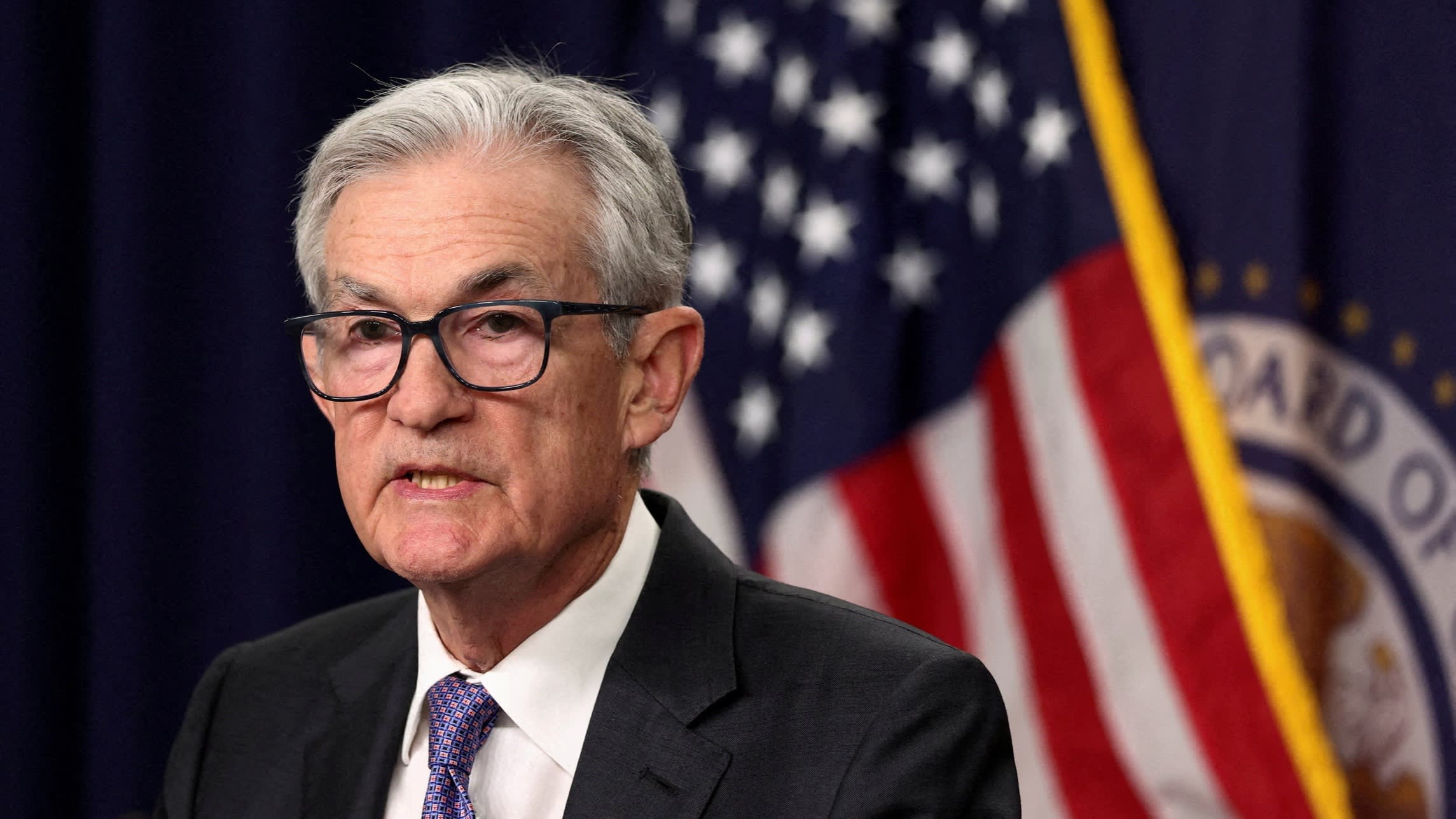
In an era defined by geopolitical fragmentation and the lingering echoes of the worst inflationary surge in four decades, the world’s most powerful financial stewards have converged on a singular, potent message: the independence of the United States Federal Reserve is non-negotiable. As Jerome Powell, the Chair of the Federal Reserve, navigates a treacherous path toward a "soft landing" for the American economy, his international counterparts have signaled a level of professional and institutional solidarity that transcends national borders. This collective front is not merely a gesture of collegiality; it represents a strategic defense of the technocratic framework that has governed global finance for nearly half a century.
The chorus of support from leaders at the European Central Bank (ECB), the Bank of England (BoE), and other major monetary institutions arrives at a critical juncture. For much of the past two years, the narrative in global markets was dominated by the "higher for longer" interest rate mantra. However, as inflation figures in the United States and the Eurozone begin to cool toward the elusive 2% target, the focus has shifted from the mechanics of tightening to the politics of easing. In Washington, the proximity of a high-stakes presidential election has cast a long shadow over the Eccles Building, with political figures on both sides of the aisle offering increasingly vocal critiques of the Fed’s timeline for rate cuts.
By standing in "full solidarity" with Powell, global central bank chiefs are reinforcing a fundamental economic tenet: that monetary policy must remain insulated from short-term political cycles to remain effective. History is replete with examples of the "inflation bias" that occurs when politicians exert control over the printing press, often trading long-term price stability for a temporary boost in employment or consumer spending before an election. The current alignment among central bankers is a preemptive strike against the return of such volatility, asserting that the Fed’s credibility is the linchpin of the global financial order.
The economic stakes of this solidarity cannot be overstated. The U.S. dollar remains the world’s primary reserve currency, involved in nearly 90% of all foreign exchange transactions. Consequently, the Fed’s policy rate serves as the de facto "world interest rate." When the Fed moves, the impact is felt from the bond markets of Tokyo to the emerging economies of South America. If the Fed were perceived to be bowing to political pressure—either by cutting rates too early to appease incumbents or holding them too high to avoid accusations of favoritism—the resulting loss of market trust would trigger a chaotic repricing of global assets.
In Frankfurt, ECB President Christine Lagarde has echoed the sentiment of institutional unity, even as the Eurozone’s economic trajectory begins to diverge from that of the United States. While the ECB has already initiated its first rate cuts, responding to a more pronounced slowdown in European growth, Lagarde has been careful to frame these moves within a data-dependent framework similar to Powell’s. This alignment ensures that while specific policy actions may differ based on domestic conditions, the underlying philosophy—anchored in price stability and evidence-based decision-making—remains a unified front.
The technical challenges facing these "monetary guardians" are equally daunting. The transition from a decade of ultra-low interest rates to the current restrictive environment has tested the plumbing of the global financial system. Central bankers are currently grappling with the "long and variable lags" of monetary policy, a concept famously championed by Milton Friedman. Because it takes 12 to 18 months for a rate hike to fully permeate the economy, Powell and his peers are effectively driving a massive tanker while looking through a rearview mirror. The solidarity expressed by global chiefs serves as a buffer, providing the "policy space" necessary for the Fed to observe these lags without being forced into a premature pivot by external critics.
Market data further underscores the complexity of the task at hand. While U.S. headline inflation has retreated significantly from its June 2022 peak of 9.1%, core services inflation—often referred to as "sticky" inflation—remains a concern. The labor market, though cooling, continues to show resilience, with unemployment rates hovering near historic lows. This "Goldilocks" scenario—not too hot, not too cold—is what central bankers strive for, yet it is also the most difficult to maintain. A misstep by the Fed could either plunge the U.S. into an unnecessary recession or allow inflation to become entrenched, necessitating even more painful interventions down the line.
Expert insights suggest that the current show of unity is also a response to the changing nature of global supply chains and "friend-shoring." As the world moves away from the hyper-globalization of the early 2000s, structural inflationary pressures are expected to be more frequent. Climate change, demographic shifts in aging populations, and the costs of the energy transition all point toward a future where the "low-inflation, low-interest-rate" environment of the post-2008 era is a relic of the past. In this new regime, the role of the central bank as a stable, independent arbiter of value becomes even more vital.
The Bank of England’s Governor, Andrew Bailey, has similarly emphasized the importance of international cooperation in monitoring financial stability risks. The 2023 collapse of Silicon Valley Bank and the forced merger of Credit Suisse served as a stark reminder that monetary tightening can expose cracks in the banking sector with lightning speed. By maintaining a united front with Powell, central bank leaders are signaling to global investors that they are prepared to act in concert to provide liquidity and maintain order should the transition to lower rates become disorderly.
Furthermore, the economic impact analysis of a potential Fed policy error extends deeply into emerging markets. Many developing nations hold significant amounts of dollar-denominated debt. A Fed that loses its independence and allows inflation to spiral would eventually be forced to hike rates to even more draconian levels, potentially triggering a wave of sovereign defaults in the Global South. Conversely, a Fed that is seen as credible allows these nations to manage their own currencies and inflation targets with greater predictability. The solidarity of the "central bankers’ club" is therefore a stabilizing force for the entire global South, not just the wealthy G7 nations.
As the summer progresses, all eyes will remain on the Federal Reserve’s upcoming meetings and the annual Jackson Hole symposium, where the nuances of this "full solidarity" will likely be codified into more formal policy guidance. The rhetoric of unity serves as a powerful shield, but the true test will be the ability of these institutions to withstand the inevitable political firestorms that accompany the final stages of an inflation fight.
Ultimately, the defense of Jerome Powell by his global peers is a defense of a specific vision of governance. It is a vision where the complex levers of the modern economy are managed by experts insulated from the whims of the ballot box, guided by mandate rather than mandate-holders. Whether this unified front can survive the populist pressures building in many Western democracies remains to be seen, but for now, the message from the world’s central banks is clear: they will stand together to protect the autonomy of the world’s most influential financial institution, recognizing that the alternative is a return to an era of economic instability that no nation can afford. The "solidarity" mentioned in the halls of power is more than a sentiment—it is the bedrock upon which the current global economic recovery is being built.