


The skyline of Caracas, once a symbol of Latin American modernity and oil-funded opulence, now stands as a stark monument to one of the most aggressive diplomatic and economic confrontations of the 21st century. When the United States government, under the administration of Donald Trump, pivoted from standard diplomatic disapproval to a doctrine of "maximum pressure," the shockwaves were felt not just in the halls of the Miraflores Palace, but in every corner of the Venezuelan capital. This strategy, characterized by a series of escalating financial "strikes"—including sweeping sanctions, the freezing of sovereign assets, and the constant looming threat of military intervention—fundamentally reordered the geopolitical landscape of the Western Hemisphere. The resulting impact has left an indelible mark on the Venezuelan economy, creating a complex legacy of humanitarian crisis, industrial collapse, and a radical realignment of Caracas’s international alliances.
The shift in Washington’s policy marked a departure from the cautious engagement of previous decades, embracing instead a neo-Monroe Doctrine approach that sought the immediate removal of President Nicolás Maduro. Central to this strategy was the recognition of Juan Guaidó, the then-head of the National Assembly, as the legitimate interim president in early 2019. This move was the political equivalent of a precision strike, aimed at decapitating the diplomatic legitimacy of the Maduro administration. It was quickly followed by the severance of formal diplomatic ties and the imposition of a "financial iron curtain." For the residents of Caracas, the immediate result was a sense of profound uncertainty, as the city braced for the possibility of direct kinetic action—a fear stoked by high-ranking U.S. officials who repeatedly asserted that "all options were on the table."
Economically, the "strikes" were designed to be paralyzing. The U.S. Treasury Department’s targeting of Petróleos de Venezuela (PDVSA), the state-run oil giant, struck at the very heart of the nation’s survival. Venezuela sits atop the world’s largest proven oil reserves, yet the sanctions effectively barred the country from its most lucrative market: the United States. Before the escalation, Venezuela exported roughly 500,000 barrels per day to American refineries; almost overnight, that revenue stream evaporated. The secondary effects were even more devastating. Global banks, fearing "over-compliance" and the wrath of U.S. regulators, began freezing Venezuelan accounts, cutting off the capital’s ability to process international payments for essential goods, including food and medicine.
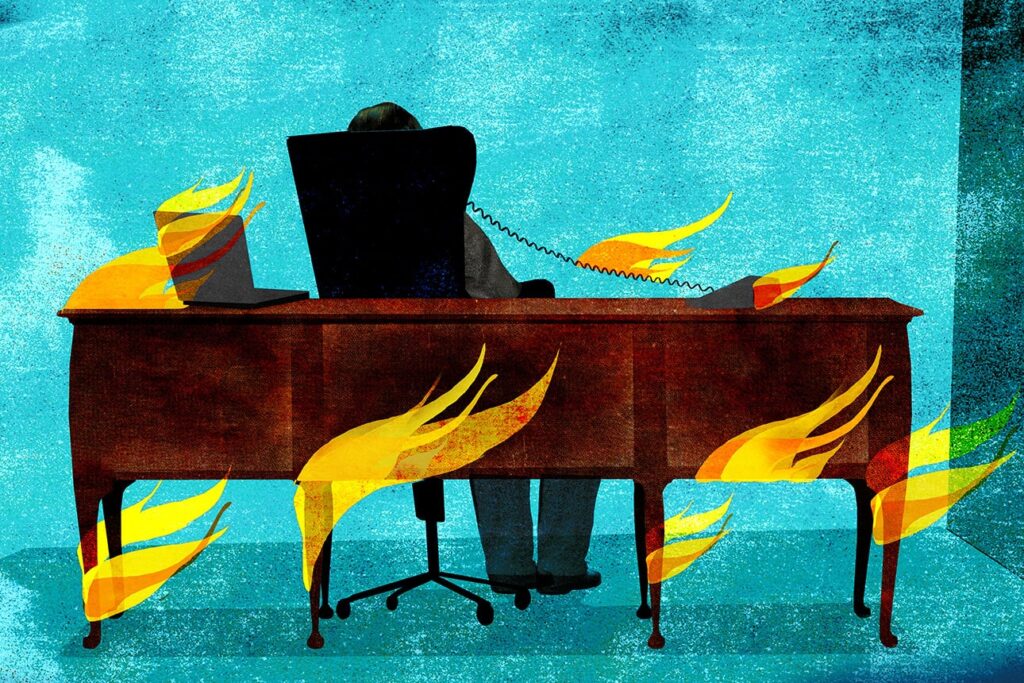
The physical reality of these economic strikes manifested in Caracas through a series of catastrophic infrastructure failures. In March 2019, the city—and much of the country—was plunged into darkness during a massive, week-long blackout. While the Maduro administration blamed "cyber-sabotage" orchestrated by Washington, independent experts pointed to years of systemic neglect and the loss of technical expertise. Regardless of the cause, the effect on the capital was visceral. Hospitals were forced to operate by flashlight, water pumps failed, and the Caracas Metro, the city’s lifeline, ground to a halt. For the average Caraqueño, the geopolitical tug-of-war was no longer an abstract concept debated in televised speeches; it was a daily struggle for basic survival.
The psychological impact of being a "target" city cannot be overstated. Throughout 2019 and 2020, Caracas lived in a state of perpetual high alert. The deployment of the FAES (Special Action Forces) and the presence of "colectivos"—armed pro-government civilian groups—on the streets increased as the government moved to fortify its position against perceived internal and external threats. The failed incursion known as "Operation Gideon" in May 2020, involving a small group of dissidents and two former U.S. Green Berets, further heightened the atmosphere of siege. Though the attempt was widely viewed as amateurish and was quickly neutralized, it provided the Maduro government with the narrative fuel to justify a further crackdown on dissent within the capital.
Amidst this pressure, a curious and unintended economic transformation began to take hold in Caracas. As the national currency, the bolívar, entered a spiral of hyperinflation—reaching astronomical rates that rendered paper money practically worthless—the city underwent a de facto dollarization. In a bid to survive the "financial strikes," the government relaxed long-standing price and currency controls. This led to the emergence of "bodegones," high-end grocery stores stocked with imported American goods, from breakfast cereals to luxury electronics, all priced in U.S. dollars. This "greenback economy" created a jarring disparity: while a small elite and those with access to remittances could shop in air-conditioned comfort, the vast majority of the population saw their purchasing power obliterated, with the minimum wage often falling below $5 USD per month.
The humanitarian fallout of this era remains one of the largest displacement crises in the world. Since the intensification of the pressure campaign, an estimated 7.7 million Venezuelans have fled the country, with a significant portion of the exodus originating from the capital. The "brain drain" has been particularly acute, as doctors, engineers, and teachers left Caracas in search of stability in neighboring Colombia, Peru, Chile, and eventually, the United States. This mass migration has not only hollowed out Venezuela’s middle class but has also placed immense strain on the social fabrics of host nations across the Americas, turning a domestic political crisis into a regional stability challenge.
From a global perspective, the U.S. strikes on the Venezuelan status quo opened a vacuum that was quickly filled by Washington’s primary geopolitical rivals. As Western companies exited, Russia and China deepened their footprints in Caracas. Moscow provided crucial military support and helped PDVSA navigate sanctions through "ghost ship" oil transfers and opaque financial networks. Beijing, meanwhile, leveraged its role as a major creditor, maintaining a foothold in the Orinoco Mining Arc. This realignment has transformed Venezuela into a focal point of "Great Power Competition," where the fate of Caracas is inextricably linked to the broader tensions between the East and the West.
Furthermore, the effectiveness of the "maximum pressure" model has become a subject of intense debate among international economists and political scientists. Critics argue that the sanctions failed in their primary objective—regime change—and instead served to consolidate Maduro’s grip on power by making the population more dependent on government-controlled food distribution programs, such as the CLAP boxes. Proponents, however, maintain that the strikes were necessary to cut off the "illicit funding" of a dictatorial regime and that the economic collapse was the inevitable result of decades of socialist mismanagement rather than external pressure.
As the geopolitical clock ticks forward, the "shocks" delivered during the Trump era continue to resonate. Even with the subsequent easing of some oil sanctions under the Biden administration—intended to incentivize democratic elections—the structural damage to Venezuela’s industrial base remains profound. The oil industry requires tens of billions of dollars in investment to return to its former glory, a prospect that remains dim as long as political instability persists.
In the final analysis, the period of intense American strikes against the Venezuelan state served as a high-stakes experiment in modern economic warfare. For the city of Caracas, it was an era of unprecedented hardship that redefined the relationship between the citizen and the state. The capital today is a place of resilience but also of deep scars; a city that has learned to operate in the shadows of global sanctions and one that remains a pivotal, if volatile, piece on the global chessboard. Whether through future diplomacy or renewed confrontation, the lessons of this era will dictate the trajectory of Latin American politics for a generation, proving that when Washington strikes, the reverberations are felt long after the headlines fade.