


Cairo, Egypt – Over the past twelve years, Egypt’s national minimum wage has undergone several significant revisions, reflecting a complex interplay of economic challenges, inflation, and governmental efforts to balance worker welfare with broader fiscal sustainability. From 2012 to 2023, the mandated lowest earnings for Egyptian workers have seen a substantial increase, though the real value of these gains has been frequently tested by persistent inflationary pressures and currency devaluations.
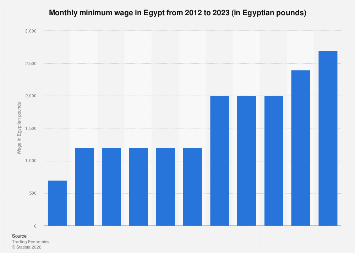
In 2012, the Egyptian national minimum wage was set at EGP 400 per month. This figure, representing a baseline for the vast majority of the workforce, was intended to provide a rudimentary safety net. However, by today’s standards, this amount was exceedingly low, particularly when considered against the cost of living in major urban centers like Cairo and Alexandria. The economic landscape of Egypt at the time was already facing nascent challenges, including a slowdown in growth and increasing social demands following the 2011 revolution.
The subsequent years saw a series of adjustments, often driven by the need to counteract rising prices. A notable increase occurred in 2014, when the minimum wage was raised to EGP 700 per month. This represented a significant jump of 75% in just two years, signaling an initial attempt by the government to address the declining purchasing power of low-income households. This period coincided with efforts to stimulate domestic demand and improve living standards, although the efficacy of such measures was often debated.
The most substantial and frequently cited upward revision came in January 2019. In a move that garnered considerable attention both domestically and internationally, the Egyptian government mandated a new minimum wage of EGP 1,200 per month. This increase, a near doubling of the previous EGP 700 figure, was presented as a critical step towards poverty reduction and social equity. It was part of a broader economic reform program that included fiscal consolidation and structural adjustments, often supported by international financial institutions. The intention was to boost consumer spending, which is a significant driver of the Egyptian economy, and to ensure that a larger segment of the population could meet basic needs.
However, the period following the 2019 increase was marked by significant economic headwinds. Egypt, like many developing nations, grappled with the global rise in commodity prices and the subsequent impact on inflation. Furthermore, the country embarked on a significant currency devaluation as part of its broader economic reform agenda. The Egyptian Pound depreciated sharply against the US Dollar, particularly in late 2016 and again in 2022-2023. This devaluation, while aimed at improving export competitiveness and attracting foreign investment, directly exacerbated inflation by making imports more expensive. Consequently, the real value of the EGP 1,200 minimum wage, while nominally higher, faced erosion as the cost of essential goods and services, such as food, transportation, and energy, climbed.
By early 2023, the EGP 1,200 minimum wage, established in 2019, was increasingly seen as insufficient by many workers and labor advocates. Reports from various sources indicated that the actual cost of living for a family in Egypt had far surpassed this threshold, pushing many into precarious financial situations. The government, recognizing these pressures, announced further adjustments. In April 2023, the national minimum wage was reportedly increased again, though specific figures and the exact implementation timeline have varied across different sectors and official announcements. Some reports suggested a rise to EGP 2,700 per month for state employees, while discussions for the private sector were ongoing, indicating a tiered approach or a phased implementation. This latest potential adjustment, if fully realized across the board, would represent a significant nominal increase, aiming to catch up with the accumulated inflation and currency depreciation of the preceding years.
The economic impact of these minimum wage adjustments is multifaceted. On one hand, increased wages for low-income earners can boost aggregate demand, as these households tend to spend a larger proportion of their income on immediate consumption. This can, in turn, stimulate domestic businesses and support economic growth. For the government, raising the minimum wage can also be a political tool to demonstrate responsiveness to public concerns about living standards and social inequality.
On the other hand, substantial and frequent increases in the minimum wage can pose challenges for businesses, particularly small and medium-sized enterprises (SMEs) that operate on thin profit margins. Higher labor costs can lead to increased prices for goods and services, potentially fueling further inflation. Businesses might also respond by reducing staff, slowing hiring, or investing less in expansion, which could dampen employment growth. For a country like Egypt, where the informal sector is substantial, the direct impact of official minimum wage hikes is often limited, as many workers in this sector do not benefit from formal labor protections.
Moreover, the effectiveness of minimum wage policies is heavily influenced by the broader macroeconomic environment. In periods of high inflation and currency instability, the nominal increases in the minimum wage can be quickly outpaced by rising costs, leading to a situation where workers feel no tangible improvement in their real income. This has been a recurring theme in Egypt’s recent economic history. The country’s reliance on imports for many essential goods makes it particularly vulnerable to global price shocks and exchange rate fluctuations, directly impacting the cost of living for all citizens, but disproportionately affecting those on fixed or low incomes.
Global comparisons offer further context. Many emerging economies face similar dilemmas in setting and adjusting minimum wages. Countries like India and Indonesia have implemented multi-tiered minimum wage systems, often varying by region and industry, to account for differing costs of living and economic development levels. The debate over the optimal level of the minimum wage is ongoing worldwide, with economists often divided on its impact on employment, poverty, and overall economic efficiency. Some studies suggest that modest, incremental increases are more sustainable and less disruptive than large, infrequent jumps.
Looking ahead, Egypt’s economic trajectory will continue to shape the discussion around its minimum wage. The government faces the delicate task of fostering economic growth and attracting investment while ensuring that the benefits of development are shared equitably. Addressing inflation, stabilizing the currency, and enhancing productivity will be crucial for any minimum wage increases to translate into genuine improvements in the living standards of Egyptian workers. The evolving minimum wage figures over the past decade serve as a clear indicator of the persistent economic pressures and the government’s ongoing efforts to navigate these challenges in one of the Arab world’s most populous nations.