


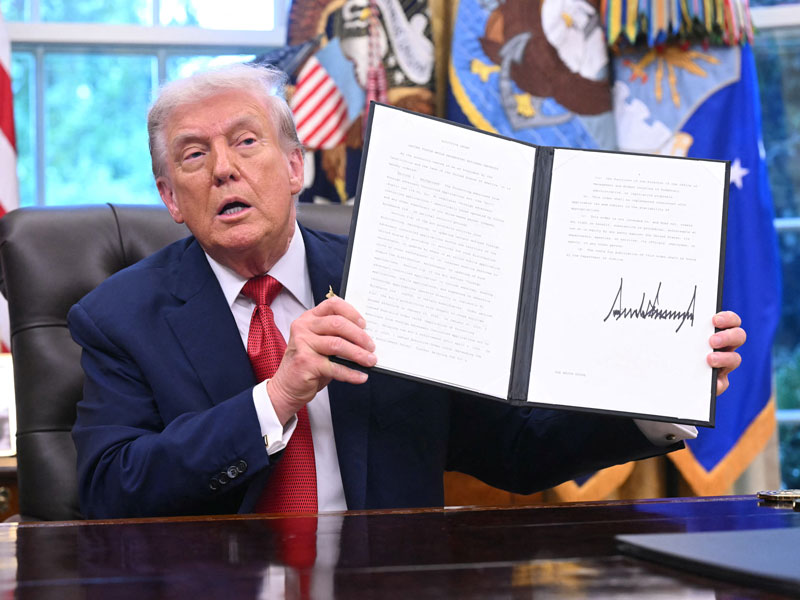
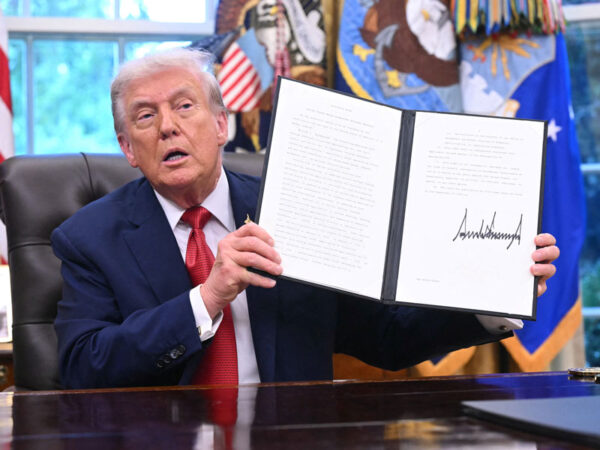
Following a protracted period of diplomatic friction, regulatory hurdles, and multiple deadline extensions, a significant shift in the ownership structure of the immensely popular social media platform TikTok has been formalized. The executive order, signed by the US President, mandates the transfer of the app’s operations within the United States to American entities. This development, arriving after years of intense scrutiny and political maneuvering, including legal challenges at various governmental levels, seemingly resolves the contentious issue surrounding the app’s Chinese parent company, ByteDance. However, a deeper analysis of the agreement reveals that Beijing may have strategically positioned itself to retain considerable influence, potentially turning what appears to be a US victory into a significant geopolitical and economic triumph for China.
On the surface, the stipulated terms present a compelling narrative of American control. The proposed framework designates Oracle, in conjunction with a consortium of US investors, to acquire an 80% stake in a newly established American corporation responsible for managing TikTok’s operations within the United States. Crucially, all data pertaining to US users is slated to be housed on Oracle’s servers located in Texas. Furthermore, the new entity is set to license TikTok’s highly coveted recommendation algorithms, with plans to retrain these systems using American user data. The governance structure also appears to favor US oversight, with six out of seven board seats allocated to American representatives. This arrangement, at face value, suggests that American user data, server infrastructure, and algorithmic operations would be firmly under US jurisdiction. The deal even includes a substantial financial payout from the investors to the US administration, framed as a fee for facilitating the settlement with the Chinese government.
However, a more granular examination of the transaction reveals a more nuanced and potentially advantageous outcome for China. Global investors already collectively hold approximately 60% of ByteDance, the parent company of TikTok. An additional 20% is owned by the company’s founders, with employees holding the remaining 20%. Consequently, the current deal effectively elevates US ownership of the American operational arm to 80%, while ByteDance retains a stake of just under 20%. This means ByteDance, despite the divestiture, remains the largest single shareholder in the US entity. More critically, the intellectual property underpinning TikTok’s sophisticated recommendation algorithms remains under the direct control of ByteDance in China. Rather than an outright acquisition of this core technology, Oracle and other US investors are acquiring a license, a critical distinction that carries significant long-term implications.
Algorithms are not static, inert assets; they are dynamic, continuously evolving systems. Unlike tangible assets such as vehicles or real estate, their efficacy is contingent upon perpetual refinement, data-driven adjustments, and substantial ongoing engineering support. While Oracle may gain the ability to inspect the source code, duplicate it comprehensively, and retrain the licensed version on US data, the operational continuity and cutting-edge performance of the US version of TikTok will remain intrinsically linked to periodic updates originating from China. This dependency raises profound questions regarding the reliable and timely receipt of these updates, and more importantly, the capacity for meaningful oversight and auditing by the US stakeholders. The inherent limitations of a licensed algorithm, particularly when divorced from the broader global dataset that fuels ByteDance’s most advanced models, could result in a less competitive and less innovative US version of TikTok.
The true leverage for China lies in its control over the export of its advanced technology. Since 2020, China has classified personalized recommendation algorithms as sensitive technology under its stringent export-control regime. This classification mandates that any transfer of updates or enhancements to TikTok’s algorithms requires explicit approval from the Chinese government. This regulatory framework transforms TikTok into a potential diplomatic and economic tool for Beijing. In scenarios of escalating geopolitical tensions – whether concerning Taiwan, trade disputes, international conflicts, or restrictions on the export of critical technologies like semiconductors – China can leverage its approval authority. By delaying or withholding licensing approvals for algorithmic updates, Beijing can exert pressure and use TikTok as a significant bargaining chip in broader international negotiations. This strategic positioning effectively elevates the platform into a potent instrument of Chinese statecraft, allowing for the projection of influence far beyond its digital confines.
US investors involved in the new TikTok entity must therefore prepare for an environment characterized by heightened uncertainty, where the operational framework is dictated less by contractual legal terms and more by the fluctuating dynamics of geopolitical relations. The current agreement, rather than fundamentally shifting TikTok from Chinese to American control, may simply be exchanging one form of dependency for another. While the direct oversight of daily content recommendations will transition to Oracle, addressing immediate US national security concerns regarding data access, China’s residual control over the core algorithmic engine persists. Beijing retains the prerogative to define the scope of the licensing agreement, dictate the frequency of essential updates, and determine whether the US version can maintain parity with its global counterparts. This scenario risks not diminishing China’s influence, but rather entrenching it in a subtler, yet more pervasive, technological dependency.
The immediate fears surrounding direct Chinese access to American user data or algorithmic manipulation may recede with this agreement. However, they are likely to be supplanted by a more enduring and sophisticated risk: a technological dependence on China, which maintains a crucial chokehold on the very engine that drives TikTok’s viral success. The current administration’s approach appears to have traded one vulnerability for another. Nevertheless, from a certain perspective, a less globally competitive iteration of TikTok might not be entirely disadvantageous for the United States. Some analysts suggest that a less potent TikTok could translate into a less addictive platform, potentially benefiting American youth and fostering healthier digital engagement habits, whether users consciously recognize this outcome or not. The long-term economic and strategic ramifications of this algorithmic leverage, however, warrant continued and careful international observation.