


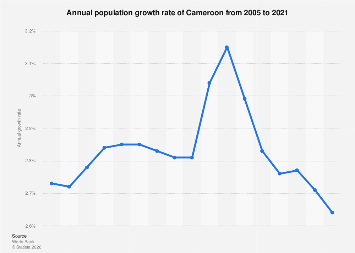
Cameroon, a nation situated in the heart of Central Africa, has experienced a significant demographic expansion between 2005 and 2021, a period marked by sustained population growth that has reshaped its socio-economic landscape. This sustained increase, a common characteristic of many developing economies, presents both substantial opportunities and formidable challenges for the nation’s development trajectory. Understanding these population dynamics is crucial for policymakers, investors, and international organizations seeking to foster sustainable growth and improve living standards in Cameroon.
The country’s population has been on a consistent upward trajectory, driven primarily by high birth rates and declining mortality rates, a pattern consistent with the demographic transition model observed globally. While specific figures fluctuate based on data collection methodologies and sources, reputable demographic data indicates a substantial increase over the 16-year period in question. For instance, if the population stood at approximately 18 million in 2005, it is estimated to have grown to well over 27 million by 2021, representing a near 50% increase. This growth rate outpaces that of many developed nations and even some of its regional peers, underscoring the dynamic nature of Cameroon’s demographic profile.
This population surge has profound implications across various sectors. From an economic perspective, a growing population can translate into a larger labor force, potentially boosting productivity and economic output. However, this benefit is contingent on the creation of sufficient employment opportunities and the development of human capital through education and skills training. If job creation lags behind population growth, it can lead to increased unemployment and underemployment, exacerbating poverty and social inequality. The World Bank, for example, consistently highlights the importance of inclusive growth strategies that ensure the benefits of economic expansion are widely shared, particularly in countries with rapidly growing populations.
The agricultural sector, a cornerstone of Cameroon’s economy, is particularly sensitive to demographic shifts. A larger population necessitates increased food production to ensure national food security. This demand can stimulate agricultural innovation, investment in modern farming techniques, and expansion of arable land. Conversely, it can also lead to increased pressure on natural resources, potentially resulting in deforestation, soil degradation, and water scarcity if not managed sustainably. Experts in sustainable agriculture often point to the need for agro-ecological approaches and improved land management practices to balance increased food demand with environmental preservation.
The burgeoning population also places significant strain on public services, including healthcare, education, and infrastructure. Healthcare systems must adapt to cater to a larger and often younger population, requiring increased investment in hospitals, clinics, and medical personnel. Similarly, educational institutions face the challenge of accommodating a growing number of students, demanding more schools, teachers, and resources to ensure quality education for all. Inadequate investment in these sectors can lead to overcrowded classrooms, limited access to healthcare, and a decline in the overall quality of life, potentially hindering long-term human capital development.
Furthermore, the rapid urbanization that often accompanies demographic growth presents its own set of challenges and opportunities. As people move from rural areas to cities in search of better economic prospects, urban centers often experience rapid expansion. This can lead to increased demand for housing, sanitation, and transportation, potentially overwhelming existing infrastructure. However, urbanization can also foster economic dynamism, creating hubs for commerce, innovation, and service delivery. Managing urban growth effectively requires strategic urban planning, investment in public infrastructure, and the development of inclusive urban policies that cater to the needs of all residents.
Globally, Cameroon’s demographic trajectory places it among nations with some of the highest population growth rates. While countries in Europe and parts of Asia are grappling with aging populations and declining birth rates, sub-Saharan Africa, including Cameroon, continues to experience a youthful and rapidly expanding demographic profile. This contrast has significant implications for global labor markets, consumer demand, and geopolitical dynamics. Organizations like the United Nations Population Division regularly publish data that highlights these regional disparities and forecasts future demographic trends.
The economic impact of Cameroon’s demographic growth is multifaceted. On the positive side, a young and growing population can represent a significant demographic dividend, provided that the nation invests adequately in education, healthcare, and job creation. A large cohort of young people entering the workforce can fuel economic growth through increased consumption and labor supply. However, without the right enabling environment, this demographic dividend can quickly transform into a demographic burden, characterized by high youth unemployment and social unrest. Analyzing the age structure of Cameroon’s population reveals a substantial proportion of individuals below the age of 25, a demographic characteristic that requires forward-thinking policy interventions.
The impact on government finances is also considerable. Increased population means a greater demand for public services, necessitating higher government spending. Simultaneously, a larger workforce can lead to increased tax revenues. The net effect on government budgets depends on the efficiency of revenue collection, the effectiveness of public spending, and the overall health of the economy. International financial institutions often advise governments in rapidly growing nations to diversify their economies, enhance fiscal management, and attract foreign direct investment to support sustainable development initiatives.
Moreover, the environmental footprint of a growing population cannot be overlooked. Increased demand for resources such as water, energy, and food, coupled with greater waste generation, can place significant pressure on Cameroon’s rich natural environment, including its forests and biodiversity. Sustainable resource management and environmental protection policies are therefore paramount to ensure that economic development does not come at the cost of ecological degradation. This is an area where international cooperation and the adoption of green technologies can play a crucial role.
In conclusion, Cameroon’s sustained demographic growth from 2005 to 2021 is a defining characteristic of its current and future development. While it offers the potential for a demographic dividend and a larger domestic market, realizing these benefits hinges on strategic investments in human capital, robust job creation, sustainable resource management, and effective public service delivery. The nation’s ability to navigate these demographic shifts will be a key determinant of its long-term economic prosperity and social well-being, positioning it as a case study in the challenges and opportunities presented by rapid population expansion in developing economies.