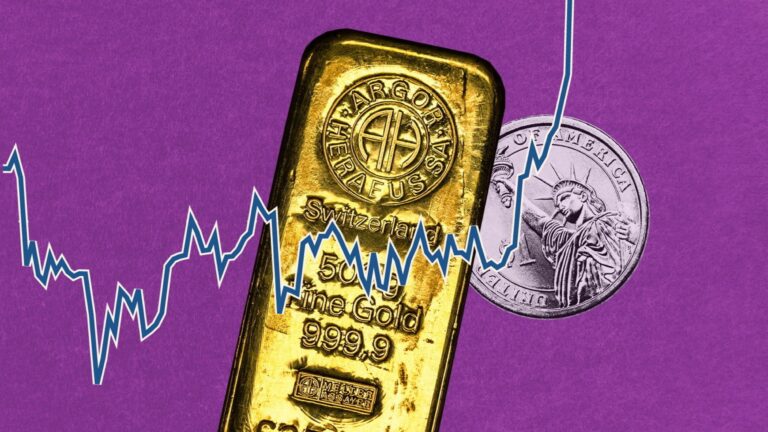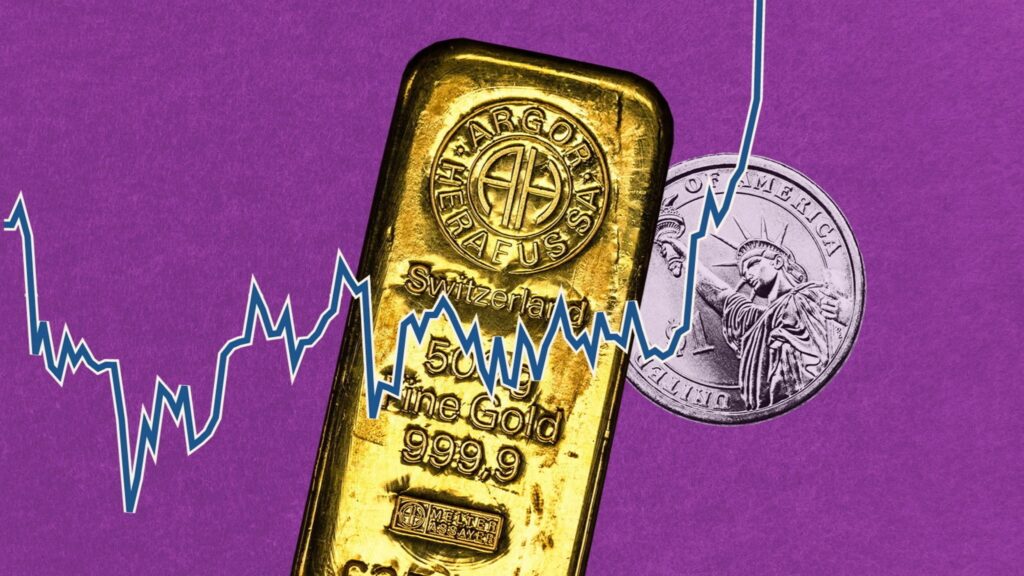


The relentless ascent of precious metals, which had seen gold and silver reach historic heights over the past several months, has hit a formidable wall of resistance. In a sharp reversal that has caught many momentum traders off guard, spot gold prices and silver futures have plunged from their recent peaks, marking one of the most significant weekly retreats of the current fiscal year. This downturn is not merely a localized technical correction but rather a multifaceted reaction to shifting expectations regarding U.S. monetary policy, a surging greenback, and a recalibration of geopolitical risk premiums that had previously underpinned the market’s bullish sentiment.
For much of the year, the narrative surrounding precious metals was one of unbridled optimism. Gold, traditionally viewed as the ultimate hedge against inflation and geopolitical instability, had benefited from a "perfect storm" of supportive factors. Central banks across the globe, particularly in emerging markets, were diversifying their reserves away from the U.S. dollar at a record pace. Simultaneously, persistent conflicts in the Middle East and Eastern Europe kept the safe-haven trade active. However, the recent price action suggests that the market had perhaps become overextended, with technical indicators flashing "overbought" signals for weeks before the eventual slide began.
The primary catalyst for this sudden about-face is the evolving outlook for the Federal Reserve’s interest rate trajectory. In recent weeks, a string of resilient economic data from the United States—including robust labor market figures and stickier-than-expected inflation readings—has forced investors to temper their expectations for aggressive rate cuts. Because gold and silver are non-yielding assets, they become less attractive to hold when interest rates remain elevated, as the opportunity cost of forgoing yield-bearing investments like Treasury bonds increases. The 10-year Treasury yield has seen a notable climb, exerting downward pressure on bullion as investors pivot toward the guaranteed returns of the fixed-income market.
Compounding the pressure on precious metals is the renewed strength of the U.S. Dollar Index (DXY). As the dollar gains ground against a basket of major currencies, gold and silver—which are priced in dollars globally—become more expensive for international buyers. This inverse relationship has been on full display; as the DXY reached multi-month highs, the demand for physical bullion in key markets like India and China began to soften. In these regions, where price sensitivity is high, the combination of record-high local currency prices and a strengthening dollar has led to a noticeable cooling of retail demand, particularly in the jewelry and investment bar sectors.
Silver, often referred to as "gold’s more volatile cousin," has experienced an even more dramatic retrenchment. While gold is primarily driven by monetary and safe-haven demand, silver carries a dual identity as both a financial asset and a vital industrial commodity. Its recent plunge reflects concerns over a broader industrial slowdown, particularly in the manufacturing sectors of major economies. Silver is an essential component in the production of photovoltaic cells for solar panels, electronics, and electric vehicle components. Recent data suggesting a cooling in global manufacturing activity has led to fears that the industrial demand floor for silver may be lower than previously anticipated.
Furthermore, the gold-to-silver ratio—a key metric used by traders to determine the relative value of the two metals—has widened significantly during this sell-off. This suggests that silver is underperforming gold on the downside, a common characteristic during periods of market liquidation. When institutional investors move to de-risk their portfolios, silver’s higher beta often leads to more aggressive selling pressure compared to the relatively more stable gold market.
The geopolitical landscape, while still fraught with tension, has also seen a subtle shift in market perception. While conflicts remain unresolved, the "fear trade" that drove gold to its recent record highs appears to have reached a point of exhaustion. Markets have, to some extent, priced in the current levels of instability. Unless there is a significant escalation or a new theater of conflict emerges, the marginal buyer is no longer willing to pay a premium for safe-haven protection at these elevated price levels. This "de-risking" phase has allowed short-sellers to enter the market with greater confidence, further accelerating the downward momentum.
Institutional positioning has played a critical role in the speed of the descent. Data from the Commodity Futures Trading Commission (CFTC) indicated that managed money—largely consisting of hedge funds and commodity trading advisors—had built up massive net-long positions during the rally. As prices began to breach key technical support levels, such as the 50-day moving average, a wave of automated sell orders was triggered. This "long liquidation" event created a feedback loop, where falling prices forced more traders to close out their positions to limit losses, leading to the "plunge" observed in recent sessions.
From a global perspective, the actions of central banks remain a wild card. While the People’s Bank of China (PBOC) had been a consistent and aggressive buyer of gold for 18 consecutive months, recent reports suggest a pause or a significant slowdown in their accumulation strategy. This shift in behavior from one of the world’s most influential institutional buyers has sent a ripple through the market, signaling to other investors that even the most bullish entities are wary of chasing prices at historic highs. Other central banks in regions like Central Asia and Eastern Europe continue to hold significant reserves, but the absence of the PBOC’s steady hand has left the market vulnerable to volatility.
Despite the current carnage, some analysts argue that this correction is a necessary and healthy development for the long-term sustainability of the bull market. Markets rarely move in a straight line, and the vertical nature of the previous rally had left the sector vulnerable to a "blow-off top." By flushing out speculative froth and resetting valuations, the current decline may establish a more durable base for future gains. Economic historians often point to the gold bull markets of the 1970s and the post-2008 era, both of which featured significant mid-cycle corrections before reaching their ultimate zeniths.
Looking ahead, the trajectory of precious metals will likely be determined by the Federal Reserve’s upcoming policy meetings and the subsequent movement of real interest rates (nominal rates minus inflation). If the U.S. economy enters a "soft landing" scenario where inflation is tamed without a significant recession, the impetus for holding gold may continue to wane. Conversely, if the aggressive rate hikes of the past two years eventually trigger a sharper economic downturn, or if fiscal deficits in the U.S. and other G7 nations continue to spiral out of control, the fundamental case for "hard assets" like gold and silver will remain intact.
In the immediate term, technical analysts are closely watching the $2,550 and $2,500 levels for gold, which could serve as psychological and structural floors. For silver, the focus remains on whether it can maintain its footing above the $30 mark, a level that has historically transitioned from a ceiling to a floor. Until the dollar’s rally stalls or the geopolitical environment provides a new catalyst, the path of least resistance for precious metals appears to be skewed to the downside.
The current retreat serves as a stark reminder of the inherent risks in commodity markets, where sentiment can shift as rapidly as the economic data that informs it. For investors who entered the market at the peak, the recent volatility is a painful lesson in the dangers of "FOMO" (fear of missing out). For the broader financial system, the decline in bullion prices is a signal that the "inflation trade" is being re-evaluated in the face of a resilient U.S. economy and a central bank that is not yet ready to declare victory over rising prices. As the dust settles on this latest sell-off, the market will be looking for signs of stabilization, but for now, the gilded rally has firmly moved into reverse.