


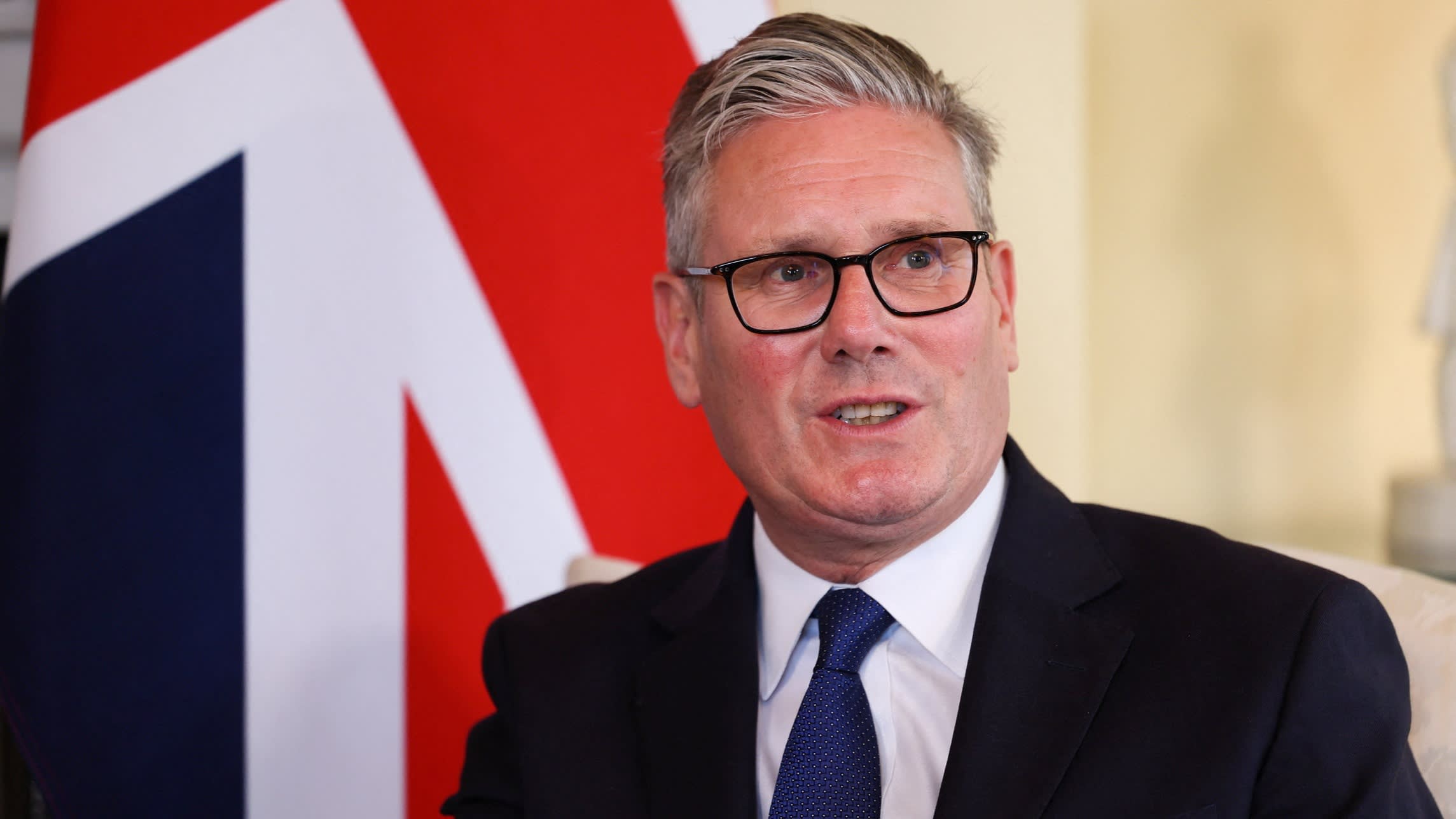
In a move that signals a definitive departure from the rigid "hard Brexit" stance of his predecessors, Prime Minister Keir Starmer has articulated a vision for a pragmatic "reset" of the United Kingdom’s relationship with the European Union. This shift, centered on seeking closer regulatory alignment with the EU single market, marks a pivotal moment in British post-Brexit policy, as the government attempts to reconcile the political reality of leaving the bloc with the mounting economic necessity of reducing trade friction. While the Prime Minister remains steadfast in his commitment to staying outside the formal structures of the Single Market and the Customs Union, his emphasis on "closer alignment" suggests a sophisticated, sector-by-sector approach designed to stimulate a stagnant economy and restore investor confidence.
The economic backdrop for this policy pivot is stark. Since the implementation of the Trade and Cooperation Agreement (TCA) in 2021, the UK has grappled with the structural consequences of its new trading status. The Office for Budget Responsibility (OBR) has consistently maintained its forecast that Brexit will result in a 4% long-term reduction in the UK’s potential Gross Domestic Product (GDP) compared to remaining in the EU. Furthermore, data from the Centre for European Reform suggests that by the end of 2023, the UK economy was approximately 5% smaller than it would have been had it remained within the European orbit. This "slow puncture" of the British economy has manifested in suppressed business investment, which has remained largely flat since the 2016 referendum, and a persistent productivity gap that continues to plague the Treasury’s growth projections.
Starmer’s strategy appears to be rooted in the belief that "making Brexit work" requires more than just administrative tweaks; it demands a fundamental reduction in non-tariff barriers. The primary focus of this new alignment strategy is expected to be the agrifood sector. Currently, British exporters face rigorous Sanitary and Phytosanitary (SPS) checks, which have added significant costs and delays to the movement of perishable goods. By seeking a veterinary agreement—a form of dynamic alignment on food safety and animal health standards—the UK could eliminate a vast majority of physical border inspections. For the UK’s agricultural sector, which saw exports to the EU drop significantly in the immediate aftermath of the TCA, such an agreement would be a lifeline, potentially restoring the "just-in-time" supply chains that once defined the industry.
However, the pursuit of alignment extends far beyond the farm gate. The British manufacturing sector, particularly the automotive and chemical industries, has become increasingly vocal about the costs of regulatory divergence. The chemical industry, for instance, faces the daunting prospect of "UK REACH," a domestic regulatory framework that mirrors the EU’s REACH system but requires companies to re-register thousands of chemicals at a cost estimated by industry bodies to be upwards of £2 billion. By signaling a willingness to align more closely with European standards, Starmer is responding to pleas from organizations like Make UK and the Confederation of British Industry (CBI), which argue that unnecessary divergence serves only to increase the "cost of doing business" without providing a competitive advantage.
The financial services sector, which contributes roughly 10% of the UK’s GDP, also stands to benefit from a more cooperative relationship, though the path here is more complex. Since Brexit, the City of London has lost its "passporting" rights, which allowed firms to operate across the EEA from a UK base. While the UK has sought to maintain its status as a global financial hub through the "Edinburgh Reforms" and by looking toward high-growth markets in Asia, the EU remains its largest single export market for services. A closer relationship could facilitate more robust "equivalence" rulings or a more structured dialogue on regulatory cooperation, providing the stability that international banks and asset managers crave.
The timing of this diplomatic outreach is strategically calibrated. The Trade and Cooperation Agreement is due for a formal review in 2025/2026. While the EU has signaled that this review will not be an opportunity to "re-open" the treaty in its entirety, it does provide a legal and political window for both sides to discuss technical improvements. Starmer’s rhetoric appears designed to build the necessary goodwill in Brussels, Paris, and Berlin ahead of these negotiations. European leaders, while cautious, have generally welcomed the change in tone. German Chancellor Olaf Scholz and French President Emmanuel Macron have both expressed a desire for a "constructive" partnership, recognizing that a stable and prosperous UK is in Europe’s strategic interest, particularly in the context of the ongoing war in Ukraine and the shifting dynamics of global trade.
Nevertheless, the path to alignment is fraught with domestic political challenges. Starmer must navigate a delicate balance between the demands of the business community and the sensitivities of a domestic electorate that remains divided on the European question. To avoid accusations of "reversing Brexit by the back door," the Prime Minister has established clear "red lines": no return to the European Court of Justice (ECJ) jurisdiction in a broad sense, no return to the Common Fisheries Policy, and, perhaps most crucially, no return to the Free Movement of people.
This last point—the rejection of free movement—remains the most significant hurdle to a truly deep economic integration. The EU has historically maintained that the "four freedoms" (goods, services, capital, and people) are indivisible. By seeking the benefits of the single market without accepting the movement of labor, the UK is essentially asking for a bespoke arrangement that the EU has traditionally been reluctant to grant. However, proponents of the "Starmer Model" argue that there is precedent for flexibility, citing the complex web of bilateral treaties between the EU and Switzerland, or the specific arrangements within the European Economic Area (EEA).
From a global perspective, the UK’s move toward alignment reflects a broader trend of "regionalization" in global trade. As the era of hyper-globalization wanes and geopolitical tensions between the US and China rise, many nations are seeking deeper ties with their immediate neighbors to secure supply chains. For the UK, the "Global Britain" strategy—which emphasized trade deals with distant partners like Australia and New Zealand—has yielded marginal economic gains. The trade deal with Australia, for instance, is estimated by the government’s own figures to add only 0.08% to GDP over 15 years. In contrast, even minor reductions in trade friction with the EU, which still accounts for 42% of UK exports, could have a far more immediate and substantial impact on growth.
The economic impact analysis of Starmer’s proposed alignment suggests a nuanced outcome. While it is unlikely to fully restore the 4% of GDP lost to Brexit, economists at the National Institute of Economic and Social Research (NIESR) suggest that a comprehensive deal on standards and a veterinary agreement could recover between 0.5% and 1% of GDP over the medium term. Perhaps more importantly, it could stem the tide of "regulatory drag"—the cumulative cost of the UK and EU rules slowly drifting apart, which forces companies to maintain two different production lines or sets of compliance paperwork.
As the UK moves toward the mid-point of the decade, the debate over its relationship with Europe is evolving from a binary "Leave vs. Remain" conflict into a more technical and pragmatic discussion about "degrees of distance." Starmer’s call for closer alignment is a recognition that in the modern global economy, total sovereignty is often an illusion, and that economic prosperity is inextricably linked to regulatory cooperation. The success of this strategy will depend not only on the Prime Minister’s negotiating skills in Brussels but also on his ability to convince the British public that "alignment" is not a surrender of national identity, but a necessary tool for national renewal. The coming years will determine whether this "middle way" can provide the stability the UK economy desperately needs or if the gravitational pull of the world’s largest trading bloc will eventually necessitate an even deeper reconciliation.