


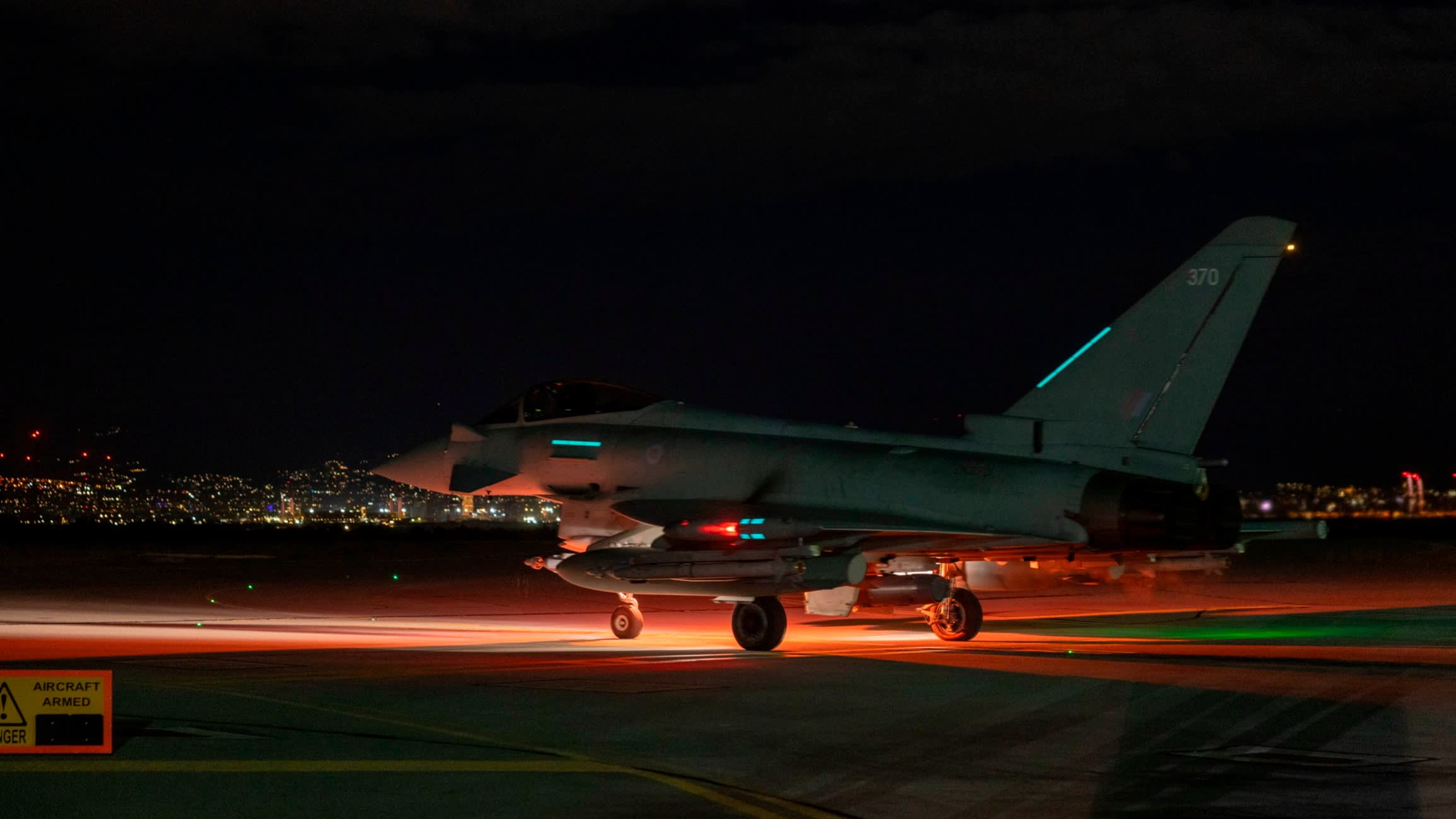
In a significant escalation of Western military involvement in the Levant, the air forces of the United Kingdom and France have executed a series of coordinated precision strikes against a high-value Islamic State (ISIS) facility in Syria. This joint operation marks a critical juncture in the long-standing campaign to suppress the remnants of the caliphate, occurring at a time when global attention has been largely diverted toward the conflict in Eastern Europe and the volatile situation in Gaza. The mission, carried out by Royal Air Force (RAF) Typhoons and French Air and Space Force Rafale jets, targeted a sophisticated weapons storage and manufacturing site, signaling a renewed commitment by London and Paris to maintain regional stability and prevent a resurgence of transnational terrorism.
The timing of the strikes is particularly noteworthy from a geopolitical and economic perspective. As the international community grapples with the complexities of a "polycrisis"—characterized by high inflation, energy insecurity, and shifting trade alliances—the persistence of instability in the Middle East remains a primary concern for global markets. The operation serves as a reminder that despite the territorial defeat of ISIS in 2019, the group continues to operate as a decentralized insurgency, capable of disrupting vital economic corridors and threatening the security of European soil. For the UK and France, the two preeminent military powers in Europe, this mission is as much about domestic security as it is about projecting influence in a region where Russian and Iranian interests are deeply entrenched.
Tactical Precision and Defense Economics
The logistics of the operation highlight the advanced capabilities of the "Entente Cordiale" in the defense sector. According to defense analysts, the strikes utilized precision-guided munitions designed to minimize collateral damage while ensuring the total destruction of the underground facility. The use of the Storm Shadow (or SCALP-EG in French service) cruise missiles—weapons that have gained international notoriety for their effectiveness in the Ukraine conflict—underscores the high-stakes nature of the target. Each of these missiles carries a price tag exceeding £2 million, reflecting the significant financial investment Western nations are prepared to make to neutralize asymmetric threats before they metastasize.
From an economic standpoint, the maintenance of such high-readiness strike capabilities is a cornerstone of the British and French defense budgets. In the UK, the Ministry of Defence has been navigating a complex landscape of procurement reforms and budgetary constraints, yet the Integrated Review Refresh of 2023 reaffirmed the "Indo-Pacific tilt" and the continued necessity of maintaining a "Global Britain" presence in the Middle East. Similarly, France’s Military Programming Law (LPM) for 2024-2030 has seen a historic increase in spending, with €413 billion allocated to modernize its forces and enhance its strategic autonomy. These joint strikes serve as a real-world validation of these massive public expenditures, demonstrating that high-tech military assets are not merely deterrents but active tools of foreign policy.
The Resurgence of the Shadow Caliphate
The intelligence leading to these strikes suggests that ISIS has been exploiting the geopolitical vacuum created by the distraction of major world powers. Reports from the United Nations and various security think tanks indicate that the group still commands between 5,000 and 7,000 fighters across Iraq and Syria. These militants have largely retreated to the "Badia" or Central Desert, a vast, inhospitable terrain where they have established a "shadow administration." This clandestine network generates revenue through extortion, kidnapping for ransom, and the smuggling of illicit goods, including captagon—a synthetic stimulant that has become a multi-billion-dollar industry in the region.
The economic impact of a resurgent ISIS extends far beyond the borders of Syria. The group’s ability to conduct hit-and-run attacks on oil infrastructure and transport routes in Eastern Syria directly affects regional energy prices and humanitarian aid corridors. By targeting a central weapons facility, the Anglo-French mission aimed to disrupt the group’s supply chain, effectively "decapitating" its ability to launch large-scale coordinated offensives. Analysts suggest that without these periodic "mowing the grass" operations, the risk of a mass prison break—similar to the 2022 Ghwayran prison attack—remains unacceptably high, potentially unleashing thousands of battle-hardened radicals back into the theater of war.
Geopolitical Friction and the Role of Russia
The operation was conducted within a crowded and contested airspace. Syria remains a patchwork of influence zones, with the Russian Aerospace Forces maintaining a significant presence in support of the Bashar al-Assad regime. The coordination required to execute these strikes without triggering an accidental confrontation with Russian assets is a testament to the sophisticated "deconfliction" protocols that remain in place, even as relations between NATO and Moscow have reached their lowest point since the Cold War.
This military action also sends a subtle message to Tehran. As Iran continues to expand its influence through proxy networks across the "Axis of Resistance," the UK and France are asserting that they remain invested in the Levant. For global investors, this presence provides a precarious but necessary layer of security for regional trade. The stability of the Eastern Mediterranean and the Levant is inextricably linked to the security of the Suez Canal and the Red Sea; any major flare-up in Syria could further complicate the already strained maritime logistics currently under threat from Houthi rebels in the south.
Comparative Global Responses and Market Reactions
When compared to the United States’ approach to counter-terrorism, the Anglo-French strikes represent a more surgical, European-led initiative. While the U.S. remains the primary architect of the Global Coalition against Daesh, the Biden administration has signaled a desire to reduce its "boots on the ground" footprint in the Middle East to focus on the Indo-Pacific. This shift has forced European capitals to take greater responsibility for their "near abroad." The success of this joint mission may encourage other European nations, such as Germany or Italy, to contribute more robustly to regional security frameworks, potentially leading to a more integrated European defense identity.
Market reactions to the strikes were relatively muted, a sign that the global economy has, to some extent, "priced in" the persistent low-level conflict in Syria. However, defense stocks in London and Paris—specifically BAE Systems, Rolls-Royce, and Dassault Aviation—saw marginal gains following the news. These companies are the backbone of the European military-industrial complex, and successful operational deployments often translate into increased export interest from Middle Eastern and Asian partners looking to upgrade their own aerial capabilities.
The Long-Term Economic Burden of Stabilization
While the military objectives of the strike were reportedly met, the broader economic challenge of Syrian stabilization remains unresolved. The Syrian economy is in a state of collapse, with the Syrian Pound losing over 80% of its value against the dollar in recent years and over 90% of the population living below the poverty line. This economic desperation provides a fertile recruiting ground for extremist groups.
The UK and France are among the largest donors of humanitarian aid to the region, yet there is a growing recognition that "aid alone is not a strategy." The cost of containing ISIS through military means is substantial, but the cost of a total regional collapse—leading to mass migration waves toward Europe—would be exponentially higher. Estimates suggest that the 2015 migrant crisis cost European economies tens of billions of euros in processing, housing, and social integration. In this light, the expenditure on a few dozen cruise missiles and several flight hours of elite fighter jets is seen by policymakers as a prudent investment in preventative security.
Navigating the Future of Middle Eastern Security
As the smoke clears from the targeted facility in Syria, the strategic focus shifts back to the political arena. The joint operation by Britain and France serves as a potent symbol of Western resolve, yet it also highlights the limitations of airpower in solving deeply rooted socio-economic and sectarian grievances. The "Global Coalition" continues to face the daunting task of repatriating foreign fighters and managing the Al-Hol and Roj camps, which house tens of thousands of displaced persons and ISIS family members—a "ticking time bomb" that military strikes cannot dismantle.
The business of security in the 21st century requires a multifaceted approach where kinetic military action is supported by robust economic statecraft. For the United Kingdom and France, the success of their latest mission in Syria reinforces their status as global security providers. However, the true measure of their success will not be the number of facilities destroyed, but their ability to foster a regional environment where such facilities are no longer needed. As global power dynamics continue to shift, the Anglo-French partnership remains a vital, albeit strained, pillar of the international order, striving to balance the ledger between the high costs of intervention and the even higher costs of indifference.