

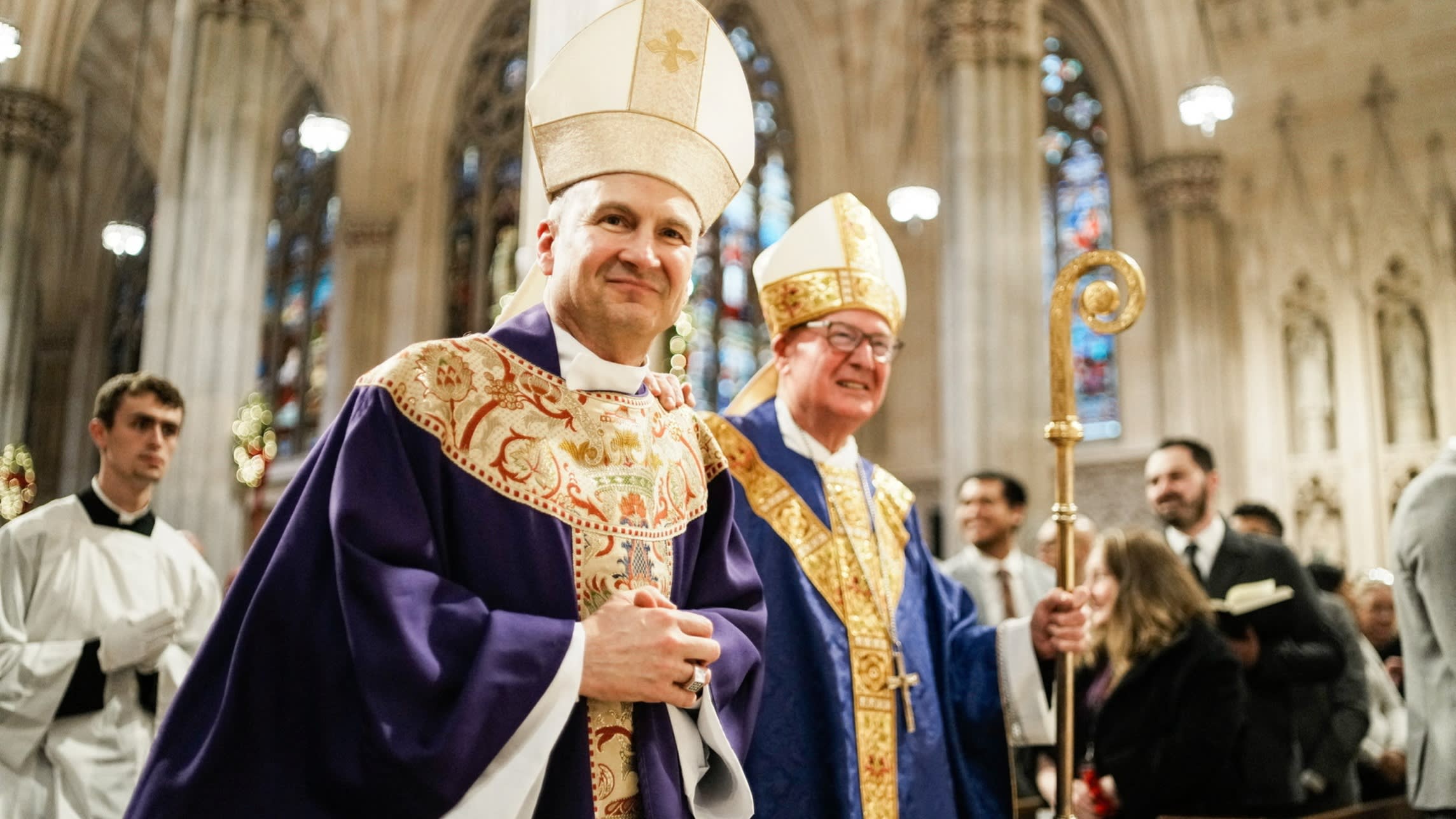
The selection of a new spiritual leader for the Archdiocese of New York represents far more than a routine administrative transition within the Roman Catholic Church; it marks a decisive strategic pivot by the Holy See to recalibrate the ideological trajectory of American Catholicism. For decades, the New York See has served as the unofficial "capital" of the Church in the United States, a bully pulpit from which its leaders have historically wielded significant influence over both national politics and the internal culture of the American faithful. By designating a successor whose vision aligns more closely with the Vatican’s current emphasis on social justice, environmental stewardship, and migrant advocacy, Pope Francis is signaling an end to the era of hardline conservative alignment that has characterized much of the American hierarchy in recent years. This move is widely interpreted by Vatican observers and political analysts as a deliberate effort to distance the Church from the populist, "MAGA"-inflected nationalism that has taken root in specific sectors of the U.S. Catholic population.
The New York Archdiocese is an institution of immense economic and social weight. With a portfolio of real estate, educational institutions, and healthcare networks valued in the billions, its leadership is uniquely positioned to influence public policy in one of the world’s most significant financial hubs. Historically, the Archbishop of New York has acted as a bridge between the Church and the American establishment. However, as the American political landscape has become increasingly polarized, the Church’s leadership has often found itself at odds with the Vatican’s global agenda. While Rome has pivoted toward "integral ecology" and the "Economy of Francesco"—a model prioritizing the poor and the planet over unfettered market capitalism—many American bishops have remained focused on a narrower set of "culture war" issues, such as abortion and gender identity, often aligning themselves with the Republican Party’s right wing.
This ideological rift has created a "Church within a Church," where American traditionalists have occasionally positioned themselves as a formal opposition to the Pope’s reformist agenda. The appointment of a more moderate, social-gospel-oriented leader in New York is a structural attempt to break this deadlock. It reflects a realization in Rome that the American Church, despite its wealth and institutional power, risks becoming a sectarian outpost rather than a participant in the global Catholic mission. The "MAGA" movement, which emphasizes national sovereignty, restrictive immigration policies, and a skepticism of international cooperation, stands in direct contrast to the Pope’s encyclicals, Laudato Si’ and Fratelli Tutti, which advocate for a borderless solidarity and a collective response to the climate crisis.
Economically, the shift in leadership carries profound implications for how the Church’s vast resources are deployed. The New York Archdiocese oversees one of the largest private social safety nets in the United States. Catholic Charities of New York provides services to hundreds of thousands of New Yorkers regardless of faith, including a significant portion of the city’s burgeoning migrant population. Under a leadership more focused on the "Franciscan" mandate, these resources are expected to be funneled even more aggressively into housing, legal aid for asylum seekers, and poverty alleviation. This shift aligns with a broader economic trend where religious institutions are increasingly being viewed as essential partners in urban governance, filling the gaps left by shrinking municipal budgets and a retreating federal welfare state.
The demographic reality of the American Church further necessitates this change. While the "MAGA" movement finds strong support among older, white, European-descendant Catholics, the future of the U.S. Church is decidedly Latino. Approximately 40% of U.S. Catholics are Hispanic, a figure that rises to over 50% among the youth. This demographic is generally more concerned with economic justice, healthcare access, and immigration reform than with the traditionalist liturgical debates that occupy the Church’s conservative wing. By appointing a leader who speaks to these concerns, the Vatican is engaging in a form of institutional "future-proofing," ensuring that the Church remains relevant to its fastest-growing constituency.
Market data and philanthropic trends suggest that this transition will also impact the Church’s fundraising landscape. For years, the American Church has relied on a network of wealthy, conservative donors who have used their financial leverage to support traditionalist causes. A shift toward a more progressive, social-justice-oriented leadership may alienate some of these high-net-worth individuals. However, Vatican strategists appear to be betting that a broader, more inclusive message will attract a new generation of "impact-driven" donors and revitalize parish-level giving among a younger demographic that has felt alienated by the Church’s perceived partisanship.
Global comparisons illustrate the uniqueness of the American situation. In much of the Global South—where the majority of the world’s 1.3 billion Catholics now reside—the Church is a primary advocate against neoliberal economic policies and environmental degradation. In Africa and Asia, Catholicism is often synonymous with community development and resistance to authoritarianism. The American Church’s recent dalliance with right-wing populism has made it an outlier in the global Catholic community. The New York appointment is, in many ways, an attempt to bring the United States back into the fold of the "universal" Church, ensuring that the American hierarchy does not become a theological silo.
The political stakes of this appointment cannot be overstated, particularly as the United States enters another high-stakes election cycle. Catholic voters remain a critical "swing" demographic, often deciding the outcome in key battleground states like Pennsylvania, Wisconsin, and Michigan. For the past decade, the Republican strategy has been to frame the Catholic vote as a monolith focused on a single issue: the opposition to abortion. However, the Vatican’s new direction encourages a "consistent life ethic," which places the death penalty, poverty, and the treatment of refugees on the same moral plane as the protection of the unborn. A New York Archbishop who champions this holistic view could significantly alter the political calculus, providing a moral framework for Catholics to engage with the Democratic platform on social and economic issues, even if they remain at odds on reproductive rights.
Expert insights from ecclesiastical historians suggest that this move is the culmination of a decade-long strategy by Pope Francis. "The Pope has been patient," notes one scholar of Vatican diplomacy. "He has spent years appointing moderate cardinals in smaller sees, but New York is the centerpiece. Changing the leadership there is like changing the course of a supertanker. It takes time, but once it turns, the entire momentum of the American Church follows." This "Francis Effect" in New York is expected to influence the United States Conference of Catholic Bishops (USCCB), which has frequently been a site of tension between the Pope’s emissaries and domestic hardliners.
As the new leadership takes the reins, the immediate focus will likely be on institutional healing. The New York Archdiocese has been rocked by the same secularization trends and abuse scandals that have plagued the Church globally. However, the new mandate is not just about internal reform; it is about external engagement. The goal is to position the Catholic Church as a mediating force in a fractured society—a "field hospital," as the Pope famously described it, rather than a fortress.
In the long term, the economic impact of this shift will be measured by the Church’s ability to advocate for systemic change. This includes pushing for a more equitable tax code, supporting labor unions—a traditional Catholic stronghold that has seen a resurgence in New York—and leveraging the Church’s investment portfolios to demand corporate responsibility. By moving away from the "MAGA" orbit, the New York Archdiocese is reclaiming its role as a voice for the marginalized, signaling that the Church’s primary loyalty lies not with a political movement or a national identity, but with a global mission of social and economic transformation. This realignment ensures that the Catholic Church in New York will remain a formidable and relevant force in the 21st century, even as the political winds continue to shift.