


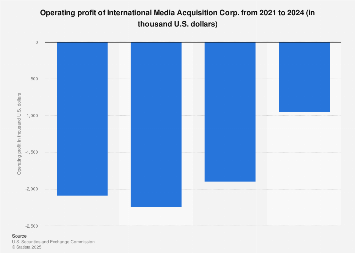
The trajectory of International Media Acquisition Corp. (IMAC) in 2024 is poised to be a critical indicator of its strategic execution and adaptability within the dynamic global media and technology sectors. While specific operational profit figures for the full year remain subject to detailed financial reporting, early indicators and industry trends suggest a period of intense focus on revenue generation, cost optimization, and the strategic deployment of capital to solidify its market position.
IMAC, as a special purpose acquisition company (SPAC), has historically operated with the primary objective of identifying and merging with a target company in the media, technology, or digital sectors. The success of such entities is intrinsically linked to the performance of their acquired businesses and the broader economic climate influencing advertising spend, consumer engagement, and technological innovation. As 2024 unfolds, the company’s underlying operational entities are navigating a complex environment characterized by rapid digital transformation, shifting consumer preferences, and increased competition.
The media industry, in particular, is undergoing a profound metamorphosis. Traditional advertising models are being challenged by the rise of digital platforms, programmatic advertising, and influencer marketing. For companies like those that IMAC might acquire or has acquired, this necessitates a robust digital strategy, innovative content creation, and effective audience engagement across multiple channels. The ability to monetize digital content, whether through subscriptions, advertising, or e-commerce, is paramount. Industry analysts point to a growing divergence in performance between media companies that have successfully embraced digital transformation and those that have lagged, leading to significant consolidation and strategic realignments. The global digital advertising market, projected to exceed $600 billion by 2024 according to various market research firms, represents a significant opportunity, but also a highly competitive arena.
Furthermore, the broader economic climate plays an indispensable role. Inflationary pressures, interest rate fluctuations, and geopolitical uncertainties can impact consumer discretionary spending and corporate advertising budgets. Companies reliant on advertising revenue are particularly sensitive to economic downturns, as marketing expenditures are often among the first to be curtailed by businesses seeking to reduce costs. Conversely, periods of economic growth can stimulate increased spending, benefiting media entities through higher ad rates and greater demand for their services. The ongoing adjustments in global supply chains and labor markets also contribute to operational costs, influencing profit margins.
For IMAC, the profitability of its operations in 2024 will be a direct reflection of the performance of its portfolio companies. If IMAC has successfully merged with or acquired businesses in high-growth segments such as streaming services, digital content creation, data analytics for media, or specialized technology solutions for the media industry, the potential for strong operational profit is enhanced. These sectors are often characterized by recurring revenue models and the ability to scale rapidly, provided they can maintain a competitive edge and adapt to evolving technological landscapes.
The strategic imperative for IMAC in 2024 likely involves a dual focus: nurturing the growth of its existing portfolio and prudently exploring further value-accretive acquisitions or divestitures. The SPAC structure itself offers a degree of flexibility, allowing for strategic pivots. However, the pressure to deliver returns to shareholders remains a constant. This pressure intensifies as the market matures and investor expectations for SPACs evolve.
Market data from leading financial analysis firms indicates a heightened scrutiny of SPAC performance. While the initial SPAC boom saw numerous companies go public via this route, the subsequent market correction has led investors to demand clearer pathways to profitability and sustainable business models. For IMAC, demonstrating a strong operational profit in 2024 would signal a successful navigation of this more discerning investment environment. This would likely be achieved through a combination of revenue growth initiatives—such as expanding into new markets, launching innovative products or services, or enhancing customer acquisition strategies—and rigorous cost management. Efficiency gains in areas like content production, distribution, and administrative overhead would be crucial.
Moreover, the global reach of media companies means that IMAC’s operational performance will be influenced by international market dynamics. Emerging economies, with their growing digital penetration and expanding middle classes, present significant growth opportunities for media and technology firms. However, navigating diverse regulatory environments, cultural nuances, and varying levels of technological infrastructure requires a sophisticated global strategy. Companies that can effectively tailor their offerings to local markets and establish a strong presence in these regions are likely to outperform.
The competitive landscape within the media and technology sectors is fierce. Large, established players with substantial resources and loyal customer bases constantly innovate, while nimble startups disrupt existing markets with novel approaches. For IMAC’s portfolio companies to thrive, they must carve out distinct competitive advantages. This could involve proprietary technology, unique content libraries, strong brand recognition, or highly efficient operational models. The ability to forge strategic partnerships and collaborations can also be a key differentiator, providing access to new markets, technologies, or customer segments.
Looking ahead, the operational profit of International Media Acquisition Corp. in 2024 will be a key data point for understanding its long-term viability and strategic success. It will reflect not only the inherent strength of the businesses it operates within but also the effectiveness of its management in navigating the complex, rapidly evolving global media and technology ecosystem. Investors and industry observers will be closely watching to see how IMAC capitalizes on opportunities while mitigating the inherent risks in a sector defined by constant change and intense competition. The year ahead represents a critical juncture for the company to solidify its position and demonstrate its capacity for sustained profitable growth.