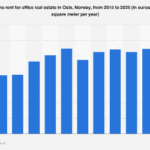

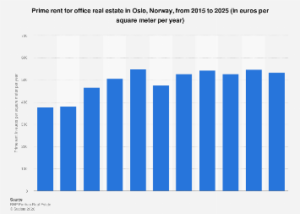

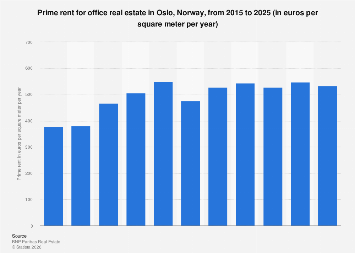
Oslo’s commercial real estate sector is poised for a dynamic year in 2025, with analysts and market participants closely observing the trajectory of prime office rents. While specific projections for the upcoming year are still solidifying, a confluence of macroeconomic factors, evolving workplace strategies, and the city’s inherent attractiveness as a business hub are shaping expectations. Understanding the nuances of Oslo’s prime office market requires a deep dive into the underlying economic forces at play, international comparisons, and the strategic decisions being made by both landlords and tenants.
The city of Oslo, a leading Nordic capital and a significant player in sectors such as energy, shipping, and technology, has historically exhibited a resilient office market. However, the post-pandemic era has introduced unprecedented shifts. The global trend towards hybrid work models continues to influence office space demand, prompting a reevaluation of space requirements and a greater emphasis on quality and amenity-rich environments. This is particularly relevant for prime office spaces, which are expected to command higher rents due to their superior locations, modern specifications, and enhanced facilities.
Forecasting prime office rents in any major city involves a careful assessment of supply and demand dynamics. In Oslo, the development pipeline for new prime office space is a critical factor. While a surge in speculative development has been observed in some global markets, Oslo’s approach has generally been more measured, often driven by pre-leasing commitments. This relative constraint on new supply, particularly in highly sought-after central business districts, could provide a foundational support for rental levels. However, any significant increase in speculative construction could introduce upward pressure on vacancy rates and subsequently impact rents.
Economic indicators such as inflation, interest rates, and GDP growth are also paramount. A robust economic environment typically translates to increased business expansion, higher employment levels, and a greater demand for office space, thereby supporting rental growth. Conversely, economic headwinds, such as rising inflation and tighter monetary policy, can dampen business confidence, leading to reduced expansion plans and potentially increased vacancy. The Norwegian economy, while generally stable, is not immune to global economic fluctuations. Inflationary pressures and interest rate hikes, experienced globally, have been felt in Norway, potentially influencing leasing decisions and the appetite for new office commitments.
Market data from recent years provides valuable context. Prior to the pandemic, prime office rents in Oslo had been on a steady upward trajectory, reflecting strong demand and limited supply in core locations. The onset of COVID-19 led to a temporary disruption, with a brief period of rent stagnation or even slight declines in some segments as businesses grappled with remote work. However, the narrative has since shifted towards a recovery, with a particular focus on the flight-to-quality trend. Companies are increasingly seeking modern, sustainable, and well-located office spaces that can serve as hubs for collaboration, innovation, and employee well-being. This trend is likely to underpin the resilience of prime rents in Oslo.
To contextualize Oslo’s market, it’s beneficial to compare it with other Nordic capitals. Stockholm, Copenhagen, and Helsinki also boast sophisticated office markets, each with its own unique characteristics. Generally, these cities have experienced similar trends, with a strong emphasis on sustainability, flexible workspace solutions, and premium amenities driving rental values in prime locations. However, differences in economic structures, population growth, and regulatory environments can lead to variations in rental performance. For instance, Stockholm, as the largest Nordic city, often sets a benchmark for rental levels, though Oslo’s strong performance in specialized sectors like offshore technology and renewable energy can create distinct market advantages.
The concept of "prime" itself is evolving. It no longer solely refers to the most central location. Instead, it increasingly encompasses buildings that offer exceptional sustainability credentials (e.g., BREEAM or LEED certifications), advanced technological infrastructure, abundant natural light, flexible floor plates, and a comprehensive suite of amenities such as high-quality common areas, fitness facilities, and food and beverage options. Landlords who invest in upgrading their existing stock to meet these evolving tenant expectations are likely to be better positioned to secure and maintain premium rents.
Expert insights from real estate consultants and market analysts underscore the importance of adaptability. "We are seeing a bifurcation in the office market," notes a senior analyst at a leading international real estate advisory firm. "Older, less amenitized buildings are facing significant pressure, while prime assets that offer a superior employee experience and are in accessible, vibrant locations are proving remarkably resilient. For Oslo in 2025, the key will be the continued demand for high-quality, sustainable spaces that facilitate collaboration and attract talent."
The economic impact of office rental rates extends beyond the real estate sector itself. Strong office rental markets contribute to the overall economic vitality of a city by supporting the growth of related industries, such as construction, property management, and professional services. Furthermore, the availability of high-quality office space is a crucial factor for attracting foreign direct investment and for established businesses looking to expand their operations. A healthy prime office rental market signals a city’s economic strength and its ability to support a thriving business ecosystem.
Looking ahead to 2025, several factors will be critical for Oslo’s prime office market. The ongoing normalization of hybrid work policies will continue to shape demand, with companies likely to rationalize their footprints while prioritizing quality. The availability and uptake of new prime developments will be a key indicator of supply-side pressures. Moreover, the broader economic climate, both domestically and internationally, will play a significant role in tenant confidence and leasing activity. The increasing focus on Environmental, Social, and Governance (ESG) criteria will also continue to be a defining characteristic, with sustainable buildings commanding a premium and potentially experiencing lower vacancy rates. Landlords who can demonstrate a commitment to ESG principles and offer spaces that align with modern workplace needs are best positioned to navigate the evolving landscape and achieve robust rental performance in Oslo’s prime office market in 2025.